Automating B2B List Building: Tools and Techniques for Streamlined Lead Generation

In the realm of B2B marketing, building a high-quality and targeted list of quality leads is paramount. B2B list building is the foundation upon which successful B2B lead generation campaigns are built. It involves identifying and compiling a list of potential prospects who are likely to be interested in a company’s products or services. This targeted approach significantly enhances the efficiency of lead generation efforts, allowing businesses to focus their resources on prospects with genuine potential. Manual B2B list building, while traditional, is not without its challenges. It’s a time-consuming process that involves searching through various sources, collecting and organizing data, and verifying the accuracy of the information. This manual approach can result in inconsistencies, errors, and inefficiencies. Moreover, the ever-growing volume of data available on the internet makes it practically impossible for manual methods to keep up. Hence, the need for automation arises as a solution to these challenges. Automated B2B list building presents a range of benefits that go beyond efficiency. Firstly, it enhances accuracy and minimizes human errors in data collection and organization. According to a study by DemandGen, 74% of B2B marketers believe that accurate data is crucial for successful marketing campaigns. Secondly, automation accelerates the process, allowing businesses to generate B2B leads at a faster pace. In fact, research by Ascend2 indicates that 61% of marketers consider lead generation as one of the biggest challenges. Automating the process can significantly alleviate this challenge. Must Read: How to Build a B2B Email List that Converts: Proven Strategies and Future Trends Automating B2B List Building: Tools and Techniques for Streamlined Lead Generation Understanding Automated B2B List Building Automated B2B list building involves using technology and software tools to streamline the process of identifying and collecting potential leads. These tools utilize advanced algorithms, web scraping techniques, and data enrichment to gather information from various online sources. The result is a comprehensive and up-to-date list of prospects that align with the business’s target audience. Must Read: Beginner’s Guide to Contact Discovery and B2B List Building Key Components and Processes in Automated List Building Automated list building comprises several key components and processes. Web scraping tools extract relevant information from websites, directories, and social media platforms. Lead generation software and platforms help in organizing and managing the collected data. CRM integration ensures that the gathered leads seamlessly integrate into the company’s customer relationship management system. Marketing automation systems enable businesses to nurture and engage with leads efficiently. Advantages of Streamlining Lead Generation through Automation The advantages of automating B2B list building are multifaceted. Firstly, it eliminates manual errors and inconsistencies that often plague manual data collection. According to IBM, poor data quality costs the US economy $3.1 trillion annually. Secondly, automation saves time and resources, allowing marketers to focus on high-level strategies rather than repetitive tasks. Thirdly, automation enhances targeting accuracy by utilizing AI algorithms to identify prospects that closely match the business’s ideal customer profile. Must Read: Pro Tips To Build Your B2B Contact List On LinkedIn Essential Tools for Automated B2B List Building A. Data Scraping and Web Crawling Solutions Data scraping and web crawling tools are essential for automated B2B list building. These tools can extract data from various online sources, including websites, directories, and social media platforms. They can collect valuable information such as company names, contact details, industry types, and more. For instance, a study by BrightLocal found that 68% of consumers would stop using a local business if they found incorrect information in online directories. B. Lead Generation Software and Platforms Lead generation software and platforms play a pivotal role in managing and organizing the collected data. These tools can segment leads based on various criteria, such as industry, company size, and location. They also provide features for lead tracking, follow-up, and engagement. Research by HubSpot indicates that 74% of companies that weren’t exceeding revenue goals did not know their visitor, lead, MQL, or sales opportunities. C. CRM Integration for Seamless Data Management Integrating automated B2B list building with a customer relationship management (CRM) system is crucial for ensuring a seamless flow of data. This integration allows leads to be automatically imported into the CRM, where they can be tracked, analyzed, and assigned to sales teams. According to Nucleus Research, CRM applications can deliver a return on investment (ROI) of $8.71 for every dollar spent. D. Marketing Automation Systems Marketing automation systems further enhance the lead generation process by enabling businesses to nurture and engage with leads through automated workflows. These systems can send personalized emails, follow-up messages, and content based on lead behavior and preferences. A study by Marketo indicates that 58% of top-performing companies use marketing automation to nurture leads. Techniques for Streamlining B2B Lead Generation A. Identifying Target Audience and Ideal Customer Profiles (ICPs) Before embarking on automated B2B list building, it’s crucial to define the target audience and ideal customer profiles (ICPs). This involves understanding the characteristics, needs, and pain points of the ideal customers. These insights guide the automated tools in collecting leads that closely align with the business’s offerings. B. Leveraging AI and Machine Learning for Data Analysis AI and machine learning play a significant role in data analysis for automated B2B list building. These technologies can analyze vast amounts of data to identify patterns and correlations. For instance, predictive analytics powered by machine learning can help in identifying potential leads with a higher likelihood of converting into customers. C. Utilizing Predictive Analytics for Lead Scoring and Prioritization Predictive analytics takes B2B list building to the next level by enabling lead scoring and prioritization. By analyzing historical data and lead behavior, predictive models can assign scores to leads based on their likelihood to convert. This helps sales teams focus their efforts on leads that have a higher potential for conversion. D. Automated Email List Building and Segmentation Automated email list building and segmentation ensure that leads receive relevant and personalized communication. Email addresses collected through automated tools can be automatically added to specific email lists based on predefined
Inbound vs Outbound Lead Generation: A Comprehensive Guide

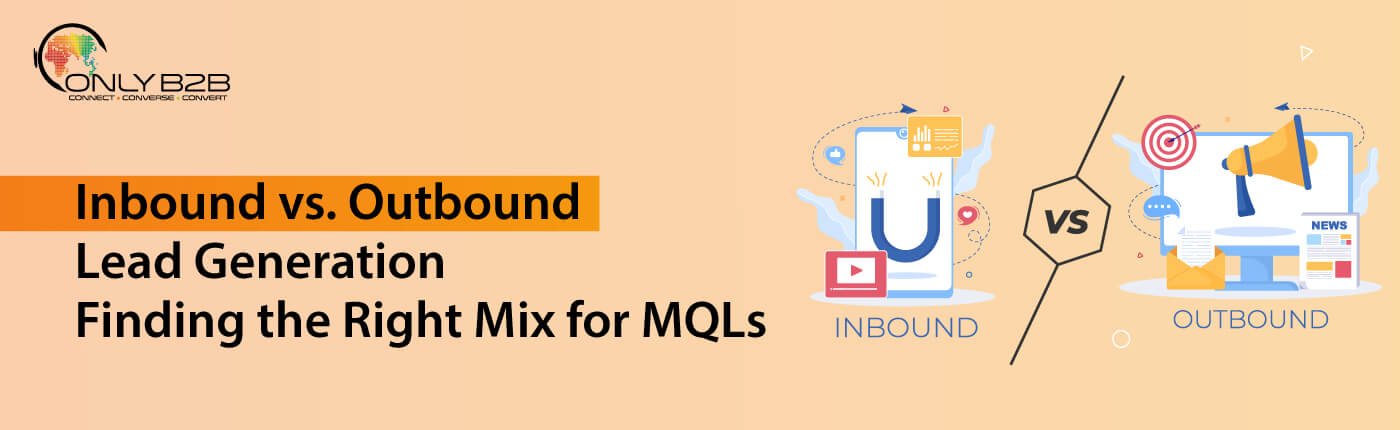
In today’s competitive business landscape, lead generation is crucial for driving growth and revenue. There are two main approaches to generating Marketing Qualified Leads (MQLs): Inbound and Outbound lead generation. Each method has its own unique strategies, benefits, and challenges. In this comprehensive blog, we will explore the differences between Inbound and Outbound lead generation, and how to find the right mix to maximize MQL generation.  Must Read: MQL to SQL Conversion Rate Inbound vs. Outbound Lead Generation: Finding the Right Mix for MQLs Understanding MQL Lead Generation: MQLs are prospects who have demonstrated an interest in a company’s products or services but are not yet ready to make a purchase. They require further nurturing and engagement to move them through the sales funnel. Both inbound and outbound strategies aim to attract and engage MQLs, but they do so in different ways. Must Read: How to Leverage Account Based Marketing for Marketing Qualified Leads Inbound Lead Generation Strategies for MQLs: Inbound marketing revolves around creating valuable and relevant content to attract prospects organically. Data and statistics show that companies with an active blog generate 67% more leads per month compared to those without Effective inbound strategies include SEO optimization, content marketing, social media engagement, webinars, and gated content offerings. Must Read: Important Ways to Generate Marketing Qualified Leads Outbound Lead Generation Strategies for MQLs: Outbound lead generation, on the other hand, involves reaching out to prospects directly through advertising, cold calling, and email campaigns. While some may argue that outbound techniques are less effective, data shows otherwise. According to Sales Hacker, 78% of decision-makers in companies have scheduled an appointment or attended an event based on a cold email or call. Pros and Cons of Inbound and Outbound Approaches: Inbound lead generation is praised for its ability to attract highly engaged and interested prospects. It is a long-term strategy that builds brand authority and trust over time. On the other hand, outbound lead generation is more immediate and can generate quick results. However, it can also be intrusive and sometimes lead to low response rates. While outbound tactics can quickly identify MQLs, nurturing those leads to become SQLs often requires a more inbound-focused approach. Striking a balance between the two is key. Finding the Right Mix: Integrating Inbound and Outbound for MQLs: To maximize MQL generation, an integrated approach that combines both inbound and outbound strategies is essential. Utilizing targeted email marketing alongside content-driven SEO efforts can capture MQLs at various stages of the buying journey. According to DemandWave, integrated campaigns generate a 24.3% increase in response rates compared to stand-alone email campaigns. Must Read: Top Reasons to Hold to MQL: They will Convert Eventually if Marketing is Done Correctly Measuring Success: Metrics for Inbound and Outbound MQL Generation: Measuring the effectiveness of both inbound and outbound strategies is crucial to optimizing B2B lead generation efforts. Key metrics for inbound MQL generation include website traffic, conversion rates, and time-on-page. Outbound MQL generation can be measured through response rates, conversion rates, and cost-per-lead. Data-driven decision-making is vital in determining which approaches are yielding the best results. Best Practices for Maximizing MQL Generation: To optimize MQL generation, consistency and relevancy are paramount. Engaging content, personalized outreach, and timely follow-ups can significantly impact lead conversion rates. According to Forbes, companies that excel at lead nurturing generate 50% more sales-ready leads at a 33% lower cost. Inbound and outbound lead generation both play crucial roles in acquiring Marketing Qualified Leads. Rather than choosing one over the other, integrating both approaches can lead to a more holistic and effective lead generation strategy. By analyzing data and continuously fine-tuning the mix, businesses can enhance MQL generation and drive significant revenue growth. Remember, it’s not about inbound vs. outbound, but about leveraging the best of both worlds for MQL success.

The Benefits Of Interactive Content For Lead Generation

One Size Fits All – Interactive Content Interactive media is similar to pizza. It may have any topping in the world and comes in a variety of sizes and forms. Nevertheless, we do enjoy pizza, don’t we? Similar to this, interactive content performs effectively regardless of where it is used or the type of content it is used with. This is so that your clients may benefit from the engaging nature of interactive content. Two times as many conversions are produced by interactive content than by passive content. Users of interactive content are more willing to provide personal information, resulting in the production of quality leads. How Can Interactive Content Benefit in Lead Generation? In comparison to static content, interactive content is more successful in generating leads. Here’s why. 1. Engagement More than 75% of marketers think interactive content captures website users’ attention. Interactive content can certainly attract your interest in this age with such short attention spans. You become immersed and engaged by it. It includes tasks like choosing options, expressing preferences, and responding to inquiries, which adds to its attraction. Users are prompted to provide information more frequently as a result. 2. Value-Based Interactive content offers something in return. The customer is informed and provided with the necessary information. A bank may employ a savings goal calculator, for instance, to assist its customers. This calculator may be used by both businesses and individuals to see how much money has to be saved each month in order to reach annual objectives. 3. Simple Data Gathering There are several interactive content creation tools available. You may also examine the data and make inferences using these tools. Interactive content makes it simple to gather this information and put it to good use. For instance, you may gather user information like skin type, skin tone, and allergies if you design a quiz to propose cosmetic products (if they have any). Using all of this data, more specialised offers may then be sent. 4. Informs The Viewer Another excellent technique to educate your audience without using lengthy posts and blogs is through interactive content. You may teach them considerably more about your brand by using calculators and tests. As a result, their experience is enhanced and their likelihood of providing lead information through the interactive content piece rises. Must Read: 6 B2B Lead Generation Strategies to follow in 2022 Calculators, Tests, and a lot more You may utilise the following incredible content categories for your lead generating process: 1. Calculators Information collecting using interactive calculators is quick and affordable. They aid consumers in finding straightforward solutions to challenging problems. In return for your contact information, they enhance your B2B leads. Imagine that your business is construction. For the benefit of your potential clients, you may create building quotations for businesses, residences, etc. Before working with you, they will have a general concept of what they may pay. Additionally, based on the data you gather, you will be able to segment your leads. You may create calculators to figure out things like staff productivity, meeting costs, and mortgage payments. Think of a ROI calculator, for instance. Businesses could input their details and get a clue of their return even before they decided to get involved. This is a sign of trust that fosters loyalty in the businesses of potential clients. 2. Results Tests You must be curious about what type of pasta you are. Or which 90s rock song best describes your character? Indeed, quizzes are entertaining. But they’re also a fantastic technique to increase the number of leads coming into your company. To further inform its clients, a marketing firm may employ a questionnaire like “Which Marketing Tool Is Perfect For You?” Depending on their interests and choices, they may target various firms with various programmes. Here is a test by Staples, a well-known supplier of office products.  The “How Strong Is Your Brand?” questionnaire was formulated. They utilize the test to probe businesses on their awareness of their own brand. They may also take part in other co-marketing projects. Additionally, the business may target clients with certain items and boost sales based on the results. Additionally, this increases brand recognition. 3. Assesments True, nobody enjoys taking assessments and tests. However, interactive exams aren’t your standard fare. They’re a fantastic interactive content type that awards grades based on your response to questions. They’re a fun approach to inform your prospects and clients. Users like knowing where they stand in relation to other users thanks to evaluations. This immediately raises the interactive assessment’s social proof. In reality, a variety of sectors may utilise assessments to learn more about their potential consumers’ knowledge and what they can provide for them. Online testing is a tool that businesses may use to qualify their customers. Companies may target the correct B2B clients by using assessments like the one labelled “How Much Do You Know About Our Software?” Or a marketing firm may utilize a test to see whether you’re an expert in Facebook marketing! These tests not only help you qualify leads (Marketing qualified or Sales qualified), but you can also make them different offers based on the outcomes. 4. Polls and Surveys One of the most economical methods of getting leads is through surveys. People like expressing their thoughts and providing comments. Additionally, surveys are a terrific sort of content for quickly and easily acquiring large amounts of data. They experience a tonne of social interaction. They are also excellent for gathering lead information. Polls function similarly to surveys in this regard. When trying to obtain data on a specific issue, polls are more beneficial. The universality of surveys and polls is their finest quality. Any sector or business can use them. Additionally, businesses may utilise surveys for “Target Market Analysis” to better understand their clients. People are the centre of businesses, and feedback is the final but most crucial component. Retail enterprises may also utilise polls to learn about the preferences and choices of their customers so they

How To Leverage SEO For B2B Lead Generation

Too many marketing efforts still take place in cages, and one of the most secluded is search engine optimization (SEO). While most B2B firms rely on SEO and lead generation to generate new leads, these teams rarely communicate until new content requires an SEO analysis. The general consensus appears to be that SEO assists a website—and all of its content—get discovered online, which creates leads in the grand picture, but lead generation is an entirely other set of operations aimed solely at acquiring new leads. If done right, SEO can drive a 14.6% conversion rate. SEO is geared on attracting people who are actively looking for information about products or services, making it an effective lead generation strategy. SEO statistics show that leads generated as a consequence of search engine optimization have a 14.6 % conversion rate on average. Traditional techniques such as print advertisements and direct mail, on the other hand, have an average conversion rate of 1.7 percent. A dynamic marketplace, on the other hand, is putting new demands on how marketers (and sales agents, and…just about every other component of a company) interact with their target audiences. Lead generation tactics are changing to match new expectations, but one aspect that is still absent from most playbooks might be the one that makes the most difference: SEO. Audience Intent Research is Required in Today’s SEO Strategies The foundation for integrating SEO and lead generation strategies starts with a modern understanding of SEO, especially a notion known as “user intent.” User intent is the true definition behind the keywords people write in a search engine text box. User intent may be divided into two categories: Inform: When someone is seeking to discover about a topic. Purchase: When someone is purchasing something described by the keyword. It’s as easy as Googling your keywords to figure out what your audience truly means when they use them. The top-ranking sites for a keyword show the sort of material that people are seeking for the most when looking for that term. What evidence do we have? Because Google is committed to giving the greatest possible user experience, and its algorithms are working 24 hours a day, seven days a week to decode the purpose behind each search word. For example, if you search for “email marketing,” you’ll largely see marketing software vendors attempting to promote their platforms. In other words, most individuals who search for “email marketing” are looking to buy something. They wish to purchase software. The word “marketing automation” has a wide range of meanings. The majority of the results on Page 1 are definitions and basic information regarding marketing automation. People are on the lookout for that data. This is helpful info for every aspect of your SEO effort. You may direct customers to information that matches their requirements if you know what they’re looking for. For example, a company offering email marketing should ensure that their content contains a good product page that targets “email marketing” and associated keywords, depending on the information provided. On the other hand, a company selling marketing automation should concentrate on producing high-quality, useful content for that keyword. Must Read: How To Embed Content Marketing And SEO For More Traffic And Leads? B2B Lead Generation Needs User Intent Research Buyers are self-educating deeper down the sales funnel than ever before, therefore lead generation requires user intent research. They’re uninterested with your meticulously built buyer’s journey model, entering it whenever they want and moving through it at their own time. Most marketers are aware of this and are adjusting their lead generation techniques to meet changing trends and expectations. Many people are working hard to provide useful, entertaining material. That’s a good start, but like with any digital material, you should pause and consider whether it’s reaching the right purchasers at the right time. Creating content does not guarantee that leads will follow. While publishing your own content is crucial, when a digital marketplace is ready to explore or make a buy, they frequently use search engines. That implies the material you develop for each stage of the sales funnel must be optimized for search engines for the user’s specific buyer’s journey. Buyers at the top of the funnel, or at the start of their buying journeys, are seeking for instructional or amusing content, such as essential jargon definitions, clear explanations of core industry ideas, infographics, and other readily digestible media. That indicates the terms that are generating those types of search results are most likely being utilized by the top-of-the-funnel part of your audience. Those are the keywords you should feature in your entry-level content. Keywords that create strong purchase intent search results, on the other hand, are likely to be utilized by a segment of your audience that is ready (or almost ready) to buy. There are a lot of product pages, vendor comparisons, pricing sheets, and other things among those results. When creating that type of material, be sure to incorporate keywords that individuals who are ready to buy are searching for. Must Read: The Dynamics Of B2B Lead Generation How To Use SEO To Generate Leads Here are five ways to using SEO to boost your lead generation tactics, from beginning to end: Make A List Of Keywords That Are Relevant You may utilize free tools like Google’s Keyword Planner, Google Trends, and/or Keyword Tool.io if you’ve never done this before. You might also start with a list of your most significant goods and services, as well as industry terminology. Look Them Up On The Internet To keep things organized, you might wish to utilise spreadsheets for this phase. Make a note of whether the search results predominantly show an inform or purchase goal, and to what extent, for each of your terms. Some will be significantly skewed, while others will be more evenly distributed. Organize The Results According To The Steps In Your Sales Funnel Users in the top-of-the-funnel are most likely to be represented by keywords that elicit a high inform intent. People towards the bottom of

The Dynamics Of B2B Lead Generation

Regardless of sector or whether they are B2B or B2C, all organizations aim for the same goal: to boost sales and income. When it comes to breaking down a business, the objective of all teams is, of course, to raise income. However, lead generation is the most crucial step in the sales process. It’s quiet simple to generate leads. What is not simple is to generate high-quality leads that are relevant to your company. The Herculean task that is B2B lead generation! Marketers are increasingly focusing more on lead quality than quantity, according to Marketing Insider Group. One of the most challenging components of running a business, especially in the B2B market, is lead generation. It’s only the first major step in a customer’s journey when they enter the sales funnel. In Layman’s terms, it’s the process of finding a company’s ideal customers or clients and persuading them to make a purchase. And it entails gathering information from people who appear to be potential customers and then utilizing that information to attract them and convert them into customers. The challenging element, as we discussed at the beginning of the post, is producing quality leads that are relevant to your organization. This is why, in order to stay in the game, you’ll need well-thought-out lead generating methods and tools. Otherwise, your competitors will walk away with all the good things. It is critical to employ clever and straightforward lead generating methods, especially in this day and age, when clients or customers are more informed of what they want and are wary of marketing ploys. Must Read: Sales Success Secrets: The Critical Role of Lead Generation and Appointment Setting The Dynamics of B2B Lead Generation You should be able to start gathering leads and eventually create a customer base now that you understand the lead generation process and the problems it entails. But first, let’s figure out the dynamics of the procedure so we can do it correctly. Landing Pages: A landing page is a dedicated web page that serves a single, specific purpose. It’s designed for use in a digital marketing strategy, and it’s the first thing a visitor sees when they click your link. The following are examples of landing pages: Lead generating landing pages use a web form as a call-to-action to gather lead data, such as names and emails, and are best suited for B2B lead generation. Click-through Landing pages work best for e-commerce businesses when the call-to-action is a simple button. Lead Capture Forms: Lead capture forms, which are the main emphasis of a lead capture page or landing page, is an absolute must.  Your firm will be unable to create leads without the use of lead capture forms. The data you collect here will help you personalize your marketing efforts. Because customers are hesitant to provide personal information, it’s critical to optimize your forms by: Providing privacy for your visitors Only the relevant information is being requested. Keeping a safe distance from fields that are too far away Offers: This is a service you provide to potential clients in exchange for their personal data. This is an important part of the lead generation process, and it’s one of the reasons why people come to your landing page and fill out the form. Call-to-Actions: Customers are attracted to your offers because of this mechanism. It generally appears in the form of a message or a button. Keep in mind that if your CTA fails to pique your customer’s interest, your entire lead generation campaign will be for naught. Must Read: B2B Lead Generation 101 Methods Of Lead Generation There are two basic categories of lead generating strategies: Source: Invoiceberry What Are Outbound Lead Generation Strategies: Display Ads:- These advertisements are either targeted at a certain demographic or a specific activity. You have the option of placing these adverts in a prominent newspaper or on a blog where your prospects spend the majority of their time. Another benefit is that you may take advantage of re-targeter advertisements. Your advertising will appear on the sites that your leads visit later when they approve cookie settings. Content Syndication: It’s true that your prospects may not always come to your website to begin their buying process. Content syndication, also known as content sharing, may help you market your articles, white papers, blog posts, and press releases on other forums or websites for a wider audience and engagement. Direct Mail Advertising: If you believe they’re a thing of the past, you’re wrong. It’s still an effective way to get your message across. You must realise that your potential clients are quite busy. As a result, it is excessive to search the internet for any information and then find the appropriate answer for their demands. Sending an email and waiting for a response might not be the best strategy to get their attention this time. Direct emails are always effective in this situation. Event Marketing: Events, no matter how big or little, should be included in your outbound marketing strategy. Events allow you to promote your brand by answering any questions or concerns people may have about your product or service. It also allows you to network with potential clients and develop a relationship with them. What Are Inbound Lead Generation Strategies: Social Media: Whether it’s Instagram’s swipe up feature for checking stories or Facebook’s bio links, you can use any social media site (LinkedIn, Instagram, Twitter, Facebook) to encourage your leads to take action. You can opt to market your products or services, and then use a CTA message to push your visitors to take a certain action. Content Marketing And SEO: When we say “content is king,” we mean it. It’s the foundation of your inbound marketing approach. Email Marketing: Emails are an important part of every marketing campaign or plan. This is a lead generating method that has shown to be successful over time. And marketing automation is one of the most popular email marketing trends, with positive effects for many B2B businesses. One of the few

Top 6 Future Trends Of B2B Industry For Quality Lead Generation

As time flies, we can observe the drastic changes around us. Similarly, the lead generation process from past years has been transforming exorbitantly. According to convince and convert 70% of B2B players want quality leads. After our research and curation, we came up with trends that are predicted to be the future of B2B lead generation industry.   1. The Future of ‘Quality Leads’  This is predicted by many researchers, the B2B industry will demand more for quality leads. It has been many years since the advertisers and publishers are finding the thin line of balance between lead quality and lead quantity. The marketers are stretching the budget for the quality lead generation process the demand for quality leads is certain to grow.  Must Read: Effective ways to generate leads via telemarketing 2. Artificial Intelligence – AI  Artificial intelligence is undoubtedly the significant technological advancement of the 21st century. AI is presently helping the majority of sales reps standing out as the best in them and is certain to surge with every passing day becoming the largest revolution in lead generation and sales history. But how AI is the future of Lead Generation?  This is quite evident that artificial intelligence has transformed the obsolete or conventional method of lead generation. According to researchers, many businesses have already implemented or are in process of implementing the AI in sales and they are observing a 59% increase in closing rate, 58% growth in revenue, and more than 50% surge in traffic and engagement.  Artificial intelligence will be implemented and integrated with the modern tools, that help to nurture and identify the potential leads. AI helps in finding the potential leads. It is easily integrated with the system and can be used by many modern tools like growbots and salesforce.  Must Read: Lead generation strategies in USA market 3. Chatbots  The lead generation tactics need improvements as technology transforms. Life got much easier with the introduction of chatbots. It is a boon to many sales reps. Bots are fed with frequently asked questions and they have the conversation with precise information and data. This way every call will be answered without waiting for any customer service executive to come and respond. This is not fully adopted by many companies but is in the process to implement it.  4. Community Marketing  Image Source: ContentWired Yes! It is a quite known thing but very few marketers have generated quality leads from this strategy. You can surely argue for LinkedIn, Facebook but the brand presence is overshadowed by comments and discussions. According to AdRoll, “community marketing is the sharp strategy for brand growth” try a fusion of few marketing traits and the future of a lead generation is in your pocket. Community marketing is a year-old concept but very few marketers have used this strategy to generate leads.  Must Read: Difference between lead generation and appointment setting with benefits 5. Personalization  This is the future! Over the coming years, we can surely observe the shifts in personalization. This is reaching an ultimate level. Physical spaces are being digitized. Starbucks and Sephora are already paying focus on the personalization for lead generation. They are using GPS technology along with company applications to trigger a person with offers and recommendations whenever a customer is near the shop. The majority of marketers are focusing on personalization and extending the budget to generate more leads.  6. Revenue Based Marketing (RBM)  The data-driven marketing is surely at the top nowadays, and this makes it easier for the content marketer to create content that resonates with the target audience. Earlier marketers used to play blind. Without data and metrics, it was very hard to deal with the targeted audience. We are already implementing the Account-Based Marketing (ABM) but the future of ABM is RBM. Adopting the RBM strategies will help the marketers to focus and better define the prospects’ revenue goal. RBM will leverage AI-based marketing and will find a balance between accurate channels and targets. Integrating RBM strategies is easier if: Read More – 6 Reasons You Are Failing To Generate Quality B2B Leads Final Words: The future of a lead generation is sure to change. We need to focus on joining the IT and marketing team to collaborate and work closely. The majority of B2B leaders are concentrating and investing more for quality leads. If you have more ideas for quality lead generation do share with us. 

Quality Vs Quantity Lead Generation: Who Wins The Race?

Quality Vs Quantity is ever intriguing topic for a debate, and so is for the lead generation. Quality or Quantity, it depends upon your product, brand, industry, and marketing strategy. Whether you are looking for the number of names to fill your CRM systems or targeting the most qualified consumer who is more likely to purchase your product or services. However, if we provide stats the picture might get some clarity, right? According to Convince and Convert 70% of the B2B marketers prefer quality over quantity. From my point of view, for a business that is not yet mature or say not well established, their route to success lies in offering the best quality of their products and services. Many Businesses admire quality over quantity. Your work industry or organization you belong to hardly matters. The sustainability and how good your business perform depend on the quality of the products, services or the data/information that a business share. Owing to this lead generation industry, quality B2B leads are always preferred by most of the B2B marketers, imagine a case where you provide 1000 leads, but out of them only 2% wants to buy or purchase the product. In such case the resources you implemented and the cost and time behind the resources you devoted was that worth? Instead you should have provided only 100 leads but the solid ones, such as out of 100 at least 50 are the sure shot buyers. This saves your cost, time, and business too. Here are some good points attached when you prefer Quality over Quantity. 1. Sustainability When a business focuses more upon providing the best quality it gains the followers and it is bound to make a solid impression in the market. So, try not to involve junk leads into your list. This would increase the sustainability of your business. 2. Increase The Productivity For any business to flourish planned strategies play a vital role. Strategies are built when you do the rigorous research and analyze the business points. A plan is strong when you focus more upon quality leads and this is bound to increase the business productivity. 3. Customer Loyalty And Satisfaction “A satisfied customer is the best business strategy” – Michael LeBoeuf Satisfied customers will help you rank the top of every entity. Businesses can leisure the success by gathering the huge customer bandwidth by concentrating on quality over quantity. We understood the quality lead is extremely important for any business to grow, but if you do not generate many leads the ROI plummets and if you generate too many leads the sales and marketing chain will get disturb. What can be the option then? How about, balancing the quality and quantity of the leads generated. Must Read: Why Quality Leads Are Vital For Your Business Growth? Quantity Of Quality Leads Of course, this is the toughest part to deal with. But as the time evolves the lead generation methodologies also demands more clever ways to generate leads having quality and quantity both. How can we achieve Quantity of Quality Leads? The quantity and quality leads are not achieved in the single go. The steps are bit tedious to proceed but are executable. You cannot run from the very first step of achieving the balance between quality and quantity. It is like after so much discussion the ‘Quality’ again grabs the whole attention. Quality Is Priority In the initial stages of building the lead generation strategies, it is must to produce quality over the quantity. This is the only solution. Many B2B marketers first focus upon the quality qualified leads (Sales qualified or Marketing qualified) and once they set the foot and gain the customer’s loyalty next is the chase for quantity and in this way, they evolve the balance between the quantity and quality leads. This depends upon your recipe of lead generation. How quickly you gain the attention of customers and build the loyalty with your clients totally depends upon your strategies. Final Words The evergreen debate, quality vs quantity is ceaseless. However, for the time being until you establish reputation in the market it is necessary for you concentrate upon quality leads instead of quantity. Gaining the balance between quality and quantity is the next phase of lead generation, which can be achieved after dedicating a period in focusing upon quality leads. But, once you start with the quantity, do not put quality at the back seat. Both quality leads and quantity leads must be at the front seats to drive the business efficiently. So, have you decided who won the race? Must Read: Lead Generation Best Practices and Examples

The Art of Telemarketing In B2B Lead Generation

In today’s business world, companies have a variety of options to generate leads from, for their businesses. Some of the famous methods used by companies are Telemarketing, Email Marketing, Content syndication, Direct Mail, Social Media Marketing (LinkedIn marketing and all) & Referrals. Of all these methods, Telemarketing has survived and flourished like none others since the 19th century. While companies benefit the most by complementing all channels to one another, Telemarketing has been the heart of lead generation for any B2B company. Companies depending on their Industry use different forms of marketing like B2B (Business to Business), B2C (Business to Consumer) & B2G (Business to Government). B2B Telemarketing is used by companies that sell their products/services to other companies. Now let’s see what it takes to become a master of Telemarketing in B2B Lead generation – 1. Research Picking up the phone and ringing 100 numbers a day doesn’t sound like a big deal. It isn’t actually! With new emerging technologies and CRMs, agents can make 500-600 calls without breaking their backs. However, this approach won’t yield results that tele agents or their managers are looking for. To get the best results of their efforts a B2B telesales agent has to be good at doing research on the companies and prospects they are calling. Research might include what companies do, their products and services, decision makers within the company, competitions they might be working with, your prospect’s previous job roles, school and college they might have attended. Any or all of these information on your prospect and their company will give you an upper hand than your sales counterparts. 2. Timing Many researches have been conducted to find out the best days of the week and time to call prospects. Almost all research suggests Tuesday and Thursday to be great days to make prospecting calls and morning 8-10 am and afternoon 2-4 pm are the best times to get hold of the prospects. This information certainly helps callers to increase their connections percentage and convert connections into leads. Mondays and Fridays are considered to be least favored days to make telesales calls. A little more information on countries that you call, will also add an advantage to your telemarketing efforts. For example, knowing which state/city falls under which time zones. Calling the right person at the right time will certainly make you look lucky. Must Read: 5 Effective Ways To Generate Leads Via Telemarketing 3. Database A good and clean database is the heart of telemarketing. Without a database, it’s like having a gun without bullets. You can’t shoot! For the Sales reps to outperform it’s important they have a good set of databases with phone numbers handy. Databases with direct phone numbers can improve reps productivity by upto 30%. It also improves the overall connect percentage by 400%. But most importantly a clean and updated database helps save a lot of time and money that sales reps invest in finding or updating existing databases. 4. Communication Communication is the key to engaging prospects and converting them into paying customers. We need to understand that people buy from people and not companies. A sales rep with good vocabulary and clear communication can attract more prospects and build relationships. But most of all, communication with sincerity helps achieve more. It doesn’t end here. A good communicator also needs to be a good listener. Listening to prospects and responding with relevant information and solutions creates trust with your prospects, which turns into win deals. Good communication also helps sales reps to ask better questions and handle objections from prospects. So good communication is the number one skill that Sales reps should work on. 5. Product Knowledge It is a no brainer that you can’t sell something that you don’t know enough about or are not confident of. A lot of Sales reps lose interested prospects just because they don’t have enough knowledge/information on the product they pitch. Hence, mastering this skill is highly important for Sales rep. Sales rep needs to know about the features, advantages and benefits of the product and how they can solve pressing issues their prospects face in day to day life. It is also imperative that Sales reps know how their product is different or better than their competitors. The Sales rep with good information about the product can sell 5 times more than their counterparts. Sales reps with good product knowledge sounds more prepared and confident as compared to someone with half or no knowledge about the product. Last but not least, continuously reviewing your performance and finding out things that work and don’t work is important for growth and learning. So keep reviewing what’s working for you and throw what’s not out of the window. Learn.Do.Pivot.Repeat. I would love to know what is working for you and how you are mastering your telemarketing skills. Please leave your thoughts in the comment section below. Must Read: Selecting The Right B2B Telemarketing Vendor

17 Types of Crazy Leads Generation Methods

Marketer spends a lot of their time on leads generation methods using whatever resources they have. They run a lot various campaigns to achieve targeted ROI. Most of their revenue (almost 80%) comes from 20% of their customers but they also need new clients to grow business. How can this be achieved? How can marketers generate new leads? I have listed down 17 types of crazy lead generation methods for you below:   1. Create Videos We all know how video marketing is taking a major role nowadays because people are choosing to be visual learners & they prefer videos over content. This is the reason why almost every one of us wants to make a video of their brand’s product/service. But are you of the post-and-pray type? Or you prefer to be more strategic as mentioned in the tale of two marketers? The choice is yours! It would need channelized efforts on leads generation methods using your videos with CTAs. Being strategic in your campaigns is must to be a successful marketer.   Always, analyze your video performance. Don’t just broadcast videos to get posts and likes but use them to generate leads using CTAs. This way, you will be able to measure your performances as well. 2. A/B Test your Sign-up Forms A simple study by beemdigital on sign up forms showed a tremendous decrease in the number of sign-ups by 18.70% only because they included spam word in their privacy policy statement. Yes, never mention the word spam there! Another way to do it? See below three sentences beemdigital mentioned above used and you will get the point.   Must Read: 6 Content Syndication Networks that will Drive Traffic 100% privacy we will never spam you 100% privacy. We keep all your personal information secret We guarantee 100% privacy. Your information will not be shared Which one of them do you think would have got increased sign up rate? Isn’t it the third one. Watch the language of it carefully. This is what positive sentences can have an effect. You too can A/B Test your sign up forms and see these results. Start now! 3. Give Fewer Choices Have you seen ladies shopping? Did you laugh at them because they have to choose from the tons of options they get? After all, all the colors are good and everything is for everyone! Does it not confuse?   Why then give people multiple choices when you want them to choose your business? Yes, according to Hick’s Law fewer choices will reduce the confusion & the less confused people are, the more leads you get. Always have one CTA when you are running a campaign. Must Read: How the lead generation strategies for USA market differ from the rest of the world 4. Advertorials and News Stories A company launches a new product and no one hears about it. It is 4th anniversary now and you celebrated the success you have achieved so far but nowhere in the news people interested in your niche heard it. Your advertorials did not reach people. Perhaps, you did not make one. This surely doesn’t give you publicity. You need people to hear about your product/service so that people trust it. A simple thought, why does good reputation makes other people trust you? Because a good report about you gets spread among peoples and they have a valid reason to trust you. News stories kind of do the same work for you; it creates a good, trustworthy reputation of you. 5. Send LinkedIn Group Invitations and you will get Qualified Leads People often share their experiences and thoughts on LinkedIn since after LinkedIn starting these feature years ago. Have you thought of LinkedIn groups? They are a great source for generating leads. You can create a group where your prospects can join. A group named Join us for a better your service name. Those who click to join are your qualified leads (Sales qualified or Marketing qualified) because they won’t join if they are not interested. Isn’t this an awesome idea? 6. Use AdWords We get traffic from Google Adwords if we highlight the offer and provide sufficient information so that users can make a decision and respond to your call-to-action which can be an email address, a toll-free number or landing page. People have observed that sending information such as reports or templates via email has given 15-30% more conversion rate. 7. Downloadable Posts in PDF Format Being an influential blogger you must have noticed a lot of people browsing through your blog. If you allow people to get their offline copy of the content they liked from your blog, you are going to increase the chances of getting more email subscribers but what if you are not yet an influential blogger? Never mind! 8. Blog Continuously Why not have a strategy? You can schedule your content for the next six months to get the bigger picture of how your blog is going to run. This will you be organized in your other projects like campaign as well. You will be in a better position to provide relevant resources & information to your visitors. Getting traffic to your blog is not enough. You need to also add appropriate CTA to your blog posts. Must Read: 10 Lead Generation Best Practices and Examples 9. Leads through sponsored Tweets Twitter allows a quick search which gives a list of people who are interested in your niche. Nothing better than this right? Why not use such an opportunity to engage with people to talk to them about your products as their solution? It is also possible to sponsor your tweets so that you can be in front of your audience but in this leads generation methods you will also have to follow-up on leads that you will get and It requires efforts. You can make your sponsored tweets effective by adding a link to your landing page that talks about the same topic as

6 Best Strategies for Targeted Lead Generation

You need a lot of high quality leads to make your business successful. Targeted lead generation is equally important and just putting your website together with a contact form is not enough. You will require various tools in your toolbox for enough lead generation to make your business profitable. We have put together 6 strategies in this article that will help you to target lead generation effectively. Use Email Marketing for Lead Generation The biggest question here arises is can you use email marketing for generating targeted leads? The reasons may be enough for questioning the liability like the ones who are already in your list also lead, right? The answer is yes, but they aren’t paying you, yet! Are they? It can also happen that they must have just signed up for a free eBook that you were giving away on your website. There are still in the first stage of your sales cycle.Must Read: 7 Lead Management Strategy Best Practices There are a few things that you can do for converting them into your customers. Great delivery: A rich delivery includes the use of better typography and the best images to attract subscribers. Human brains process images better than they process texts and things become even more interesting if you use images or human faces in the emails. Subject line: A subject line in an email plays a very important role in making people open the message. If you personalize your email, by using either the first or the last name of the prospect, you will have higher chances of getting increased open rates. An ideal email marketing does NOT start and end with sending emails 10 times in a week. Instead, you should focus on building a better relationship with your contact list. Give them quality content and let them trust you before you begin promoting offers. Let them see you as a friend or at least a next door neighbour. Use Effective Landing Pages This is directly related to the above technique. Like your content, your landing pages should also look like they are providing value to the prospects. You can use the tripwire offer, an offer that is hard to resist because it is full of value. It works something like this: Suppose you offer social media marketing services to businesses. To make them take up your service, you can make them a tripwire offer saying you will set up their social media page for $10 and will bring in leads for only $0.02. Trust me, plenty of offline business owners don’t even know how to set up a Facebook page, leave the targeted lead generation list for 2 cents. After you are done with your initial campaign, they will realize how effective your service is and would want more. This is where you offer them services as per your price. You need not use the tripwire element on the landing page but you can surely use it somewhere to get in more business. Must Read: 7 Tips on How to Market Your Business Use LinkedIn for Targeted Lead Generation The reason for using this strategy is that people not only consider LinkedIn to be a social media channel but also a platform where they can share their resume with others. They are also looking for information for growing their careers or for helping their businesses. Therefore, LinkedIn will have a more targeted audience than any other social media channels who are just waiting to become leads. LinkedIn Ads: Using LinkedIn can be a great way to flaunt yourself in front of your target audience.  Profile Views: You are required to have a premium profile if you want to see who has viewed your profile and it’s worth it. You will identify the leads that are stalking you. Send them a message and ask them if you can help them in any manner. Create Great Content What are the types of content that you think your audience values? The best place to determine such content is to go through the reader’s social conversations. You don’t need to learn rocket science to achieve this feat. All you have to do is use tools that allow you to see the information that the potential leads share around freely. Some of these tools allow you to specify a particular keyword and then read conversations that are taking place around that keyword. Now, determine what your target audience needs. Listen to their problems and then offer solutions in the form of your products by creating valuable content. To do this you need to give them exactly what they need. Speak at Events Events, mostly offline, can be a good way to acquire more leads. There is more honesty when you stand in front of your audience and talk to them about how you can solve their problems. People love immediate solutions and more so when they see the face behind it. They love face-to-face conversations. Incorporate Live Chat People struggle to find solutions that fit their needs and which is not costly. They tend to read the reviews and then trust a specific product. If you stand there and do not solve their problem your targeted lead generation list might wander and contact someone else. You can set up a live chat option where they can contact you and be quick to help them. The bottom line is that support emails are fine but nothing beats instant live chat or quick call (if feasible) option. A targeted lead generation list is like a lifeline for every online business. Try all or any of the strategies that can eventually get you the right leads.

Fast-track your revenue generation with Pay-for-Performance marketing campaigns.