Email Lead Generation Process: What Counts?
Email lead generation is the most impactful digital tactic. For marketers’ emails still has the highest ROI conversion rate at each email bringing in an ROI of almost 44%. Marketing experts state that the final goal of emails and email campaigns is ultimately lead generation.  Email lead generation is rolled out by initiating and running email campaigns. The intent here is to make the receiver read the email or at least click and open the email. This is what will generate quality leads. Email lead generation is enabled by testing and tweaking each email sent, nurturing the campaigns run, and by email monitoring at a more granular level.   Before we look at the process that is best followed for generating email leads, it would be for the best to know why emails even work for the marketers. One of the leading reasons is email access by smartphones. With smartphone penetration increasing by the day, a Salesfusion study states that 72% of adults in the USA prefer receiving business communication via email.  This is an impressive percentage of people who prefer emails. It is time for the Email lead generation process. Here are the steps in brief:  Must Read: How to Build an Email List Fast? Tell the world about your content. Publish the content to be promoted in social networks and websites. Publishing will spread the word as well as educate people about what we are talking about.  Create CTA and landing pages that can entice a lead. A strong CTA prompts and gives that extra push to the interested prospects to click the CTAs. Once clicked the prospect subscribes to what the CTA talks about. CTAs may be for subscription, a prompt to read more, encourage buying or anything else as apt in context to the email.  Create a detail-oriented lead capture form. For email lead generation, the design and the length of the form should be long or short, depending on the industry you are creating the form for. If we discuss the B2B industry, where the lead generation of the target audience is being generated for business purposes, the form has to be detailed.  Perhaps one of the most important elements of a lead capture form, especially in the B2B industry is the work email id and phone number. The other fields that a lead generation form needs to have are the name, job title, company name, industry and  Utilize drip email campaigns to nurture leads. Drop the leads filtered from the lead capture form database. The filtration here occurs based on the answers fed into the lead capture forms.  Now that we have the process in place, let us take a quick look at the elements that make an email a winner.  Create a readable email template. A good email template is one where there is enough white space and has a clean layout. The idea is to make the receiver of the email read it. A messy layout will immediately curtail any kind of interest that the reader may have in reading the email.  Creating HTML emails or Text only emails is a decision that needs to be taken on what you need your emails to achieve. HTML emails have more marketing feel to it. Since HTML lets you send, not just emails but newsletters, event invitations, etc too.   Text-only emails, however, can be personalized a lot more.  Must Read: Tips for Small Business Growth Strategies Create a catchy subject line that will hook the attention of the receiver. Frankly, everyone is trying to stand out in the target audience’s inbox. Making your mark is therefore left to the subject line.  Create engaging content. Time and attention are two different factors when it comes to engaging content. Your audience might have time but they might choose to ignore the content anyway. This happens when the format and the style of writing are not precise and crisp.  Make an impact by getting your core message delivered quickly. Make your content easy to read. The best way to do this is to use bold fonts and bulleted lists. Remember that most of the people you are targeting will be accessing the emails on smartphones.  A Fun Fact about Email lead Generation is emails sent for new registrations, welcome emails and even follow up emails have an average of the open rate at 39.2%.  The click-through rate of the same is at 22.4%. Email lead generation has many positive aspects to it. It is, therefore, a preferred marketing tactic of the marketers.  The only important factor that you must look into before embarking on email lead generation, is to ensure that you have a clean email list. In the B2B industry, email mailing lists need to be cleaned and updated regularly, especially when it comes to working email ids and phone numbers. Secondly, ensure that the email lead generation emails are sent from a genuine email id which can be relied back to. Unless this is done, your emails will end up filtered into the spam folder. 

Lead Generation and Dating | Let Prospects Swipe You Right

Lead generation has truly started resembling an online dating scene. Don’t believe us? Think about how brands try to entice you into buying their product or engaging with them at the least. Do you want to swipe right for those efforts or ignore them? Look at the lead generation cycle – Source Now, think about this in terms of dating – Attract, convert, close and delight for life. In this post, we will discuss how you to ensure that your leads swipe you right and you have a date!  AWARENESS & ATTRACTION Think about it for a second. You want to date but you are ALWAYS cooped up inside the comforts of your house. No parties, no meeting new people, no social media, no tinder. How would anyone know you are available to date? So, you start socializing and maybe, have a tinder account to attract new people.   But, is it enough to just have a tinder account?  Nah!   Once you have put yourself out there, it is time to work on attracting the other party. No one would swipe right, if your tinder account is without a photo, message or any details about yourself.   Similarly, B2B lead generation does not happen on its own. You cannot expect a bunch of customers waiting to buy your product the day you release a product (unless, of course, it is a planned product launch).   Nada. Nah!   You need to generate awareness and demand for your product. As a business, you ensure that you get onto social media, spend time blogging, speaking, going to events, advertising etc and attract the right qualified leads (Marketing qualified or Sales qualified) for your product.  But, that is not enough! You need to optimize your efforts with relevant information, brand voice, and details. Visuals should be attractive, social media optimized and any message that you give out should be charming (so, the other party is interested in learning more about your business). In other words, you should have a right lead capture page for this. Read Fieldboom’s article here to learn more about creating a highly converting lead pages.   You make use of the best tools for lead generation efforts. Here are a few relevant articles that can help you How graphics and UI can help in generating more leads Twitter vs Linkedin: Social media for B2B lead generation 18 B2B lead generation strategies that will rock your 2018 Similar to tinder, right? You put in the best of your photos and message to attract a prospect.   Qualifying your may-be-date (or lead!) If you are into blind dates or online dating sites like Tinder, you know that we all qualify our dates. We look through their pictures (and wonder how edited they could be!), professions, cities, interests etc and see if they are to your liking. By the way, tinder already shows you qualified date leads, because they ask you for age range and how far you are willing to travel before showing you any lead (oh! sorry, possible date!) Basically, you do not right away swipe right to whoever pops on your screen. Lead generation works similarly. You do not cast a wide net and try to catch as many fish. They draw a detailed buyer persona (which are like the Tinder specs – age, gender, industry, job title etc) and use them to qualify accounts. Only when leads are qualified, marketers approach them. This is also known as the account based marketing tactic for lead generation   Source: Fract. Sending the right message Have you heard us saying not all leads are sales ready right? Similarly, not all dates end up in marriages. If you meet someone on the first date and they talk about our children, you are sure to freak out. No more dates! Similarly, if an unknown business gets in touch with you and claims to solve your business problems (without even talking to you about your actual business problems), you will probably NEVER contact them. That is why, we all make sure that, we do not come off as too strong on the first few meetings. First dates are usually light, fun and focused on wanting to know each other. Similarly, the first touch in lead generation is all about your lead – wanting to know about them, their pain points, interests, budget, needs etc. Marketing efforts for the top of the funnel leads should be always be focused on building trust, credibility and showcasing yourself as the right solution to their pain points.  Response and Nurture You cannot force someone to date you. If they like you and your ideas resonate with them, they might date you. Similarly, if you are doing great at lead generation, it does not mean your lead will ALWAYS end up being a buyer. You cannot force a lead to respond. But, when your leads or dates respond, you work on the relationship and nurture it. You align the content along the buyers journey.    LEAD SCORING – Take the relationship forward When you are dating someone, you like certain attributes of that person (brownie points for that!) and you don€™t like others. If you want to take any relationship forward, you assess whether or not the future is bright (for example, are negatives more than positives or the positives more prominent than negatives). At a certain point, if everything seems right, you decide to marry or inform your parents. In lead generation, you score a lead based on their behavior – give points for positive activities (for example, download a white paper against information) and deducting points for negative actions (for example, not opening an email or visiting your website for over 6 months). If everything seems good, at a certain threshold, the lead is passed onto sales to seal the deal. Customer service and fulfilling a relationship Problems occur in every relationship and people sort it out by talking. They do not break the relationship right away!   In lead generation, this sorting it out is handled by the customer service and success

25+ Lead Generation Blogs B2B Executives Should Follow

Lead Generation is the process of generating leads for the product which cannot happen simply. Sales and marketing are the two types of leads in the market of Lead Generation. We use different online marketing tools to generate leads. Sales leads are generated based on the demographics while the market leads are brand specific leads. Below are few Lead Generation Blogs which every B2B marketer should follow. 1. B2B Lead Blog Website: https://www.b2bleadblog.com/  Twitter URL: https://twitter.com/B2BLeadBlog  Facebook URL: https://www.facebook.com/1markempa/ 2. Top Rank Blogs Website: http://www.toprankblog.com/  Twitter URL: http://twitter.com/toprank  Facebook URL: http://www.facebook.com/toprank.online.marketing.blog 3. INCo Blog Website: http://www.inco-marketing.com/blog  Twitter URL: https://twitter.com/INCo_UK Facebook URL: http://www.facebook.com/pages/INCo/917400241666835 4. Click Back Blog Website: https://www.clickback.com/blog/  Twitter URL:  https://twitter.com/Team_Clickback  Facebook URL:  https://www.facebook.com/Clickback 5. PureB2B Website: https://pureb2b.com/blog/  Twitter URL: https://twitter.com/ThinkPureB2B  Facebook URL: https://www.facebook.com/ThinkPureB2B 6. Really B2B Blog Website: http://info.reallyb2b.com/blog-hs  Twitter URL: https://twitter.com/reallyb2b  Facebook URL: https://www.facebook.com/ReallyB2B/ 7. Moving DNeedle Blog Website: https://aeroleads.com/blog/best-lead-generation-blogs/  Twitter URL: https://twitter.com/aeroleads  Facebook URL:  https://www.facebook.com/aeroleads/ 8. Response Point Blog Website: https://www.responsepoint.com/lead-generation-blog/  Twitter URL: https://twitter.com/responsept/  Facebook URL: https://www.facebook.com/responsepointmarketing 9. LeadGenAnd List Building Tips Blogs Website: https://leadgenandlistbuildingtips.com/  Twitter URL:  https://twitter.com/leadgenlisttips  Facebook URL:  https://www.facebook.com/leadgenandlistbuildingtips/ 10. Hubspot Website: https://blog.hubspot.com/  Twitter URL: https://twitter.com/HubSpot  Facebook URL: https://www.facebook.com/hubspot 11. Marketo Website: https://blog.marketo.com/  Twitter URL: https://twitter.com/marketo  Facebook URL: https://www.facebook.com/Marketo/ 12. Predictable Revenue Website: http://predictablerevenue.com/blog  Twitter URL: https://twitter.com/motoceo  Facebook URL:  https://www.facebook.com/PredictableRevenue/ 13. CopyBlogger Website: https://www.copyblogger.com/  Twitter URL: https://twitter.com/copyblogger Facebook URL: https://www.facebook.com/RainmakerDigital/ 14. Duct Tape Marketing Website: https://www.ducttapemarketing.com/  Twitter URL: https://twitter.com/ducttape Facebook URL: http://www.facebook.com/ducttapemarketing 15. Convince and Convert Website: http://www.convinceandconvert.com/  Twitter URL: https://twitter.com/convince  Facebook URL: http://facebook.com/ConvinceConvert 16. Social Media Examiner Website: https://www.socialmediaexaminer.com/  Twitter URL: https://twitter.com/smexaminer  Facebook URL: http://www.facebook.com/smexaminer 17. B2B Lead GenGuy Website: http://www.b2bleadgenguy.com/savvy-b2b-marketers-lead-generation-blog/  Twitter URL: Not Available  Facebook URL: Not Available 18. Direct Marketing Partners Blog Website: http://directmarketingpartners.com/blog.html  Facebook URL: https://www.facebook.com/B2BLeadGeneration/ 19. OnlyB2B Website: https://www.only-b2b.com/  Twitter URL: https://twitter.com/Onlyb2b  Facebook URL: https://www.facebook.com/onlyb2b 20. Lead Views Website: https://www.calliduscloud.com/marketing-solution/  Twitter URL: https://twitter.com/CallidusCloud Facebook URL: https://www.facebook.com/CallidusSoftware 21. Point Blog Website: http://www.pagewiz.com/blog/lead-generation/lead-generation-blogs  Twitter URL: https://twitter.com/pagewiz_app  Facebook URL: https://www.facebook.com/pagewiz 22. iMedia Connection Blog Website: http://www.imediaconnection.com/  Twitter URL: https://twitter.com/imediatweet  Facebook URL: https://www.facebook.com/pages/iMedia-Connection/116418948405948 23. Insightpool Blog Website: https://insightpool.com/blog-2/  Twitter URL: https://twitter.com/insightpool  Facebook URL: https://www.facebook.com/insightpool 24. Retargeter Blog Website: https://retargeter.com/blog/  Twitter URL: Not Available Facebook URL: https://www.facebook.com/ReTargeter/ 25. Traffic Generation Website: https://trafficgenerationcafe.com/blog/  Twitter URL: https://twitter.com/AnaTrafficCafe  Facebook URL: https://www.facebook.com/TheAnaHoffman/ 26. Leads Explorer Blog Website: http://www.leadsexplorer.com/blog/  Facebook URL: http://www.facebook.com/pages/LEADSExplorer/43446923584 Must Read: 10 Lead Generation Best Practices and Examples

3 Crazy Ways to Boost Lead Generation via Artificial Intelligence

MarketingProfs reports that businesses that implement AI see 59% better close rates for sales, 58% increased revenue, 54% more traffic and engagement, and 52% higher conversion. It is tough to accept this truth but statistics show that AI can generate more quality leads than the traditional marketing methods. Weren’t we already expecting it? Just like the AI and robot movies! They did prepare us for the future. AI has already reached our pockets with Siri on our phones, Alexa in Amazon Echo on our tables and Google Nest products in our homes!  Oh, yes! AI does things faster, cheaper, more accurately and bring more bang for your buck than human employees.  But, remember, humans are better when it comes to personalizing campaigns and communications. There will always be a need for human marketer, salesperson or brand representative. So, lets discuss how you can augment lead generation via artificial intelligence (AI). Must Read: How the lead generation in the USA market differ from the rest of the world Artificial Intelligence in lead generation You are right! We are going to focus on how you can use chatbots to boost lead generation for your products/services. I know what you are thinking! It is expensive, technical, time taking and probably not worth it. Yes, traditionally, chatbots required a lot of coding or huge budgets but thanks to a number of platforms today, you can create an AI-powered chatbot without help. Lets discuss how chatbots can help. Must Read: Sales success secrets: The critical role of lead generation and appointment setting 1. Chatbots can automate lead nurturing 80% of sales require at least five follow-ups after the initial contact and according to Two by Fore, about 50 percent of leads are never sent follow-ups.  Wow! Thats a lot of leads (and revenue!) lost. What if I tell you, chatbots can automate the process and make it soooper easy for you? Oh yeah, they can! With chatbots that offer virtual assistance, you can nurture leads on autopilot to a great extent. Chatbots collect (and remember) lots of data (which we will talk about in a while) and based on this information, you can create ideal campaigns. Not only that, chatbots can handle sending the follow-up emails based on consumer behavior all by themselves. For example, chatbots can gather data on the preferred time of sending an email to a prospect and *boom* they open it. Also, we know that much of lead nurturing is about sending the right offers at the right time (like, Amazon does!) and you can train chatbots to help you with that. Wondering about personalization which is missing in these communication? Look at this This mean, people are becoming more and more comfortable with communication by bots. Must Read: 9-Point Checklist: Generate More Leads via Website 2. Gather data, help with predictive analysis and enhance user experience Data = gold! Without data, you cannot ace any of your marketing efforts (even if your strategies are brilliant!).  YIKES!  Gather data: Chatbotscan be trained to track consumer behavior and monitor ALL data. For example, chatbots can interact with your consumer, help them with products and track the data which comes along the communication. Just like celebstyle does! You pick a celebrity and the bot helps you with the look. All this data is monitored, stored and analyzed by the bot. Next time you visit them, the bot already knows about your preferences and pick out similar products for you. AI-powered bots (or assistants, as they say) can also collect information from social media channels, browsing habits, or by directly asking consumers about their interests and merge everything together. And, this gets us to the next point. Predictive analysis: Bots do not need surveys and feedbacks to analyze consumer preferences. They can put all the possible data together and understand consumer behavior (also, segment them if you like!). According to this, chatbots can gather data based on a users clicks, shares or scrolls in order to predict the circumstances where they would buy. By analyzing this type of data (including purchasing patterns, interests, and other relevant demographics), you can qualify prospects in a better way and show your sales team where each prospect is located within the buyer’s journey. Enhance user experience: By conversing with the customers and using any previous customer data, bots can help them find the right product/service. Look at this bot from SnapTravel.  Chatbots can also be used to create the most detailed buyer persona and segment them for future campaigns. In short, chatbots are smart virtual assistant who have mind of Mike Ross and they apply it to the given situation to win the case at hand. I mean, close the deal or help your customers in every way.  3. Enhance customer Service Just like the way chatbots enhance user experience, they can help with customer query and after sales services. In fact, Gartner predicts that by 2020, 85 percent of a customers relationship with a company will happen without interacting with a single human. Starbucks have already embrace virtual assistants with the launch of its app – My Starbucks Barista. Customers can place their orders via messaging or voice recognition. The assistant confirms the location of the branch for the pick up and helps process the payment. Could it get any convenient for their consumers? Source: KingKong Another advantage? None of your customers will ever be missed or ignored. So, faster conversions on automation. There is no doubt chatbots are changing the way marketers approach marketing. Implementing chatbots to your company can bring positive results by increasing conversions and closing rates, along with freeing up your sales and marketing team to focus on what they do best, strategize and close deals! You already using it for your business? Lets talk about it in the comments section Are you ready to boost lead generation via AI and implement chatbots? Are you? Must Read: 10 Lead Generation Best Practices and Examples

Lead Generation vs. Demand generation: What Marketers Tend to Confuse

Lead Generation vs. Demand generation: Stop Being Confused For most people content marketing is ALL about marketing content That is partially right. However, we cannot ignore the advanced nuances of content marketing which focuses on the purpose of creating content and different strategies to achieve it. In this post, we will focus on two significant purposes of content marketing:  Demand Generation and Lead Generation. B2B marketers often use lead generation and demand generation interchangeably. That’s sad. If they do not realize the difference between the two, how are they suppose to carry it out for you? Ouch!  But, marketers often forget the difference between the two gen-twins because they use similar content and tactics to drive results. For example, you can use blogs as a part of lead generation as well as demand generation. Understanding the difference between lead generation vs. demand generation is crucial to your business if you want to scale your content marketing initiatives to the next level.  So lets discuss a few differences between the lead generation vs. demand generation and analyze how content marketing is different for both.   Must Read: 9 demand generation books every marketing expert should read Do you know what this is?  Of course, a horse cart! But, there is more to it. Keep wondering for just a few seconds!  Don’t (already) roll your eyes, I will explain it.   What is demand generation? Demand generation, as the name suggests, drives awareness for your product/services.   What is the first thing we do when we need to buy a new product? Google it?   As the customers rely more and more on their research, marketers will continuously be engaged in content marketing. By creating content for every level of the buyer’s journey, a brand or a business can expand its reach and influence their customers. It is simple. If you address a pain point of your customer through content, they are likely to consume your product or services later.   Must Read: Top 6 Demand Generation Strategies Which Work! What am I getting at? The goal of any demand generation campaign is to increase the awareness for your content and shape the perception of your business.  If you are still scratching your head, this example will clarify it. A demand generation campaign would market content without you having to give any information or fill out any form. Blog posts are a good example of this. Must Read: How the lead generation in USA market differ from the rest of the world What is lead generation? Lead generation focuses on interest. If it was a lead generation campaign, you would give content in return of information (like contact details, name, your designation etc). Your focus will be on gathering information about that visitor and nurture them into qualified leads (Sales qualified or Marketing qualified). The content which is typically offered as a part of the lead generation campaign are ebooks, white papers, reports, webinars etc. The reason is quite simple – neither of us will part away with our contact information unless somebody is providing us with data which isn’t available for free. Any visitor who is willingly giving you the details is most likely one of your target audience. It is safe to say that lead generation will have a tougher time without a good demand generation strategy. And you know what happens without a good lead generation campaign.  Getting back to the horse cart. The horse cart is the perfect depiction of how demand generation and lead generation work. A good marketer should never place lead generation (cart) before demand generation (horse). Where do we see them in sales funnel? According to Arts Store Front, a sales funnel is the buying process that your typical customers go through in order to make a purchase, like so: Picture by ArtsStoreFrontIf you notice, the first stage is awareness and the second stage in interest. This is how the gen-sisters should be placed for best results.   Lead Generation Vs. Demand Generation: Putting it all together By now you would have realized that lead generation and demand generation are not mutually exclusive but interdependent. You need a combination of both to succeed in your content marketing efforts. Before penning down any content marketing strategy ask yourself – do you want to cast a wide net that catches as many fish or you want to catch the interested fish?     Must Read: 17 Types of Crazy Leads Generation Methods

18 Best 2018 B2B Lead Generation Strategies For Marketers

“Have you yet planned your best 2018 B2B lead generation strategies? Well if you have not until now then you should probably know that when it comes to B2B lead Generation, 2018 is going to become the lifeblood of modern sales process. With loads of strategies to choose from, it has become very challenging for businesses to survive the competition. After going through almost hundreds of websites and research on how to plan your B2B lead generation strategies we have come up with 19 best 2018 B2B lead generation strategies for marketers to strengthen their B2B lead generation. We know these lead generation strategies WILL come handy for you. Must Read: How the lead generation in USA market differ from the rest of the world 1. Increase the frequency of publishing the content Content helps to give you some authority and credibility. Focusing on the very fact creating and increasing the frequency of content publishing can give you a better visibility along with reliability. This is one of the most important points to keep your eyes on among the best 2018 B2B lead generation Strategies. Publishing valuable and insightful content in a good frequency positions you as a thought leader in your niche, making you a trustworthy resource for businesses that are ready to purchase. So, make sure this year you pitch your frequency right. 2. CXOs need to Increase their personal network 79% of B2B marketers say that social media is an effective source for lead generation. According to Alex Rynne, studies also show that 80% of B2B leads come from LinkedIn. 2018 is going to be extremely important for marketers, thus all you need in your strategy is to increase personal networking! Send personalized connection request messages to prospective customers. Add more connections to your network through social media sites like LinkedIn, Twitter, Facebook and various forums to get best 2018 B2B lead generation strategies. Go tell your boss the right way! Must Read: Preparing your business for 2023 with B2B lead generation strategies 3. Focus those social media that work Whom are you catering to? Where are your target audience? What are their interest, their age and where do they spend more time? If you have your answer, then stop wasting your time where you might get less leads. Needless to say that social media marketing is no more option but a must-have in your best 2018 B2B lead generation strategies if you are eager to get more leads in your pipeline. Try not to ride on multiple boats at same time – focus on boat that will take you to places. Choose now! 4. Quality over Quantity – always! As a B2B Lead Generation company, that is what we do here – rely on quality over quantity, and thus we get better results. What we all need is to create an authentic and a relevant audience, to a certain extent what we slip out of our mind that creating a quality content rather than quantity content is what engages and entices a relevant audience. When a prospect clicks on your landing page, this may be your one opportunity to convert them into a lead. A quality content creates a more professional and to the point approach than just a lengthy content with less value. Lead Generation Technique To Boost Sales Funnel Must Read: Sales success secrets: The critical role of lead generation and appointment setting 5. Create engaging and trending content The secret to persuading the audience rests in the way you have drawn the blueprints of your content. Depending upon two significant aspects you can easily identify whether your content is compelling enough to engage the reader or not: 1. Drafting of your content 2. Selling point of content Always make sure you draft your content in such a way that even if the reader is not interested in reading the whole thing, he/she at least gets the points that are important in your content. Content is the core of anything marketing strategy creating engaging and trending content is one of the best B2B Lead generation strategies. 6. Host (more) webinars The first stage in marketing/sales process is making sure the prospect knows who you are (awareness) and is interested in learning more about the value you could provide (attraction).  Hosting more webinars create awareness as well as attraction giving your more sign-ups that can be possible leads. Along with social media post and other marketing strategies Webinars are proven to be great mediums for creating awareness among the audience. It does promote the host, but that is a win-win situation for you always. Must Read: High-Performance Inbound Marketing Techniques for Successful Lead Generation Campaigns 7. Are you into Drip Marketing? Creating long emails containing multiple topics is a great way of segregating your prospects. This strategy will give you a better idea about the interests of your prospects. Adding drip marketing as one of your best 2018 B2B lead generation strategies this year can bring a massive visible difference in your understanding of prospect, giving you better clarity to close your leads.  8. You can’t skip video marketing on LinkedIn The best example would be Gary Vaynerchuk’s videos on LinkedIn. Adding text below so that it would be easy for his followers to just watch him speak even without the audio – is just a great way to market. Marketers like Gary fins more innovative ways to attract audiences, thus making a video as a meaningful part of the strategic conversation. After watching a video on LinkedIn, 64% of users are more likely to convert into a customer – and such videos act as a magnet placed between the customers. Adopt what Gary is doing, because video marketing on LinkedIn being one of the best 2018 B2B lead generation strategies, you can’t skip it.  Must Read: Top 6 Strategies For Increasing Lead Quality For Your B2B Business 9. Broaden your niche If everyone starts thinking like a businessman, they can never become an entrepreneur – Steve Jobs is a true example of how he demonstrated his product

Content Syndication vs Paid Media: Which One Is Better for B2B Lead Generation

If you had to choose one channel for B2B growth, would you bet on content syndication’s intent or paid media’s speed and scale? Modern growth teams are expected to build visibility, pipeline quality, and revenue velocity at the same time. Content syndication and paid media are both popular choices, yet they are built on very different assumptions about how buyers are influenced. According to Gartner, B2B buyers spend only 17% of their buying journey engaging directly with vendors, while most decisions take shape during independent research. That reality makes this choice less about preference and more about timing, context, and where influence truly happens. Content Syndication Explained Content syndication involves distributing existing long-form assets, typically whitepapers, case studies, research reports, and guides across third-party platforms that already attract your target audience. It is designed to capture and shape demand that already exists. These platforms might include industry publications, professional communities, analyst networks, or curated resource hubs. In return, marketers gain exposure, engagement data, and, in paid models, first-party lead information from readers who actively choose to access the content. What distinguishes syndication is not the asset itself, but the environment in which it appears. The content is framed as education, not promotion. It is encountered alongside peer insights, market analysis, and independent perspectives, which subtly changes how it is received.  There are two dominant operating models in content syndication. Free syndication:  It prioritizes reach and visibility. Content is republished or referenced without a direct exchange of contact information. The goal is brand presence, authority building, and extended shelf life across third-party platforms. Paid syndication: It is performance-driven. Brands sponsor placement and distribution, and in return receive lead details tied to specific content consumption. Qualification criteria such as job role, company size, industry, and geography are often applied to filter engagement. Adoption has accelerated as B2B buying has become more self-directed. Research shows that buyers now consume an average of 8–12 pieces of content before engaging a sales representative. Content syndication supports this behavior by placing depth-oriented assets where research is already happening. Why Content Syndication Works Content syndication succeeds because it supports how buyers prefer to learn, evaluate, and build conviction. Around 67% of marketers consider content syndication as leading method to connect with their target audience. Relevant reach Syndicated assets appear inside environments buyers already visit for insight. This reduces resistance and increases engagement with complex ideas, particularly in categories where risk and scrutiny are high. The buyer is already in an evaluative mindset, which changes how information is processed. Intent through effort Depth acts as a filter. Downloading a long-form asset from a third-party platform requires time, attention, and cognitive effort. That effort signals evaluation behavior rather than casual interest, improving downstream qualification without forcing artificial gating mechanisms. Credibility accumulation Repeated presence alongside respected publishers compounds authority over time. Instead of asserting expertise, brands borrow credibility from the environments they appear in. This is particularly effective for emerging categories or complex offerings that require trust before comparison. Mid‑funnel influence Content syndication is structurally aligned to the middle of the buyer journey. It supports problem framing, internal justification, and shortlist creation, stages where buyers need language, data, and validation more than promotion. Extended value beyond the campaign Syndicated content often continues to generate referral traffic, backlinks, and discoverability after distribution ends. Unlike ads that disappear when spend stops, syndication assets compound value over time. Predictable economics Content syndication costs are influenced by audience quality and platform credibility rather than bidding dynamics. This predictability makes planning easier, particularly for teams managing longer sales cycles and multi‑quarter targets. Paid Media Explained The paid media definition is more familiar, but its complexity has increased. Paid media refers to placing advertisements across platforms such as Google Ads, LinkedIn, and display ad networks in exchange for guaranteed visibility. Campaigns are structured around targeting parameters, bidding strategies, creative formats, and conversion objectives. Unlike syndication, paid media introduces a message into moments that were not explicitly created for it. Search advertising is the partial exception, where intent is declared through queries. Social and display formats rely on relevance modeling, behavioral data, and frequency to generate response. Operationally, paid media drives traffic to landing pages or native lead-generation forms. Performance is tracked through impressions, clicks, conversion rates, and downstream attribution models. Within content syndication vs paid media, paid media is typically associated with speed. Campaigns can be launched quickly, adjusted rapidly, and scaled aggressively as long as budgets allow. Why Paid Media Works Paid media delivers value through speed, control, and measurable response. Targeting flexibility Audience segments can be built and refined using firmographic, behavioral, and engagement signals. This allows teams to test positioning quickly and identify which messages resonate across segments. Immediate visibility Campaigns can be activated rapidly, making paid media effective for launches, promotions, and time‑sensitive initiatives. It fills gaps where awareness needs to be created rather than nurtured. Operational transparency Performance feedback is near real‑time. Click‑through rates, conversion rates, and cost metrics provide immediate signals that support rapid iteration. Low‑friction conversion paths Native lead forms reduce steps between interest and submission, supporting consistent volume even when attention spans are short. Retargeting leverage Paid media is particularly effective when layered onto existing engagement. Retargeting known visitors or syndicated audiences improves efficiency and relevance. These strengths come with structural trade‑offs. Rising competition increases costs. Creative fatigue reduces effectiveness over time. Dependence on platform algorithms introduces volatility that teams do not fully control. Cost and ROI Considerations ROI differences between channels reflect how and when they influence buying behavior. Content syndication tends to deliver steadier performance because pricing is not auction-driven. This stability matters as competition and automation increase volatility across ad platforms. Paid media provides faster feedback but greater exposure to fluctuation. Minor changes in competition, relevance, or algorithms can materially alter results. Syndication appears in assisted or multi-touch models, while paid media more frequently receives last-touch credit. Evaluating either channel in isolation obscures its real contribution. Performance should be assessed as behavioral impact across the journey,

MQL Lead Generation: How to Attract High-Value Leads

In the ever-evolving landscape of B2B marketing, where competition is relentless, and digital marketing strategies continuously shift, the importance of Marketing Qualified Leads (MQLs) stands out like a guiding light. MQLs represent more than just prospects; they embody potential customers who have ventured deeper into your sales funnel, demonstrating a keen interest in your products or services. In this blog, we will navigate the realm of MQLs, exploring their pivotal role in B2B lead generation and unveiling strategies to not only generate more leads but also to nurture and convert them into loyal, revenue-generating clients. Generating More Qualified Leads with MQLs: A Pathway to B2B Success What Is Marketing Qualified Leads (MQLs)?  Marketing Qualified Leads (MQLs) are the essential bridge connecting marketing efforts with sales endeavors. These prospects have engaged with your brand in substantial ways, such as subscribing to newsletters, downloading valuable resources, visiting your website, or actively participating in webinars. Their actions signal a genuine interest in your offerings, making them prime candidates for conversion into customers.  Must Read: MQL Criteria: Identifying Potential Customers Effectively Why Are MQLs Important for B2B Lead Generation?  Skyrocketing Conversion Rates: MQLs exhibit significantly higher conversion rates compared to raw leads. According to Gleanster Research, a whopping 73% of all B2B leads are not sales-ready, underscoring the critical role of nurturing leads into MQLs.  Optimized Sales Efforts: By focusing on MQLs, your sales team can channel their efforts toward prospects who not only demonstrate interest but are also more likely to make a purchase. Identifying and nurturing pre-qualified leads further enhances this process, ensuring that sales efforts are directed toward prospects with a higher likelihood of conversion. This streamlined approach reduces the time and resources spent on unqualified leads, resulting in more efficient and cost-effective sales processes.  Maximized ROI: MQL-focused strategies translate into cost-effective endeavors. By investing your resources in leads with a higher likelihood of conversion, your business can achieve a higher return on investment (ROI).  Sustainable Long-Term Value: MQLs often evolve into loyal customers who provide repeat business, referrals, and sustained revenue. This not only bolsters your bottom line but also ensures a robust Customer Lifetime Value (CLV).  Must Read: Inbound vs. Outbound Lead Generation: Finding the Right Mix for MQLs Benefits of Generating More Qualified Leads  Revenue Surge: The primary objective of any lead generation strategy is to drive revenue growth. Generating more MQLs guarantees a steady stream of promising leads to nurture and convert into paying customers.  Streamlined Sales Cycle: MQLs are already educated about your products or services and have expressed genuine interest. Consequently, the sales cycle is significantly shortened, allowing for quicker revenue realization. Implementing sales cadence best practices here can further optimize the process, ensuring consistent follow-ups and engagements are conducted in a timely and efficient manner, thus maximizing the speed and effectiveness of moving MQLs to closed sales. Enhanced Customer Retention: Satisfied MQLs are more likely to remain loyal to your brand, increasing customer retention rates and diminishing the constant need for aggressive customer acquisition efforts.  Informed Decision-Making: The process of generating and tracking MQLs provides invaluable insights into the preferences and behaviors of your target audience. This, in turn, facilitates data-driven decisions that refine your marketing strategies for optimal results. Must Read: MQL to SQL Conversion Rate  Now, let’s delve into actionable strategies for generating more qualified leads through MQLs:  How to Generate More Qualified Leads with MQLs A. Create Buyer Personas  Understanding Your Audience: Generating MQLs commences with the creation of comprehensive buyer personas. These personas serve as detailed profiles of your ideal customers, encompassing demographics, pain points, goals, and preferences. Understanding your audience at this level enables you to tailor your marketing endeavors to resonate with their needs and aspirations.  Tailored Content: Once you’ve developed buyer personas, the next step is to create content that directly addresses their pain points and aspirations. Whether it’s blog posts, eBooks, whitepapers, or webinars, your content should be highly tailored, providing valuable solutions to your audience’s unique challenges. Research conducted by Demand Metric reveals that content marketing generates three times more leads than traditional outbound marketing and costs 62% less.  Must Read: How to Leverage Account-Based Marketing (ABM) for Marketing Qualified Leads B. Develop Targeted Content  Personalized Approach: One-size-fits-all content is a relic of the past. In the current landscape, personalization reigns supreme. Your content must speak directly to the pain points, needs, and aspirations of your buyer personas. This personalized approach positions your brand as a valuable resource, attracting MQLs who resonate with your content.  Consistency Across Channels: Ensuring a consistent message across all marketing channels, from your website and social media to email campaigns, is essential. A cohesive brand voice and message build trust and familiarity with your audience, reinforcing your brand’s authority.  For attracting MQLs, Here are some familier lead generating channels: Must Read: Important Ways To Generate Marketing Qualified Leads C. Use Lead Magnets to Capture Contact Information  Offering Value: Lead magnets are incentives offered to prospects in exchange for their contact information. By effectively utilizing lead magnets, businesses can attract and convert MQLs through inbound channels, complementing outbound lead generation efforts. These incentives can take the form of eBooks, whitepapers, webinars, templates, or free trials. Permission Marketing: Lead magnets align with the principles of permission marketing. In this approach, prospects willingly provide their contact information in exchange for valuable content. This not only generates MQLs but also ensures that these leads are genuinely interested in your offerings.  Must Read: How to Personalize Your B2B Marketing for Better Results  D. Nurture MQLs with Personalized Messaging Lead Scoring: Implement a lead scoring system that assigns values to various lead attributes and behaviors. For instance, a lead who downloads a product demo might have a higher score than one who merely visits your website. Understanding the difference between MQL vs SQL helps in refining this scoring process, ensuring that leads are nurtured appropriately based on their readiness to engage with sales. This allows you to prioritize your efforts, focusing on high-scoring MQLs who

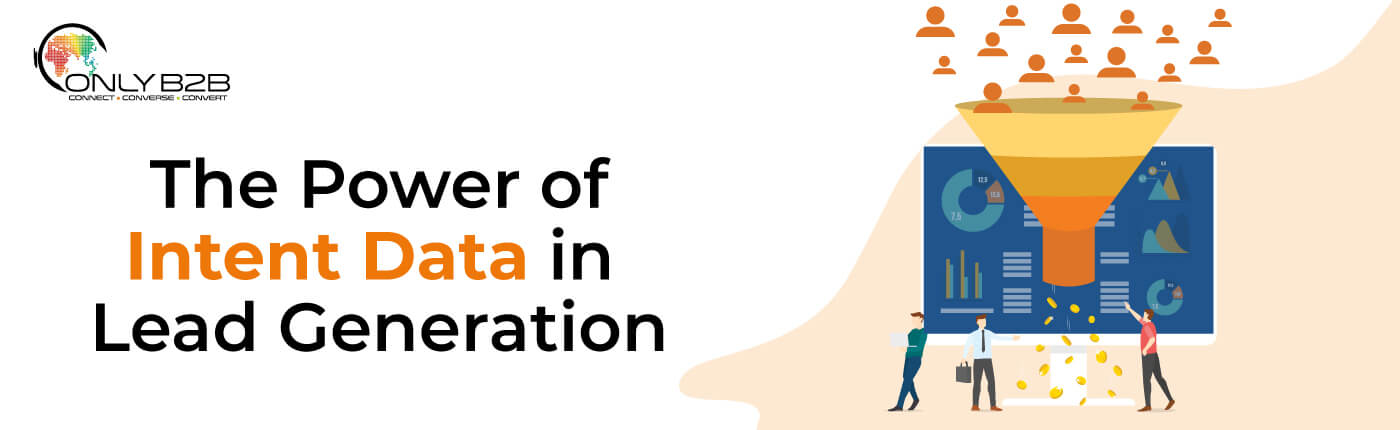
The Power of Intent Data in Lead Generation

In the ever-evolving landscape of B2B lead generation, one element has emerged as a game-changer: Intent Data. It’s like having a secret weapon that empowers businesses to connect with high-quality leads in a profoundly personalized way. This blog unveils the power of intent data, illustrating how it’s reshaping B2B lead generation and taking it to unprecedented heights.   The Power of Intent Data in Lead Generation Understanding Intent Data for Lead Generation  At the very core of this transformative shift lies intent data, a digital footprint meticulously crafted by potential leads as they navigate the vast expanse of the online world. Intent data is an intricate record of their online actions, encompassing a diverse array of activities, from the keywords they search for to the content they voraciously consume. Think of it as a complex and ever-evolving digital trail of breadcrumbs, meticulously crafted by your potential prospects, leading you with unwavering precision to the doorsteps of your ideal customers.  The profound significance of intent data is vividly underscored by a trove of staggering statistics:  Must Read: Virtual Prospecting with Intent Data: Fueling B2B Engagement Leveraging Intent Data for Generating High-Quality Leads  Picture intent data as your personal treasure map, leading you on a journey to a chest brimming with high-quality leads. Let’s embark on this adventure and explore how it unfolds:  Spotting the Eager Prospects: Intent data is akin to your treasure map’s compass, helping you navigate the vast sea of potential leads. It excels at identifying those prospects who are actively immersed in the process of researching products or services closely aligned with what your business offers, thanks to the precision of B2B buyer intent data tools. These individuals are not mere potential leads; they are the proverbial low-hanging fruit, primed and ready for meaningful engagement.  Must Read: Benefits of B2B Intent Data Crafting Tailored Messages: Armed with the wealth of insights gathered from intent data, your marketing team possesses a rare and invaluable skill—the ability to craft messages that resonate deeply with the specific needs, desires, and preferences of potential customers. No longer must you rely on generic communication; instead, you can tailor your approach with surgical precision, ensuring that your message strikes a chord and fosters genuine connection.  Skyrocketing Conversion Rates: Engaging with prospects displaying intent signals is like having the key to unlock the doors of lead-to-opportunity conversion. Companies that harness the power of intent data report an astonishing 45% increase in lead-to-opportunity conversion rates. This isn’t just a marginal improvement; it’s a resounding testament to the transformative potential of intent data.  In essence, intent data serves as a beacon that guides you toward the most promising leads. It’s not about casting a wide net and hoping to catch a few fish; it’s about targeting your efforts with pinpoint accuracy, directing them toward those leads most likely to convert into valued customers. This shift from quantity to quality is nothing short of a revolution in the world of B2B lead generation.  By leveraging intent data, you not only streamline your lead generation process but also significantly enhance its effectiveness. This treasure map of insights allows you to navigate the treacherous waters of lead generation with confidence and precision, ensuring that your efforts are not in vain but directed toward prospects who are not just interested but are actively seeking solutions like yours.  Must Read: Quality Vs Quantity Lead Generation: Who Wins The Race? Integrating Intent Data into B2B Lead Generation Strategies  Integrating intent data seamlessly into B2B lead generation strategies requires a strategic approach:  Incorporating intent data seamlessly into your B2B lead generation strategies is not a task to be taken lightly; it requires a strategic and methodical approach that harmoniously blends the art of human communication with the precision of data-driven insights. Let’s embark on this journey and uncover the key components of this integration:  Tailored Content Creation: Intent data serves as your guiding star in the content creation process. It ensures that your content is not merely a shot in the dark but a precisely aimed arrow, directly targeting the unique interests, questions, and curiosities of potential leads. No longer must you rely on guesswork; you now have a meticulously plotted roadmap.  Intent data tells you what your potential customers are searching for, what topics pique their interest, and what challenges they’re currently facing. Armed with this knowledge, your content creation team can craft materials that not only capture attention but also provide genuine value. It’s not about flooding the digital space with generic content; it’s about delivering the right message to the right audience at the right time.  Must Read: First-Party, Second-Party, Third-Party Intent Data: Diving into Notable Differences Synchronized Sales and Marketing: In the intricate coordination of B2B lead generation, alignment between sales and marketing isn’t a luxury; it’s a necessity. Intent data emerges as the unifying force, the glue that binds these two crucial teams together.  Sales and marketing teams can no longer afford to operate in silos. Collaboration, guided by the insights gleaned from intent data, becomes the cornerstone of your success. Marketing generates leads with precision, nurturing them with targeted content that speaks directly to their needs and interests. At the same time, sales steps in with a deep understanding of these leads, armed with insights that enable them to engage in meaningful, personalized conversations.  The result? A unified effort that not only expedites lead nurturing but also significantly enhances lead conversion rates. No longer do leads feel like they are transitioning between two distinct worlds; they experience a seamless journey, guided by professionals who understand their unique requirements.  Timely Engagement: In the intricate process of B2B lead generation, timing is everything. Intent data allows you to pinpoint the precise moment when your prospects’ intent signals are at their zenith. Engaging at this critical juncture drastically enhances the likelihood of meaningful interactions and conversions.  Must Read: Intent Data: A Game-Changer for B2B Event Marketing Conclusion  To sum it up, intent data is like a secret weapon in today’s B2B

Fast-track your revenue generation with Pay-for-Performance marketing campaigns.