How To Create A Data-Driven Content Strategy

Data is the backbone of every effective content strategy. There’s a reason why the concept “data-driven content marketing” has become so popular recently. You can’t count on speculations and intuitive feeling in today’s dynamic environment – that’s a certain way to burn up your money and eventually end up nowhere. Data should be the gasoline that powers your marketing machine, whether you’re a little firm or a giant organization. You can design a smart content program that will help your organization produce more B2B leads and conversions by utilizing statistics to influence every preference. This article will walk you through steps for constructing a data-driven content strategy. You’ll also discover what data-driven means, why it’s important, and how to effectively adopt it at your own organization. What does it mean to have a data-driven content strategy? A data-driven content strategy is a method of creating and implementing content that strongly depends on advanced data analytics. Rather than instinct or predictions, all content strategies are based on facts obtained through analysis and statistics. A data-driven strategy aims to improve content delivery while also ensuring positive audience reaction and also help in content syndication. To do so, you must first comprehend: Your area of expertise Your competitor Your audience’s primary choices The platforms you publish your content on  You must also use data at various stage of the content creation process, including pre-production, publication, and post-production. Data will assist you in developing a thoughtfully created content strategy, writing optimized articles that attract to your target audience, and improving them significantly once they’ve been published. For research, analysis, and data collecting in data-driven content marketing, it’s ideal to use content analytics solutions. Data churning manually takes time and sometimes leads in erroneous findings. What are the benefits of a data-driven content strategy? According to Google, “Nearly two-thirds of prominent marketers feel that data-driven judgments are preferable than gut instinct ones,” and according to Forbes,  “64% of surveyed executives strongly believe’ that data-driven marketing is essential to succeed in a super competitive global marketplace,”  But how does data-driven marketing benefit so well, and how can it assist your business? There are several factors for this. You will save both time and money. Obtain the highest feasible rate of return on investment (ROI) Employ the power of search engine optimization (SEO) to your advantage Assists with your branding Make your content marketing more long-term and sustainable. Must Read: A Brief Guide to Generate Leads Using ABM Content Syndication What is the best way to build a data-driven content strategy? What data should you gather, how should you acquire it, and how should you utilize your study to enhance outcomes? Let’s go through nine data-driven, battle-tested techniques for taking your content marketing to the next level, starting with building a foundation for all your hard work. 1. Create a framework based on data. Here’s a step-by-step guide to incorporating statistics into your content marketing strategy. You may use this framework as-is, expand it, or integrate it into your existing approach. Analyze your audience and define your content’s aims and objectives. Examine your market and competition. Perform a keyword search Develop content based on what you’ve learned. Create a content delivery system. Analyze and improve data Let’s speak about a few tried-and-true ways for improving your content marketing now that you know how to include a data-driven approach into your efforts. 2. Get to know your target market and audience. Your content marketing is destined to fail from the beginning if you don’t know who you’re developing content for. Who are you attempting to contact? What are their desires and needs, what drives them, and what keeps them up at night? Where can you locate your target audience, both online and offline, so you can interact with them genuinely? Before you write a single line, you must know the solutions to these concerns. If you overlook this phase, it’s like shooting arrows without spotting the target: you could strike something, but it’s doubtful and unexpected. Here’s a rundown of information about your target audience that you should be aware of: Demographic characteristics Employment and revenue Buying habits Your target audience’s pain points Emotional triggers that entice people to buy your product Content Preferences Main platforms where your target audience looks for material What’s the best way to find all of this information? There are a few simple methods for getting started: Google Search Console is a useful tool. Conduct a customer poll.   Include data gathering forms on your website Look for internet communities where your target audience congregates. Inquire with your sales team. Examine your competitors. Knowing your target market will aid in the creation of buyer personas, which are fictitious versions of your ideal customer. They’re also required for personalizing your content marketing. 3. Organize your content according to customer buyer personas. We all know that one-size-fits-all clothing does not suit everyone properly. The same is true in terms of content. The buyer personas will assist you in answering this issue and preparing correct, tailored messaging. Even if they’re both in your customer base, a post for a middle-aged working mom should look a little different from one for a bright, fresh-out-of-college, ambitious professional woman. There’s one additional thing you must know prior to actually mapping your content :where your reader is most likely in the customer journey.   Are they still learning about your genre and scanning educational content, or are they on the verge of purchasing and reading your guides? You must adjust your content to one of the three client journey stages: Understanding Evaluation Resolution 4. Regularly optimize your content One of the most effective approaches to increase content marketing outcomes is to optimize content. Without post-publication optimization, no SEO campaign would be ready. First and foremost, rather than starting from scratch, it is preferable to work with what already works. Secondly, Google’s algorithms are continually evolving, so even if an item is ranked number 10 today, it may be ranked lower tomorrow as a result of a change. And if you’re meticulous about SEO, your material will constantly be current with your product and market trends. You don’t want to provide your readers outdated information, do you? Examine Google Search Console and Google Analytics on a regular basis to keep track of your content’s progress. Google Search Console will assist you in tracking your SEO, while Google Analytics will provide
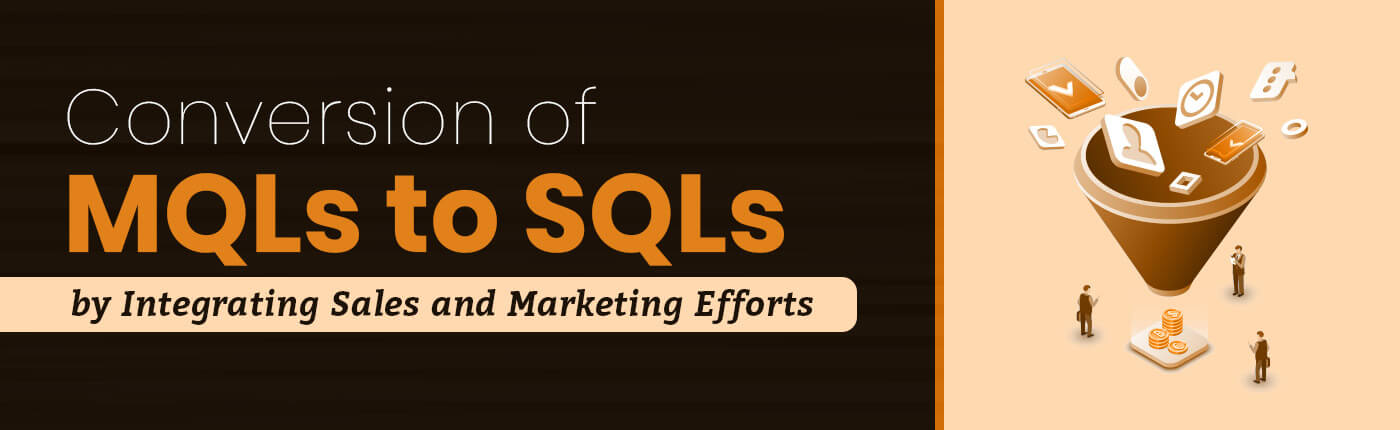
Conversion of MQLs to SQLs by Integrating Sales and Marketing Efforts

Over a long time, the sales and marketing operations in B2B organizations were thought to be discrete. However, this is rapidly adapting. Nevertheless, as companies throughout the world focus on stabilization following the Covid-19 pandemic interruption, harmonizing the two activities will become even more important. According to estimates, imbalance between these two roles costs organizations more than a trillion dollars each year. At some point throughout the sales cycle, marketers must transfer over marketing qualified leads (MQLs) to sales teams as sales qualified leads (SQLs). A large percentage of marketing efforts and resources are wasted when sales and marketing teams are not synchronized. Marketers and sales staff will see the need of collaborating in near future as organizations aim to avoid even more losses than they have already experienced. Both of these groups have a specific role to play in the sales pipeline. Marketers are responsible for acquiring prospects and nurturing them into MQLs (Marketing Qualified Leads) based on predetermined criteria. This ensures they are qualified leads with a higher potential to convert. Sales teams are then responsible for turning SQLs (Sales Qualified Leads) into clients. However, in order for this to happen, the two teams must collaborate on defining marketing qualified lead criteria and nurturing strategies — and there is evidence to back this up. According to statistics, connecting sales and marketing teams boosts sales win rates by 38%. Companies who have successfully integrated the two roles have experienced a 24% increase in revenue and a 67 percent increase in the efficiency of their sales staff when it comes to completing transactions. The Sales Funnel Leads move through different phases before becoming clients, as you can see from the sales funnel funnels. 1. Subscribers: Customers that are not involved with your business are referred to as subscribers. They’re in the early stages of the purchasing process and are just looking for information on a topic or area that interests them. They’re more likely to sign up for newsletters or blogs you have accessible if they visit your website and find content that attracts them. 2. Leads: Subscribers who are starting to heat up to your business are known as leads. They are well-aware of their requirements and join your email list with a clear goal in mind, such as gaining access to fenced information such as white papers, ebooks, and high-level publications. However, not all leads are created equal. By nurturing these leads with targeted content and messaging that addresses their specific pain points, you can increase your B2B lead to MQL conversion rate, ultimately turning those interested subscribers into qualified leads ready for further sales engagement. 3. MQLs (Marketing-Qualified Leads): These leads are at the assessment stage of the purchasing journey. They’re conscious of their issue, they’re aware of the resolution they require, and they’re looking for a product that provides that answer. MQLs, generated through targeted marketing efforts, suit your buyer persona well and are prospective clients for your company. 4. Sales-Qualified Leads (SQLs): These are leads that are ready to be sold. They are those who have the executive power to make purchasing choices in the B2B setting. This implies that if your organization produces quality material that puts it ahead of the competitors, they’ll likely persist through the sales conversation process. 5. Opportunities: When real sales conversations are started, SQLs turn into opportunities. These are during the purchasing stage of the buyer’s journey. Opportunities communicate with the sales team on a frequent basis until the contract is finalized. Must Read: What Is MQL & SQL and How Do They Differ? Integrating Sales and Marketing Efforts to Boost Conversion of MQLs into SQLs When sales and marketing teams work together, their capabilities are optimized. As businesses recover from the Covid-19 epidemic, marketing and sales channels will work together to cut expenses and boost growth. To effectively nurture MQLs to SQLs, marketers will need to collaborate closely with sales teams at every level of the selling process, given the evolving behavior of B2B buyers. For any B2B company, the translation of MQLs into SQLs with sales and marketing alignment will be different in following ways: Begin with a series of intensive marketing strategies: In the aftermath of a pandemic, B2B sales and marketing teams will unite to conduct extensive outreach efforts to attract prospects. Companies must first recruit MQLs before they can turn them to SQLs. Because of the pandemic’s impact on businesses, B2B marketers and sales people will need to build a big inventory of prospects to nurture leads and qualify them for sales outreach. The majority of businesses will concentrate on doubling, if not quadrupling, the number of leads they create at the top of the funnel. However, it’s important to distinguish between unqualified leads, MQLs (Marketing Qualified Leads), and highly qualified leads (HQLs). Focusing on nurturing MQLs with targeted content will be crucial to improve conversion rates and generate a pipeline of sales-ready leads. Despite the fact that this method isn’t recent, B2B sales and marketing teams will have to devote more effort throughout the recovery phase to raising awareness within their target clientele. These initiatives will be aimed at raising brand recognition as well as educating people about the challenges that their products solve. Enhanced Social Selling Engagement In the previous several years, social selling has been a catchphrase, going forward it will be at the center of B2B sales operations. Social selling will be used by B2B marketers and sales professionals to nurture MQLs into SQLs by giving MQLs customized content at frequent contact points with the goal of moving them down the pipeline.   B2B marketers and sales representatives will boost their involvement with MQLs on B2B social media platforms such as LinkedIn, Twitter, YouTube, Facebook, etc. B2b companies will focus the digital customer experience in order to succeed in social selling. Virtual selling will take center stage, thanks to the pandemic’s increased acceptance of remote labor. Rethinking the digital journey that prospects travel to become clients will be a top goal for B2B marketers and sales

The Advantages of Employing Intent Data In B2B Marketing

Businesses are constantly seeking methods to get a competitive advantage in sales and marketing. If there was data available that could provide you with not only qualified prospects, but also in-market account information that was continuously researching or in the purchasing process of your product, you could not only make your marketing efforts more efficient, lower your operational costs, and improve your convebrsion. This is where B2B intent data might come in handy to reach your target audience. What Is the Source of Intent Data? Intent data originates from a variety of digital sources, including tracking important intent search keywords via website cookies. A subscriber’s intent is then assessed in terms of subject and context to help construct a more clear image, and when this score improves, a prospective lead is discovered. Intent data can be classified into two categories: First-Party Intent Data First-party intent data is all about developing optimal use of the information available from your own website and CRM applications. This allows a firm to analyze purchase signals from website visitors. Data can be mined by tracking the pages on your website that a prospect has settled on, the successive links they have clicked on, and the time spent on your website. Because there is no name associated with this b2b intent data collection, it is referred to as ‘anonymous.’ Furthermore, behavioral data can also be monitored using contact forms on your website. Third-Party Intent Data Third-party data is where everything can become very fascinating, because it allows you to collect predictive behavioral data from other websites. That means a prospect who isn’t aware of your company doesn’t have to visit your website for you to discover that they’re interested in acquiring a product or solution similar to yours. When you combine these two techniques, as well as the capability to evaluate website visits, what content is being viewed, downloads, white-papers, and other metrics, you can actively monitor when a user’s engagement in a particular matter surges. Accordingly, you can instruct your marketing and sales staff about the same once the data is compiled and ready to use. Read More: What Is Intent Data and How It Can Help Your Company? Effective ways that intent data can improve your marketing efforts The demand for B2B sales and marketing teams to achieve desired outcomes is going up. With the majority of pre-purchase research taking place online, it is becoming extremely challenging to grab people’s attention and have your views addressed. Benefits of integrating B2B intent data into your marketing plan may improve your marketing campaign in a variety of ways: 1. Break Through The Noise At any certain moment, only a small fraction of any prospective market will be engaged in the buying process, particularly for costly B2B products. Focusing your efforts on businesses that have already visited your website or begun inquiries into your area of specialty provides you with a significant advantage over competing brands who are adopting a more broad strategy. This enhances conversion along with the quality and efficiency of your marketing. Must Read: Best B2B Intent Data Providers 2. Target A Probable Customer Sooner In The Purchasing Process Knowing when a potential customer is investigating your product allows you to reach out and get in front of them early in the purchase process. This might offer you an advantage over your competing firms and help bridge the gap between them selecting your product or theirs. This also allows sales teams to initiate the process of lead nurturing throughout the customer’s pipeline journey and purchase stage. Individually tailored communications can be even more customized and accurate to the prospect if their intent data is collected from the beginning. 3. Identify Possible Leads, Even If They Haven’t Encountered You Yet. Someone somewhere is now investigating a product or solution similar to yours, but they are not doing so on your website. We can leverage B2B intent data to track these research surges and inform your sales and marketing teams using contemporary lead scoring methodologies. They can embark their magic in the direction of B2B lead generation and, ultimately, schedule a sales meeting. 4. Prioritization of the leads Intent data is ideal for enhancing your lead scoring model, allowing you to emphasize incoming qualified leads (Marketing qualified or Sales qualified) based on how interested a prospect is on your website. Has anyone spent a significant amount of time on your popular sites? Have they reverted several times but have been unable to contact your sales force? You may begin to categorize user engagement and focus on your marketing strategies accordingly. 5. Tailored outreach Customizing your campaign allows you to target your audience effectively. By leveraging intent data for lead generation, you can gain vaprosluable insights into the specific interests and buying journeys of your ideal customers. This allows you to craft highly relevant messaging that resonates with prospects who are currently investigating topics related to your offerings. As a result, a prospect is considerably more likely to read that email or call if it is about a topic they are actively researching, and your sales staff will be prepared with pertinent information to assist them in converting. Only by knowing your potential customers’ purchasing behaviors you can begin to add accuracy and quality to your marketing efforts. You should spend less time pursuing dead leads and more time acquiring genuinely engaged prospective buyers. When implemented as part of your marketing plan and combined with your own professional experience, B2B intent data has the potential to position you in front of the appropriate leads at the perfect time with accurate, focused, and unique content. Explore our range of B2B buyer intent data tools to enhance your strategic insights. Learn more about our B2B intent data analytic techniques by going through the blogs and content we have on our website. Must Read: Predictive Modeling done better with the Purchase Intent Data

Why Email Marketing Is Great For Inbound Strategy?

Many people think email is an outdated way to market, but the truth is more than 80% of businesses use email marketing and observed extraordinary results in their revenue. Email Marketing has the great potential to push your ROI exponentially. Email marketing is crucial for many marketing strategies like inbound, content, and account based marketing. Your prospects and customers receive personalized messages and it is the best way to connect with them and great for customer retention. Email is the best way to ensure your customers don’t miss any updates from you. Let’s focus more on – Why email marketing is a go-to thing for every inbound marketing strategy. 1. Personalized Content The best way to connect with your audience is personalization. Send personalized and customized emails to cater the needs of your audience. Let me share a tip. Try giving the first name of the user in the subject line and compare the click rates you will get a higher click-through rate than those who don’t. However, this doesn’t mean that every time you should insert a name. Create subject lines that will generate some attention. Segment your audience according to their positions in the sales funnel and then begin with creating personalized and customized content for each segment. Must Read: 4 Powerful And Tested B2B Email Marketing Practices To Boost Your ROI 2. Driving Traffic To Your Website Along with your content don’t forget to add CTAs within your mail that will direct readers to your website. You can begin with an email marketing campaign and can send your website to your audience. CTA will let your audience, sign up for or download other content from your website. This creates users engagement. Must Visit: Proven Logical Tips To Commence With Your Email Marketing Campaign 3. Sales Can Be Improved Email marketing, the trusted tool of many marketing and sales departments. It has the enormous potential to increase your company’s sales. Try featuring your service or product in the email that will intrigue customers into buying and if any user shows interest in your service or product don’t forget to follow him with more information about your product/service till he passes to the last stage of your sales funnel. All you need to do is encourage them with offers, discounts, and good content to take action and lead them to conversion. 4. Right Audience At Right Time Email marketing makes it possible to reach the right audience at right time. Automation tools are available in the market, they provide a full-fledged report of your audience’s demographics that includes age, gender, location, and more. This makes it easier to create your lists of audiences whom you want to target first. So, good luck with this! 5. Inexpensive Way To Generate Leads Moreover, email marketing is the cheapest way to generate quality leads. Running email campaigns is cost-effective and easy too. Isn’t it great, that you get a chance to present your product/service to your prospects without paying for it? It is just a matter of a day or two to create your email campaign and content for it. The most convenient way that does not hamper your pocket. 6. Gathering Feedback And Improving On Loopholes Feedbacks are very important for self-improvement. Every brand wants to understand its customer’s likes and dislikes. Email marketing helps you monitor your customer satisfaction with your brand. This will make it better to improve your services/products and customer experience. Conclusion : Email marketing is definitely not an obsolete marketing tactic for your inbound marketing strategy. It has a lot of potentials to improve the company’s revenue. Researches indicate that 70% to 80% of marketers rely on email marketing for customer retention. After knowing these benefits of email marketing, we are certain that you will also incorporate Email Marketing to improve your inbound marketing strategy. Do you need more assistance, to begin with your first email marketing campaign? You can check for our Email Marketing services as we have helped many businesses establish their presence globally and guided them through the right track for growth. Try it now! Must Visit: Email Marketing Statistics Every Business Must Consider

Email Marketing Statistics Every Business Must Consider

Are you seeking for valuable email marketing statistics to get ahead in 2023? You are at the right place! Businesses use sundry marketing techniques to reach a wider audience and make more sales. One of such techniques is email marketing. So, here we will be sharing the valuable Email Marketing stats for every business to consider. What Is Email Marketing and Why Businesses Find This Marketing Technique Reliable? Email Marketing is the process of sending promotional messages to your prospects or targeted customers. “It is the best process to improve sales, revamp brand loyalty and distribute important or educational content or information. It is the direct form of marketing that is much efficient for the wallet and environment since it is totally paperless.” Email marketing is a trusted marketing technique by many marketers because it is a conversion-rich and cost-effective marketing technique that has been in existence since long.  To be precise, the first email blast was sent in 1978 to 400 recipients for the promotion of the company and resulted in $13 Million sales. The sender man was Gary Thuerk, from Digital Equipment Corp. Isn’t it fantastic to see how Email Marketing is transforming many businesses and getting stronger every time? Now, let’s have a look at some 2023 stats which will be undoubtedly helpful to craft your email marketing strategy and you ought to know them! Must Read: Do’s and Don’ts of email marketing A. 3.9 billion Email Users And Is Expected To Hit 4.48 Billion By 2024 Woah! Can you imagine it is nearly half of the world’s population? This is what a marketer should be able to forecast, ‘OPPORTUNITIES’ and no business should make a mistake to miss it. You can just send the promotional content to your targeted audience without any hustle and bustle. You can plan your emails week in advance to begin with any campaign that will offer good results. B. ROI of Up To 4,400 Percent Here is another reason to spend on email marketing and is one of the major reasons why email marketing is loved by many people. Do you know according to researches the current ROI for email marketing per $1 spent is $42? Isn’t it great! Must Read: Why Cold Email Marketing Works Great For Small Businesses C. Average Email Open Rate Is 21.33% For all industries this is an average open rate, but specifically talking about Marketing and B2B Lead Generation industry it is only 17.38%. The government related mails have been observed with the highest open rate of 28.77%. D. 80% Of the Business Use Email Marketing to Acquire and Retain Clients Because it is cost effective and perfect to pitch new customers this marketing technique is loved by many businesses including small and medium. One more surprising fact for you, if your focus is to generate ROI then, email marketing wins over social media marketing. E. Emails That Contain Videos Offer Click Rates Up to 300% The YouTube’s success is the greatest example of importance of videos. People love to watch videos than reading. Hence consider adding videos into your email and get ready to see the positive results, that can help with the click rates of near to 300%. However, ensure you add a relevant, interesting, and engaging video.  F. 49% Customers Like to Receive Weekly Emails Generally, Tuesday is great for Email Marketing, this is founded by CoSchedule. Tuesdays get more open rates compared to any other day of the week, followed by Thursday and Wednesday. G. 93% B2B Marketers Use Email Marketing to Distribute Content Reports reveal that B2B Businesses heavily rely on emails for information. Many do not always prefer social media (LinkedIn, Facebook, Twitter, Instagram) for the information. Email Marketing is the best way to generate revenues for around 59% of the marketers. Final Say These stats show that the email marketing is here to stay for longer years. Hence understand the cruciality of it and try to improve the way you reach your audience. Begin with your email marketing plans, strategies now, and enjoy your business bolster. Must Read: Why Is Email Marketing Vital For The B2B Industry?

This Is Why Cold Email Marketing Works Great For Small Businesses

Cold email marketing has been in the marketing industry since many years. We can say since the dawn of internet.  The notion or process of finding the huge businesses or prospects has been the strategy since long because, it works! Cold emailing is the best and proven way to grow your network and increase sales.  The idea of sending an email to the business can be daunting, especially for small companies.  It can be nerve racking, whether the email sent to business will consider your message or delete it into the bin. The prospect might not open your mail, even if you have given a great solution into it! The only way to fit into your cold email marketing is by practicing it more and more. But does cold email work? And is it worth it? In brief : Yes! Around 90% of marketers feel email is the best channel for quality lead generation and cold email is perfect, when we consider it for any business, especially the small to medium scale.  Because it is affordable, scalable, and effective these advantages are perfect for small businesses. Must Read: The Art Of Cold Calling Is Alive And Well! Cold Calling, Connecting, Converting, And Crushing On The Phone Here are some tips for cold email marketing that will grow your business exponentially. 1. Plan It Perfectly What is your actual goal? First determine the answer to this question. When you get an answer! Craft your message accordingly. In this whole process, you must consider data-driven studies to analyze the best time to send Cold Emails. Comparing cold calls vs cold emails can also help you decide the most effective approach for your outreach strategy. Suggestion – We would suggest to send your emails on Tuesdays Or Thursday mornings. This is the data driven research made by Mail Chimp and many email marketing companies, as they found high open rates on these days. So, undoubtedly, Tuesdays and Thursdays are the winners of Open rates. 2. Subject Line Needs To Be Short And Specific Be specific about your subject line. Keep it short and simple, if you cannot fulfil the promise don’t make it. Always be specific about your points. The key is to be specific and clear about why you are texting an email. Be clear about the purpose of your email. If you want to grab attention of someone important,  don’t go for entertaining subject line, instead go for a something that will concentrate more on utility. Suggestion – Try these while writing an email subject line – Must Read: Why Is Email Marketing Vital For The B2B Industry? 3. Problem or Pain + Future + Solution Layout When you get the pain or problem of the prospect you will be able to deliver better solution. Pain+Future Pain + Solution is the simplest and best formula to get the business.          Suggestion – How your solution can benefit the future business, you need to focus on this point very often or say always. Personalize the whole content and show empathy in the email. Resonating people with their pain is the best way to capture and close the deals. 4. Don’t Forget To Close Email With CTA The extremely important point is about Call-To-Action (CTA), this ensures that you are building connections with your target audience. An effective CTA is exciting for both email sender and receiver too! Suggestion – Tell people about your next step and try including the questions or links for them to click and know more about your solutions. Must Read: Best Practices and Examples for Call to Action in Cold Emails Final Piece Of Advice: Never be afraid to get the follow-up with different approaches, if you think your email is unanswered or unopened. Don’t leave your email with link into your email message. Try to educate prospect in the same email body. Even though it is called a cold emailing, by using right platform and strategy you can create a successful future for your small business. Must Read: Pro Tips To Build Your B2B Contact List On LinkedIn

Why Is Email Marketing Vital For The B2B Industry?

In one of the surveys conducted by CMI, 93% of marketers still practice email marketing for efficacious branding and promotions. Moreover, 87% of the marketers apply email marketing for B2B lead generation. Email Marketing is the most effective and undisputed king of B2B marketing. Now the big question is, how can businesses generate profit from email marketing and alleviate their business productivity? The answer is simple – by effective and impactful email marketing practices. Before this, let’s learn about email marketing. 1. What Is Email Marketing?  Email Marketing is a powerful content marketing tool, that is used by many businesses to promote their services and products. It is not just about sending the emails to subscribers, it is more than that.  Email marketing is a process or technique of sending promotional messages to the targeted customers, but before don’t forget to create alluring content, testing, and maintaining it.  It is the best process to improve sales, revamp brand loyalty and distribute important or educational content or information.  It is the direct form of marketing that is much efficient for the wallet and environment since it is totally paperless.  Must Read: The Do’s and Don’ts of Email Marketing 2. What Are The Advantages Of B2B Email Marketing For Your B2B Business?  Other than collecting the leads or data, email marketing has many benefits that help the business grow. 2.1 Cost-Efficient  Compared to other marketing channels, email marketing doesn’t require any paperwork, unlike other channels it doesn’t have any printing, advertising costs. We can target a wider audience, whether they are business or customers.  2.2 Approaching New Clients  Email marketing is a precious tool for reaching out to new clients located anywhere in the world and attracting them with beneficial offers.  2.3. Measurable Results Many software and tools of email marketing allow a marketer to track their email performance and this helps them to effectively manage their marketing strategy. This includes analyzing the email marketing stats depending on the demographics and firmographics. Must Read: Email Marketing And Content Marketing – The Perfect Brew 2.4. Easy Design And Launch Process A constructive email marketing plan doesn’t require much hard work and effort. Strategic email campaigns are all about personalization and relevant content, produced on interior platforms, with a perfect email body, and the market research and analysis details. Takeaways: The email marketing process is the easiest one if done strategically. It can take your marketing to next level. Email is certainly the best channel to reach your targeted audience and quality leads. There are certain benefits of email marketing for your business –  It helps you to fragment the customers into different lists. In this, you can customize your messages too. The very important point of email marketing is to build credibility about your company and creates robust brand recognition. The best way to boost sales, analyze the marketing performance by easily available metrics, it also optimizes the time and budget. So, entrepreneurs and marketers still in the dilemma of whether to consider email marketing for the growth of your business? Shall we help you with details, consider providing us your valuable time for consultation.  Happy Marketing!  Must Read: 14 Reasons Nobody Is Opening Your Email

Pro Tips To Build Your B2B Contact List On LinkedIn

Quality Leads and Revenue!  Isn’t that a goal for every business?  And with the B2B sales, the most effective way to generate quality leads is with a targeted B2B prospect list. The question here is, How to Develop B2B list? If you don’t have a B2B prospect list, you are just throwing stones into the dark night. You will be sending emails to the prospects who are not at all interested in your services or products and are least likely to engage.  And this will lead to missing out on the people who are genuinely interested and have a high possibility of being converted into your buyer.  So, firstly you need to understand your buyer and then you can effectively target and create your B2B Prospects list.  Read More – How To Build B2B List? Before proceeding further let me answer, why you should target LinkedIn For B2B List Building.  LinkedIn has over 620 Million professional users The biggest networking platform for lead generation Maximum Target Audience  It has the maximum power to build stronger relationships LinkedIn is the best tool to reach the right decision makers, increase website traffic, brand awareness, and most importantly generating leads. The perfectly optimized LinkedIn profile can increase the buying power of the target web audience by 2X.  Are You Interested In Building Your LinkedIn Marketing Profile? Now, let’s begin with how effectively you can use LinkedIn to build your B2B prospect List  1. Start With LinkedIn Sales Navigator  With over 600 million professional users, LinkedIn has become the most valuable channel for connecting to professionals and especially in B2B domain. You can use this tool to narrow down your search filters that define your target market and ICP – Ideal Customer Persona.  And most prominently it helps to build a substantial list of the targeted prospects.  Do You Want To Make Most Out Of This Platform? A. Conserve Leads And Prospect User Account  Save the targeted prospects you want to build a relationship into your pipeline. The sales navigator then customizes your feed to show these leads and makes it easier to keep updates about their profile that might affect the sales cycle.  B. Set Smart Triggers  This will help you keep an update about your accounts. For instance, if your prospect joins another company, you will need to update your contact list. This way you will never be misinformed about your prospect.  C. Use Filter To Narrow Your Search  With millions of users and accounts on LinkedIn executing a search based on general demographics is quite difficult. Hence, make use of sales Navigator to narrow your search and find more targeted qualified leads (Sales qualified or Marketing qualified).  Pro Tip – Once you make a custom search for a segment of your target market, remember to save it.  D. Sales Spotlight – A Time Saver  At the top bar of your search result page, you will get a sales spotlight. It summarizes the account counts you have found by the filters you added. So, Clicking within each division highlights it, indicating that the results you spot reflect that specific Sales Spotlight. The Sales Spotlights feature leverages LinkedIn data to categorize your Sales Navigator search results. Sales Spotlight appears after you run the search, it identifies and uncovers: Job Change Shared Experiences LinkedIn Activity Teamlink Leads That Follow Your Company Brand Engagement Pro Tip – You can add notes and tag accounts while browsing through various prospect accounts.  2. Use Social Media Platform  Yes! Use social media platforms to keep an eye on your prospects and competitors. Check the groups and pages they like and follow. Use this data to contact users who have shown interest in your service and product. Alternatively, you can run ads on the platforms to reach the target audience.  Apply similar efforts on the other platforms too! 3. Leverage the Tools And Technology As we fuel marketing with automation, similarly you can leverage them to build your B2B list. Use various software to search leads based on different parameters like – Industries, Software used, and budget spends on Ads, and more.  These tools populate your pipeline with information like – email addresses, phone numbers, social profiles, and more. This helps you to quickly identify touchpoints, to begin with a conversation.  These tools can seamlessly integrate with your existing CRM, so, don’t worry about manual data entry. This will keep your contact list up-to-date.  Conclusion: In the whole B2B list building process you can also seek help from the lead researchers. Most importantly, you need to be really quick at every stage of prospecting and building the list, because once you have your target defined don’t waste time! You might end up losing your potential customer. All set to create your lead list and proceed to the next step? 

Top 5 Content Marketing Trends To Learn In 2026

Content marketing has always been a tougher part to carry, because it has been transforming since ages, audience easily get bored if they do not find your way of marketing interesting.   What we want to frame is, it’s not something to set and forget, especially when it comes to marketing, where every action is going digital. Now, we are having the data which is extremely precious to fine tune our marketing approach, only the thing needed is better understanding and analysis of data to get the buyer’s preferences. So people, for those who are searching for, what it is, what’s working and what will work, we are presenting the emerging 2026 trends of content marketing. Lets learn and explore the popular content marketing trends that would help you create a perfect marketing strategy. 1. Personalized content 2. Concise the content 3. Voice Search 4. Live video 5. Niche Branding is the New way of Content Marketing So, lets start with the countdowns – #1 Personalized Content According to the studies by Demand Gen, 20% hike in sales has been observed when personalization was implemented to the brands. If you want to get the perfect personalization message focus on the data of customers. The more the data the better and powerful is the personalization message. Read this informative article about Account Based Marketing Framework. #2 Concise the Content We are into the era where “Time is Actually the Money’. Internet is the world of millennials and they don’t want to spend much time reading long articles, to the point, midsized and          concise. Short content always works great for millennials, the group of most of the buyers. According to the recent reports of Demand Gen, the more the visual content  the better is the audience reach and engagement. #3 Voice Search “Hey Google!! Tell me….” Yes, the future trend is about voice search. Many people nowadays are using screenless search. Millions are already doing it; search assistant is quiet the thing in 2026. Voice search contributes 20% of all searching and is expected to grow in the coming years. This will certainly focus the pointers towards ‘content’. The style of writing will be more casual because the way we talk is not aligned with the way we write. A content marketer will have to change the writing style, include more questions and answers, complete sentences and long tail keywords into headers and titles. Use advantage of ‘near me’ searches and optimize to casual and natural language/writing. Read this article about Account Based Marketing Tactics. #4 Live Videos Video marketing is already in trend, many brands are already using videos to market their brands. But live video marketing is something which is very trendy for some brands. Live video is the perfect way to market your product when launched first time. Live videos make a lot of sense. On the social media, you must have seen many companies flaunting their office floor, celebrations and more, this is just the way of branding. Going live and connecting with audience is a vogue way of marketing. Try it and write us your experience. Read this article about B2B Content Marketing on Linkedin #5 Niche Branding Is The New Way Of Content Marketing Image Source: Shopify There is a lot of content on many sites and this leads to content saturation.  So, the bottom line is, it gets harder to raise the organic ranking on certain keywords. To point this and attract attention of the audience and rank higher, brands are going very niche with their content, which means, combining the services you are good at and getting your content draw more attention. For instance, OnlyB2B is good at lead nurturing, so our blogs do not revolve only around ‘lead nurturing’ but also on tele-calling, Account based Marketing and many more you can check them out. And hence, we are narrowing our content on various sub services. Try it! Read More – 6 Learnings From Popular Content Marketing Examples Final Thoughts It is quiet evident that the audience is going intuitive and marketers need to be very smart to capture the attention and engagements. Content marketing is not something to set and forget, it is not only about chasing the ranks and leads but has become much more. What is your trend of content marketing? Write us we would love to read them. Hope you got valuable insights and enjoyed reading our blog.

6 Learnings From Popular Content Marketing Examples

When we say ‘content marketing’ one would think about some pleasing content ‘please check our new brand xyz’ but this type of content sometimes is a total flop! You should know how to play clever because your audience has got more precocious than you. The time has changed, and many brands are going way crazy and clever while doing the content marketing. So pals, gear up because we will be revealing the best content marketing examples which might be useful for you and your brand. On Number 1, I Personally Like Zomato’s Content Marketing Strategies The most entertaining brand I would say. When Zomato launched its food delivery it won many hearts with the quirky advertisements which were aimed to draw many eyeballs. The bright red board with the wittiest lines is totally amazing. not only this, Zomato never leaves social media track, the marketing team always comes up with the humor tool to answer any questions or comments.  So, the things you should learn from Zomato’s content marketing strategies are- Always keep your humor tool bag with you Simple and powerful messaging works Stick to the bold colors for your brand The offers you give should always fill the gap in the market. Number 2 – Coke   There was a campaign ‘Share a coke’ this was an ultimate example of content and personalization. From the US they took popular names and printed them on the bottles people, went crazy with this campaign which focused mainly on personalization. We know the solid core of the content marketing is the ‘personalization’ According to the study, 74% of the marketers say personalization improves customer engagement drastically. Coke with its campaign, touched an emotion by using the word ‘Share’ and it literally revolutionized the marketing strategy. Your Learnings are – Think of your audience/customers with emotion. Think how YOU want them to feel. Personalization with a tempering of emotion is the perfect content marketing strategy. Number 3 – The One Who Coined The Term ‘Inbound Marketing’ – Yes! It is HubSpot  The revered marketing platform! Isn’t it? Yes, when it comes to innovative marketing strategies all we could think about is HubSpot. HubSpot does not have any magic wand, it is just the way of doing the same things differently. Because if you see the path followed by the HubSpot – It is Attract Convert Close Delight We too know this, but are we doing it in a unique way? Think – Out of the box HubSpot produces the high-quality content which is extremely useful for the marketers and companies too. They are like ‘omnipotent’ creators of the marketing field they are the king of E-books, marketing tips and kits, webinars, certificates, courses, user guides, and everything you can imagine. The mighty wand is their ‘Content’ the top-notch content. What To Focus –  The content is the king, create high-quality content – this is an obvious statement but, quality always trumps quantity. Number 4 – GoPro  The best way to connect with people is ‘Visual Content’. All content marketers know this, but very few try to implement it. GoPro is a company of cameras and it would be really unfair if it does not market its content visually with videos and pictures. The content marketing strategy of GoPro is all about jaw-dropping quality. The quality of pictures and videos. GoPro is having 17.6 million followers and more than 3.5 million subscribers this is proof of how powerful the visual content can be! They focus on what their customer is searching for which is based on the great market research. GoPro guys know, content marketing can be very powerful with visual content, and hence if you check their Instagram page you will be very thrilled to see the videos and pictures collection. Takeaway Point –  Get friendly with the pictures and videos, this will connect you to the masses. The content marketing is picking pace with the visual content, hence educate yourself to do it extremely well. Number 5 – TED talks – It’s All About Storytelling Why do you think TED talks is so popular? Yes! Of Corse it is storytelling. We concentrate ourselves whenever we are reading, listening, or watching stories. Stories keep us engaged and this is picked by smart marketers for branding and increasing the popularity. We can say this as a default mode into a human being. Our childhood is also beautiful because we loved to listen to stories. You learn – To market your product you can also use the art of storytelling, which is considered the ‘crux’ of content marketing. Summary – The Key Elements To Remember  After reading all the content marketing strategies used by brands you might be having some amazing and creative ideas for your product, right! So, before we say bye to you, we would like to deliver the key elements you should learn from these content marketing examples. Humor, simple yet powerful messages always work. Personalization is loved by everyone – It is psychologically proven. Quality should be the priority Be free and contagiously optimistic in your posts on Social media Storytelling is an art – you should learn it as the market demands it. Visual content marketing is the need for an hour- try to learn and implement it. Follow these key elements and we are sure you will be just great at it! Read More – 7 Types Of Invaluable B2B Content Used For Content Marketing Pals Adieu for now! if you like our post do not forget to revert us in the mail.

Fast-track your revenue generation with Pay-for-Performance marketing campaigns.