B2B Inbound Lead Qualification: Attract the Perfect Clients in 2026
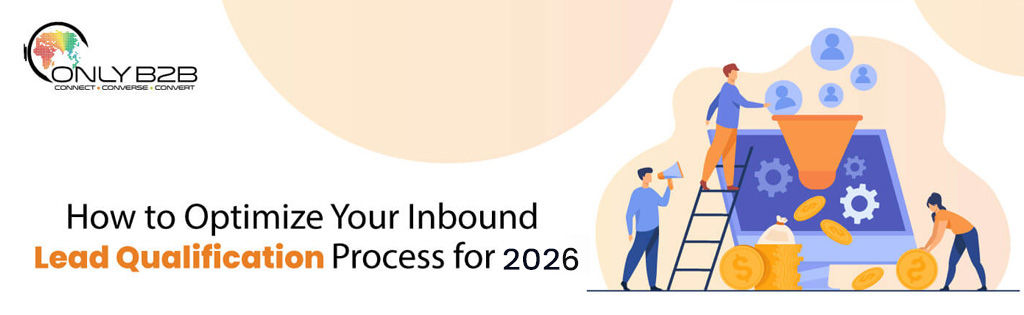
In the fast-paced world of digital marketing, staying ahead of the curve is not just a goal; it’s a necessity. The landscape of the lead generation and its methods is undergoing a significant transformation. According to recent studies, 85% of B2B marketers believe that improving the quality of leads is a top priority. This shift in focus has made optimizing your inbound lead qualification process, including the valuable aspect of inbound lead qualification service, more critical than ever before. Let’s embark on a journey to understand the ins and outs of this vital strategy, exploring its benefits, key components, practical implementation, and how to measure its success. Whether you’re considering in-house efforts or exploring an inbound lead qualification service, the following guide will provide insights to elevate your approach. For a broader framework covering BANT, discovery calls, qualification meetings, and sales-readiness assessment, see our B2B sales qualification guide. Must Read: Revolutionizing Lead Generation with Automated Lead Qualification: A Data-Driven Guide How to Qualify Inbound Leads: 2026 B2B Guide Understanding Inbound Lead Qualification Before we dive into the optimization process, let’s grasp the fundamentals of inbound lead qualification. At its core, inbound lead qualification is the art of identifying and categorizing leads based on their potential to become paying customers. In essence, it’s about sifting through the haystack to find the golden needles. To put things in perspective, consider this: 68% of B2B organizations struggle with lead generation, and a significant part of this challenge lies in determining which leads are genuinely worth pursuing. You see, not all leads are created equal. Some may be ready to make a purchase, while others are merely exploring options. Without a robust qualification process, your sales team might be wasting valuable time and resources chasing leads that aren’t likely to convert. Must Read: Mastering BANT Qualification for Sales Success Benefits of Optimizing Inbound Lead Qualification Now that we understand what inbound lead qualification entails, let’s explore why optimizing this process is worth your investment. Enhanced Efficiency: An optimized lead qualification process ensures that your sales team is focusing its efforts on leads with the highest potential. This, in turn, boosts efficiency and productivity. Research indicates that organizations using lead scoring experience a 77% increase in lead generation ROI. Improved Conversion Rates: When your team prioritizes qualified leads, you’re more likely to see them convert into paying customers. B2B lead nurturing plays a crucial role in this process, ensuring that potential customers are guided through the sales funnel with relevant and timely content. In fact, businesses that nurture leads effectively experience a 20% increase in sales opportunities. Resource Optimization: By directing your resources towards leads that matter, you can allocate your marketing budget more effectively. This includes not only your budget but also your team’s precious time. An unoptimized qualification process can lead to wasted resources. Key Components of Optimized Inbound Lead Qualification To effectively optimize your inbound lead qualification process, you need to consider several key components: Lead Scoring: Implement a lead scoring system that assigns values to various lead attributes and behaviors. This is especially important in B2B lead scoring, where understanding engagement at different touchpoints is crucial. For instance, a lead who engages in a product demo might have a higher score than one who merely visits your website. Must Read: Lead Scoring Strategies That Boost Conversion Rates: The Road to Sales Success  Automated Workflows: Embrace marketing automation tools to streamline the qualification process. AI can assist in lead qualification by analyzing large volumes of data and identifying high-quality leads more accurately. These tools can handle routine tasks, allowing your team to focus on more complex aspects of lead qualification. Alignment with Sales Teams: Collaboration between your marketing and sales teams is paramount. Establish clear criteria for what constitutes a qualified lead to ensure that both teams are on the same page. Continuous Analysis: Regularly analyze your lead data to identify patterns and trends. This ongoing analysis allows you to refine your qualification criteria over time, ensuring it remains effective. Must Read: Sales Success Secrets: The Critical Role of Lead Generation and Appointment Setting How to Optimize Your Inbound Lead Qualification Process Now, let’s get practical. How can you go about optimizing your inbound lead qualification process for 2026? Here’s a step-by-step guide: Define Ideal Customer Profiles (ICPs): Start by creating detailed ICPs that outline the characteristics and behaviors of your most valuable customers. Use these profiles as benchmarks for qualifying leads. Implement Lead Scoring: Develop a lead scoring system that assigns values to various lead attributes and behaviors. Ensure that your scoring is dynamic and evolves as you collect more data. Leverage Automation: Invest in marketing automation tools that can assist with lead qualification. Automated lead qualification not only saves time but also ensures that high-quality leads are identified based on predefined criteria. These tools can track lead interactions and apply scoring rules automatically. Segment Your Leads: Divide your leads into different segments based on their behavior and characteristics. Tailor your marketing messages and content to each segment for more personalized engagement. Establish a Feedback Loop: Maintain an open channel of communication between your marketing and sales teams. Regularly review and refine your qualification criteria based on feedback from the sales team. Must Read: A Beginner’s Guide to Generating Business Leads Measuring Success In the world of inbound lead qualification, metrics serve as your guiding light. To measure your success, consider the following metrics: Conversion Rate: Track how many of your qualified leads actually convert into customers. This conversion rate is a direct reflection of the effectiveness of your qualification process. Lead Velocity: Monitor the rate at which new leads enter your pipeline. A steady flow of qualified leads (Marketing qualified or Sales qualified) indicates a well-optimized process. Sales Cycle Length: Measure how long it takes for a lead to move through the entire sales cycle. A shorter sales cycle can signify more efficient lead qualification. Lead-to-Customer Ratio: Determine the percentage of leads that eventually become paying customers. A higher

6 Effective Practices For Database Cleaning In 2026

Every business adores its data. Gathering data is must for companies that want to unveil the insights with data analytic. We have witnessed the massive rise of data in volume and variety of collected data. Many business leaders know that data science applications can get the substantial value to the business. For instance, a business equipped with reliable and sophisticated database and CRM platforms can measure and understand the customer’s behavior at almost every stage of  the buyer’s journey – this eventually translates to amelioration in sales and comprehensive customer interactions. However, understanding the insights from the data is harder than it seems. Often these challenges arises from the poor quality data. And many companies use these data to support their business decisions, so it is necessary to ensure that the data is clean, reliable and good to use. That’s where smart data cleaning best practices comes in. Must Read: Data Hygiene: Mastering CRM Data Cleansing for Optimal Performance Here are some Data cleansing best practices in 2026 which will help you maintain the sophisticated database. 1. Identify The Goal You should know what your data should look like at the end stage, before initiating any data processing activities. The vital key is to identify the objectives of your data cleaning strategy, rather working on solving the problems that will arise due to poor quality data . Strategy I: Identify the key objective of your work. What data you want to deal at the end stage. Must Read: Benefits of Data Cleansing 2. Construct The Data Quality Criteria What are your expectation for the data? You need to understand this foremost. Create Key Performance Indicators (KPIs)  for the data quality. Identify where most of the errors occurs and dig the root cause. Develop a plan, a robust strategy to ensure good health of your database. Strategy II: Know the KPI’s for your data quality. Must Read: What Is Data Cleansing, Why Is It Important, And How Can You Do It? 3. Standard Operation Procedure (SOP) At the entry point itself if you check the important information it will help you with retaining the healthy data. Following a standardized procedure will assist you to discern duplicates. While creating a database, remember to annex all the information after verifying and instruct the same to your team too. A sophisticated SOP will allow only quality data in the CRM. Strategy III: Create a standard procedure at the entry point. Must Read: How Data Cleansing Help To Boost Your Marketing Campaign Performance? 4. Validate The Accuracy Level Of Data Validate the data in real time. How?  There are some competent tools such as Tibco Clarity, ZeroBounce and more. That offers information verification and ensures to deliver a seamless result. Of course you can validate the information manually, but at the end human errors are inevitable. Also, manual validation would require a lot of time and may waste a lot of efforts if any error is passed unseen. So, better to take the help from the technology isn’t it? Strategy IV: Integrate tools to achieve maximum accuracy. Must Read: What is CRM Data Cleansing? 5. Identify Duplicates Source: MySQL Tutorials Avoiding duplicates is the paramount of database cleansing. Duplicate data can make a business spend abundantly on general data maintenance and cause fallacious reports. To ensure this, first validate the data, scrub it to check duplicates and then remove. Strategy V: Never pass any duplicate data. Validate, Scrub, Delete, Repeat till you get an error free list. Must Read: Everything You Need to Know About Automated Data Cleansing 6. Append Information At this point you are having data that is standardized, validated, and scrubbed now you can combine it. Since you have all the information just say – First Name, Last Name, Email and business address as the data record, ensure you do not miss to append, title, phone number revenue and ‘contact locations’ too. Strategy VI: Highlight the contact’s location, in order to abide the data protection and privacy laws. Why care about Contact’s Location? Because we must abide by the data protection and privacy laws and you should know it as early as possible so that you are clear which compliance rule to follow, whether GDPR or CASL. If you are not having comprehensive data it means you have a ‘White Space’ There are many platforms which capture the accurate information about the contacts, like LinkedIn, you can compile it from such platforms. Summary Following the above mentioned Practices of Data Cleaning will help you with – As you start implementing and adopting the mentioned data cleansing best practices, you can surely expect the best return on your effort. Analyze and pinpoint the dirty data sources and begin with getting the good ROI. Read Now: List Of Best 5 Database Cleansing Tools To Know

Outsourcing B2B Appointment Setting: Navigating Success Through Strategic Collaboration

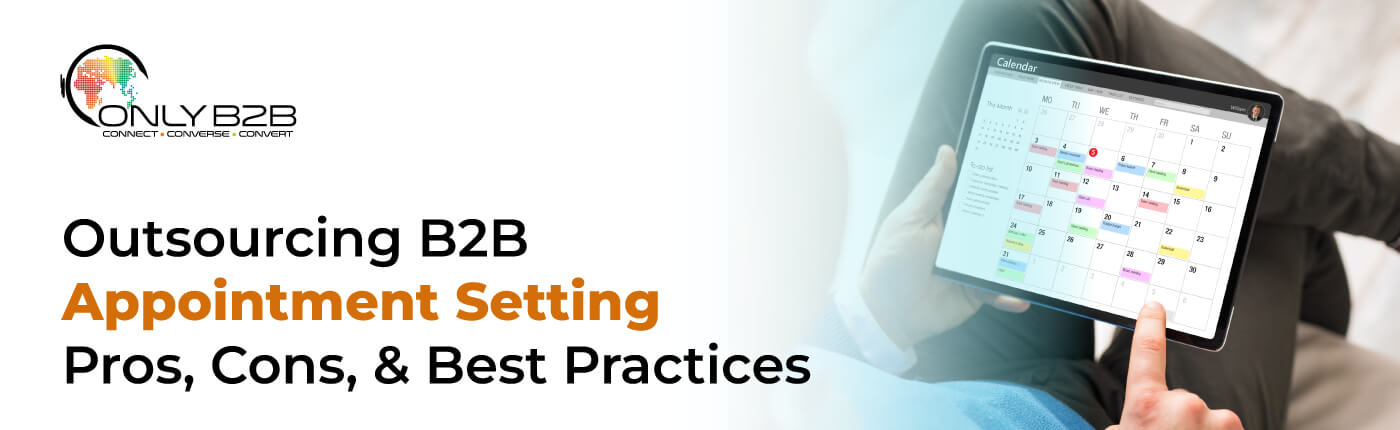
In the intricate web of B2B sales, establishing meaningful connections with potential clients stands as the cornerstone of lucrative business relationships. This initial step often entails the art of appointment setting – a task that demands specialized skills, unwavering attention, and, above all, time. In an era where B2B sales have become increasingly complex, businesses are exploring innovative avenues to streamline their sales processes, and one such avenue gaining momentum is outsourcing B2B appointment setting.  This blog aims to delve deep into the intricate world of B2B appointment setting outsourcing. It seeks to explore the advantages, challenges, and best practices that surround this strategic approach. Join Only B2B on this journey as we uncover the secrets to transforming your B2B sales landscape. Must Read: B2B Appointment Setting vs. Lead Generation: Understanding the Difference Outsourcing B2B Appointment Setting: Navigating Success Through Strategic Collaboration  Why Outsource B2B Appointment Setting?  Outsourcing B2B appointment setting offers a myriad of benefits to businesses striving for streamlined sales processes. Recent studies have indicated a substantial increase in appointment-to-opportunity conversion rates for companies that choose to outsource this critical function. This surge in productivity allows in-house teams to refocus on their core competencies, knowing that external specialists are diligently handling the task of securing valuable and qualified appointments.  Pros of Outsourcing  1. Expertise and Experience: Outsourcing agencies specialize in B2B appointment setting. Their teams are meticulously trained to navigate diverse industries, bringing invaluable insights and effective strategies tailored for specific sectors.  2. Cost-Efficiency: Outsourcing eliminates the need for extensive training and infrastructure investment. Businesses pay for the service they receive, making it a highly cost-effective solution, particularly beneficial for smaller enterprises with limited resources.  3. Scalability: Outsourced services are inherently scalable, designed to adapt to evolving business needs. This flexibility ensures optimal resource utilization, whether there is a need for a sudden surge in appointments or a reduction in workload during quieter periods.  4. Focus on Core Activities: Delegating appointment setting to external experts empowers in-house teams to direct their efforts towards nurturing leads, closing deals, and strategic planning. This redirection of focus substantially enhances overall productivity and efficiency. Must Read: Outsourced Vs. In-house Appointment Setting – Which is Better?  Cons of Outsourcing  1. Lack of Control: Concerns about relinquishing control over the appointment setting process are common among businesses. However, effective communication and collaboration can mitigate these concerns, ensuring alignment with the company’s vision and values.  2. Quality Concerns: Without proper vetting, outsourcing partners may not meet desired quality standards. Thorough research and partner selection are essential steps in addressing this issue, ensuring a seamless and productive partnership.  Best Practices for B2B Appointment Setting Outsourcing  1. Define Clear Objectives: Clearly outline your goals, target audience, and expected outcomes to your outsourcing partner. Alignment on objectives is the foundation of a successful partnership, guiding strategy and approach.  2. Regular Communication: Maintain open channels of communication with the outsourcing team. Regular updates, feedback sessions, and strategy discussions are vital to fostering a collaborative and effective partnership.  3. Data Security: Ensure that the outsourcing partner adheres to stringent data security protocols to safeguard your confidential business information. Data breaches can have dire consequences for both parties involved.  Must Read: 5 Signs It’s Time to Outsource B2B Appointment Setting In-House vs. Outsourcing: A Strategic Choice  The decision to keep appointment setting in-house or outsource is pivotal and depends on the specific needs and resources of the business.  In-House: While it offers more control, in-house appointment setting demands significant time, training, and infrastructure investment. It may be ideal for larger enterprises with extensive resources.  Outsourcing: Outsourced appointment setting provides specialized expertise and cost-efficiency. It necessitates careful partner selection and ongoing collaboration. It is particularly beneficial for smaller to mid-sized businesses seeking to enhance their sales processes without overwhelming financial investments.  Measuring ROI and Success  The success of outsourcing B2B appointment setting can be measured through various metrics, including:  Conversion Rates: Monitoring the rate at which appointments convert into opportunities and, subsequently, sales, offers insights into the effectiveness of appointment setting strategies.  Cost per Appointment: Evaluating cost-effectiveness involves calculating the expense incurred per successful appointment set. Comparing this cost with the revenue generated provides a clear understanding of the financial impact.  Client Retention: Measuring the impact of outsourced appointments on client acquisition and long-term business relationships provides a holistic view of the partnership’s effectiveness. A positive correlation indicates a successful and enduring partnership.  Must Read: Sales Success Secrets: The Critical Role of Lead Generation and Appointment Setting Challenges and Solutions  Common challenges faced in B2B appointment setting outsourcing include misalignment of strategies and inadequate communication. Address these challenges through comprehensive partner selection, clear objective setting, and regular feedback loops. Establishing a robust communication framework ensures that both parties are consistently aligned and can address challenges proactively.  Choosing the right outsourcing partner is pivotal to the success of your B2B appointment setting efforts. Consider the following factors:  Industry Experience: opt for agencies with a proven track record in your specific industry. Industry-specific experience ensures a nuanced understanding of your target audience and market dynamics.  Client Testimonials: Seek referrals and testimonials from previous clients to gauge the partner’s reliability and effectiveness. Positive testimonials are indicative of a partner’s ability to deliver results consistently.  Customized Solutions: Ensure the partner offers tailor-made solutions aligned with your business objectives. A customized approach ensures that strategies are specifically tailored to address the unique challenges and opportunities within your industry.  Must Read: How is Outsourcing Appointment Setting Services Beneficial to the Organizations? Conclusion  In the fiercely competitive landscape of B2B sales, outsourcing appointment setting emerges as a strategic solution for businesses seeking enhanced efficiency and amplified revenue. By carefully evaluating the pros and cons, implementing best practices, and selecting the right partner, businesses can unlock the full potential of outsourced B2B appointment setting.  In essence, outsourcing B2B appointment setting transcends conventional sales strategies, offering a dynamic and adaptable approach tailored for the modern business landscape. As businesses navigate the intricacies of the contemporary marketplace, strategic partnerships in appointment

Video Content Syndication: Reach More Viewers, Faster

In the ever-evolving digital landscape, the power of video content cannot be overstated. With the rise of platforms like YouTube, Vimeo, and social media giants, videos have become a pivotal tool for communication, engagement, and marketing. However, in this vast sea of videos, standing out is a challenge. This blog explores the art and science of video content syndication, delving into strategies that not only maximize engagement but also drive meaningful interactions in the digital era.   Must Read: B2B Content Syndication Strategies Video Content Syndication: Reach More Viewers, Faster Video Syndication: Unpacking the Basics  Video syndication is a strategy that involves sharing your video content on various platforms beyond your own website. This can include popular video hosting platforms like YouTube, Vimeo, or Dailymotion, as well as social media channels and content aggregators. The key objective here is to broaden your reach, tap into new audiences, and create a domino effect of engagement.  According to recent statistics, 85% of internet users in the United States watch online videos monthly, emphasizing the importance of having a video syndication strategy in place. Moreover, 95% of consumers retain information through video content, making it a highly effective medium for conveying messages and driving engagement.  Must Read: Content Syndication Metrics: Measuring Growth in B2B Syndication Campaigns Leveraging Video Platforms for Syndication  One of the cornerstones of video syndication is leveraging dedicated video hosting platforms. YouTube, as the second-largest search engine globally, boasts over 2 billion logged-in monthly users, making it an indispensable tool for syndicating video content. Vimeo, known for its high-quality and artistic communities, is another influential platform for reaching niche audiences. Dailymotion, with its global reach, can provide an alternative platform for your content.  Statistics show that 6 out of 10 people prefer online video platforms over live TV, highlighting the immense potential these platforms offer in terms of audience engagement. And all these platforms are free to syndicate and have diffrent benefits of each. Must Read: 14 Expert Tips to Boost Your Blog Traffic with Content Syndication The SEO Power of Video Syndication  Video syndication is not just about extending your reach; it’s also a potent SEO strategy. Google, the world’s largest search engine, favors video content in its search results. Websites that include video are 53 times more likely to appear on the first page of Google.  Furthermore, videos embedded in web pages can increase the time spent on those pages, a crucial SEO metric. According to HubSpot, the average user spends 88% more time on websites with video, contributing to higher rankings in search results.  Must Read: The Ultimate Lead Generation Content Syndication Strategy Crafting Compelling Thumbnails and Titles  To stand out in the sea of online video content, your videos’ thumbnails and titles must be captivating. Thumbnails with engaging visuals can significantly improve click-through rates, increasing your video’s exposure. In fact, videos with custom thumbnails receive a 30% higher click-through rate than those without. If you’re looking to create eye-catching visuals easily, consider using a free thumbnail maker. A/B testing your video titles can also help identify the most enticing options for your audience. Ensure that your titles are concise, relevant, and, if possible, include relevant keywords to boost SEO.  Must Read: Utilizing Intelligent Content Syndication To Produce High Intent MQLs Promoting Engagement with Video Descriptions and Metadata  Video descriptions and metadata provide valuable information about your content to both viewers and search engines. By crafting comprehensive and relevant descriptions, you can improve your video’s discoverability. Ensure to include relevant keywords, links to your website, and a call to action in your video descriptions.  Metadata, including tags and categories, further helps in categorizing your videos and connecting them with relevant content. This enhances the chances of your videos appearing as suggested content to viewers.  Syndicating Beyond Video Platforms: Blog Integration and Email Campaigns  To fully harness the potential of video syndication, consider integrating your video content into your blog. Embedding videos within blog posts not only enriches the user experience but also keeps visitors on your site longer, signaling to search engines that your content is valuable. This can lead to improved search rankings and increased organic traffic.  Incorporating video content into email campaigns is another effective way to engage your audience. Video emails have been shown to increase click-through rates by up to 300%, offering a compelling way to share video content directly with your subscribers.  Must Read: All You Need To Know About Content Syndication Metrics That Matter: Tracking Video Engagement  To assess the success of your video syndication efforts, you must monitor the right metrics. Engagement metrics, such as likes, shares, comments, and watch time, provide valuable insights into how viewers interact with your content. In the context of ABM content syndication, analyzing these engagement signals becomes even more critical to ensure your content resonates with high-value target accounts. These metrics are key indicators of your video’s impact and can guide your future content strategy.  Building Collaborative Networks for Video Syndication  Collaboration is a powerful strategy in video syndication. Utilizing B2B content syndication services can enhance this approach by helping you target the right business audiences. Partnering with influencers or complementary businesses can expand your reach exponentially. Joint ventures and cross-promotion create a network effect, exposing your video content to new and engaged audiences. Social Media Syndication: Sharing Video Across Platforms  Social media platforms are a treasure trove for video syndication. The synergy between visual content and social media is undeniable. In fact, Facebook users watch an astonishing 100 million hours of video daily. Cross-posting your video content on platforms like Instagram, Facebook, Twitter, and LinkedIn can help you tap into a diverse audience base.  Must Read: 6 Content Syndication Networks that will Drive Traffic The Future of Video Syndication: Emerging Trends  As technology evolves, so does the world of video syndication. Keep an eye on emerging trends such as 360-degree videos, virtual reality experiences, and interactive videos. These innovative formats can provide an immersive experience for viewers, boosting engagement and interactivity.  Must Read: 10 Content Syndication

B2B Lead Generation vs. Appointment Setting | Key Differences & Strategies

In the ever-evolving landscape of B2B (Business-to-Business) sales and marketing, two critical strategies stand out as linchpins in driving growth and success: B2B Appointment Setting and Lead Generation. These strategies play distinct yet interconnected roles in the complex journey of acquiring and nurturing valuable business relationships.  This blog will delve into the depths of Appointment Setting and B2B Lead Generation, demystifying their definitions, exploring their individual intricacies, and shedding light on how they function in harmony to propel businesses forward. Along the way, we’ll employ relevant data and statistics to paint a vivid picture of their significance and impact.  What is B2B Appointment Setting vs. Lead Generation What is B2B Appointment Setting Let’s begin with B2B Appointment Setting. At its core, B2B appointment generation is the process of scheduling qualified appointments, meetings, or interactions between a sales representative and a prospective business client. These appointments are not casual encounters, but rather carefully orchestrated conversations designed to explore mutual opportunities, address specific pain points, and showcase the value a business can offer. B2B Appointment Setting is akin to the bridge that connects a quality lead with a sales professional. It is the moment when vague interest transforms into a tangible commitment—a meeting or call that can lead to meaningful discussions and, ultimately, to a mutually beneficial partnership.  Must Read: Powerful Tips for B2B Appointment Setting: Strategies and Techniques for Success What is Lead Generation in B2B  While B2B Appointment Setting focuses on the “when and where” of interactions, Lead Generation casts a wider net. It encompasses the strategies and tactics employed to identify, attract, and capture potential business prospects. In essence, Lead Generation is the engine that fuels the top of the sales funnel, filling it with a stream of potential clients.  Lead Generation is not merely about accumulating contact information; it is about nurturing a pipeline of leads who have expressed interest in a business’s products or services. These leads may come from various sources—website inquiries, content downloads, social media engagement, or even referrals. The goal is to guide them through a nurturing process that gradually transforms them from prospects into well-informed, sales-ready leads.  How Appointment Setting Complements Lead Generation Now that we’ve defined both B2B Appointment Setting and Lead Generation, let’s explore how they interact within the broader framework of B2B sales and marketing.  B2B Appointment Setting is the natural progression of effective Lead Generation. Once leads have been identified, nurtured, and have reached a certain level of interest and qualification, it’s time to initiate direct, personalized interactions. This is where B2B Appointment Setting steps in, setting the stage for meaningful conversations that can lead to conversions.  Imagine a scenario where a potential lead has engaged with your business through various online channels. They’ve downloaded whitepapers, attended webinars, and interacted with your content. While they are undoubtedly interested, they may still have questions, hesitations, or specific needs that require addressing. This is the juncture at which a well-executed B2B Appointment Setting strategy becomes invaluable.  B2B Appointment Setting allows your sales team to proactively reach out to these nurtured leads, offering tailored solutions, addressing concerns, and ultimately guiding them towards making informed decisions. This personalized approach unlocks the benefits of appointment setting, turning passive interest into active engagement and facilitating deeper connections with qualified leads who are demonstrably more likely to convert into paying clients. Must Read: 5 Signs It’s Time to Outsource B2B Appointment Setting Key Differences Between B2B Appointment Setting & Lead Generation To appreciate the distinctions between B2B Appointment Setting and Lead Generation fully, it’s essential to recognize their unique approaches and goals.  Lead Generation Focus Areas Appointment Setting Focus Areas While Lead Generation casts a wide net to identify prospects, B2B Appointment Setting fine-tunes the selection process, identifying those prospects who are not only interested but also prepared to engage further.  Must Read: Generating More Qualified Leads with MQLs: A Pathway to B2B Success Measuring Success: Lead Generation vs. Appointment Setting In the world of B2B sales and marketing, measurement is paramount. It allows businesses to gauge the effectiveness of their strategies, optimize processes, and allocate resources judiciously. Both Lead Generation and B2B Appointment Setting have their own set of metrics that serve as barometers of success.  Lead Generation Metrics:  Appointment Setting Metrics:  These metrics serve as compasses, guiding businesses towards refining their approaches. For instance, if Lead Generation efforts yield a high number of leads but a low conversion rate, adjustments may be needed in the nurturing process. Conversely, if B2B Appointment Setting results in a low show rate for scheduled appointments, strategies to enhance engagement may be required.  For the formula, benchmarks, and funnel-stage calculations behind this metric, see our B2B appointment setting conversion rate guide. How to Integrate Lead Generation & Appointment Setting for Maximum Results While B2B Appointment Setting and Lead Generation are distinct strategies, they are not mutually exclusive. In fact, they are most potent when integrated seamlessly. Here’s how this integration can benefit businesses:  Enhancing Lead Quality Integrating B2B Appointment Setting with Lead Generation ensures that leads entering the appointment setting phase are well-qualified and genuinely interested.  Optimizing Resources By focusing B2B Appointment Setting efforts on leads with higher conversion potential, resources are allocated where they are most likely to yield results.  Shortening Sales Cycles Combining these strategies streamlines the buyer’s journey, reducing the time it takes for leads to move from initial interest to conversion.  Leveraging Feedback Loops Insights from B2B Appointment Setting interactions can be fed back into Lead Generation efforts, informing content creation and nurturing strategies.  Must Read: Lead Scoring Strategies That Boost Conversion Rates: The Road to Sales Success  Where to Invest More? Budget Allocation for B2B Lead Generation vs. Appointment Setting An often-debated question in B2B sales and marketing is where to allocate budget and resources: towards Lead Generation or B2B Appointment Setting? The answer lies in understanding your business’s unique needs and objectives.  Businesses with longer, more complex sales cycles may find it beneficial to allocate more resources to Lead Generation. A robust

From SQL to Loyal Customer: The Journey of Nurturing Leads 

In today’s fiercely competitive business landscape, where customer acquisition costs are rising, nurturing SQLs has become the cornerstone of sustainable growth. In this comprehensive blog, we’ll unravel the transformative journey from SQL (Sales Qualified Lead) to loyal customer. By understanding the significance of SQLs, the mechanics of the sales funnel, strategies for building customer relationships, and the art of nurturing, converting, measuring, and optimizing, you’ll grasp the critical role of lead nurturing in long-term customer engagement and loyalty.  Must Read: MQL to SQL Conversion Rate From SQL to Loyal Customer: The Journey of Nurturing Leads Understanding Sales Qualified Leads (SQLs)  Sales Qualified Leads, commonly known as SQLs, are the most promising prospects in your lead pool. These individuals have moved beyond mere curiosity; they have expressed a sincere interest in making a purchase. To contextualize their significance, consider a report by Gleanster Research, which states that roughly 50% of leads are indeed qualified but aren’t quite prepared to make a buying decision.  This is precisely where the art of nurturing comes into play. Nurturing these SQLs is paramount, as it involves fostering relationships, delivering valuable content, and providing the necessary guidance to help them progress along the buyer’s journey. By doing so, you can effectively bridge the gap between the initial interest and the final conversion.  In essence, SQLs are your golden opportunity to convert potential customers into loyal patrons. They are the cream of the crop and nurturing them with care and precision can lead to remarkable outcomes, benefiting both your business and the individuals seeking your products or services. Understanding the nature and significance of SQLs is the first step toward mastering the art of lead nurturing and ultimately achieving conversion success.   Must Read: Unconventional Ways to Generate Qualified B2B Sales Leads The Sales Funnel and Lead Nurturing  The sales funnel serves as a graphical depiction of the buyer’s journey, outlining the various stages from initial awareness to consideration and ultimately, the decision-making process. It’s during the consideration stage that the concept of lead nurturing takes center stage. According to a study conducted by Marketo, nurtured leads exhibit a remarkable trait – they tend to make purchases that are 47% larger in scale compared to their non-nurtured counterparts.  In essence, the sales funnel is the pathway through which potential customers progress, and it is at the consideration phase where the art of lead nurturing truly shines. Nurturing these leads through tailored communication, relevant content, and personalized engagement can significantly impact their purchasing decisions. This study underscores the pivotal role of lead nurturing in optimizing your sales funnel and driving more substantial, revenue-generating transactions.  Must Read: What Is MQL & SQL and How Do They Differ? Building Customer Relationships  Lead nurturing extends beyond merely ushering leads through the sales funnel; it revolves around fostering meaningful relationships. This involves the consistent delivery of value, addressing queries, and, most crucially, building trust. A recent study conducted by Edelman Trust Barometer underscores the significance of trust in the customer-brand relationship, revealing that a staggering 81% of consumers require a high level of trust in a brand before committing to a purchase.  Lead nurturing, therefore, serves as the linchpin for nurturing this trust. It involves ongoing engagement and communication that resonate with potential customers, addressing their needs, and providing them with valuable insights and solutions. By actively nurturing leads in this manner, businesses can establish a foundation of trust that forms the basis of strong and enduring customer relationships, ultimately resulting in increased conversions and customer loyalty.  Must Read: How To Generate Sales Leads Without Cold Calling? Nurturing Strategies and Best Practices  Effective lead nurturing strategies are grounded in segmentation, personalization, and multi-channel communication. Research conducted by Campaign Monitor underscores the potency of personalization, revealing that personalized email campaigns yield a median return on investment (ROI) of 122%. This emphasizes the pivotal role of tailoring content and messaging to cater to the unique preferences and needs of each lead.  Furthermore, crafting content that aligns with the various stages of the buyer’s journey is indispensable. By delivering information, resources, and solutions that correspond to a lead’s specific point in the purchasing process, businesses can significantly enhance engagement and conversions.  Successful lead nurturing hinges on the ability to deliver the right message, via the right channel, to the right audience, at the right time. This precision, coupled with personalization and relevant content, is the hallmark of effective nurturing strategies, ultimately fostering stronger connections with leads and driving them toward conversion. Must Read: What is Sales Qualified Lead Definition?  Converting SQLs into Loyal Customers  The ultimate goal of the nurturing process is to transform Sales Qualified Leads (SQLs) into devoted, loyal customers. Achieving this objective demands a harmonious alignment between marketing and sales teams, ensuring a seamless transition for leads as they advance through the sales funnel. Consistency in delivering a compelling brand experience at every touchpoint is another critical factor.  Personalization emerges as a linchpin in this journey. As indicated by Adobe, a staggering 40% of consumers are inclined to increase their spending when brands provide a tailored and personalized experience. Therefore, personalization efforts should extend across various aspects of the customer journey, from tailored content to customized incentives.  Ultimately, converting SQLs into loyal customers requires a holistic approach that combines effective nurturing, alignment between marketing and sales, consistency in branding, and a commitment to personalization. This comprehensive strategy not only facilitates conversions but also cultivates enduring customer relationships.  Must Read: How to Know Whether Your Lead is Qualified Enough to be a Sales Ready Lead? Measuring and Optimizing the Journey  In the realm of digital marketing, measurement and optimization are paramount. Tracking key performance indicators (KPIs) such as conversion rates, engagement metrics, and customer lifetime value provides valuable insights into the effectiveness of lead nurturing efforts. According to a report by Econsultancy, a substantial 72% of marketers prioritize the enhancement of customer experience as their foremost goal.  Measuring the success of lead nurturing campaigns enables marketers to identify what’s working and what requires

MQL Lead Generation: How to Attract High-Value Leads

In the ever-evolving landscape of B2B marketing, where competition is relentless, and digital marketing strategies continuously shift, the importance of Marketing Qualified Leads (MQLs) stands out like a guiding light. MQLs represent more than just prospects; they embody potential customers who have ventured deeper into your sales funnel, demonstrating a keen interest in your products or services. In this blog, we will navigate the realm of MQLs, exploring their pivotal role in B2B lead generation and unveiling strategies to not only generate more leads but also to nurture and convert them into loyal, revenue-generating clients. Generating More Qualified Leads with MQLs: A Pathway to B2B Success What Is Marketing Qualified Leads (MQLs)?  Marketing Qualified Leads (MQLs) are the essential bridge connecting marketing efforts with sales endeavors. These prospects have engaged with your brand in substantial ways, such as subscribing to newsletters, downloading valuable resources, visiting your website, or actively participating in webinars. Their actions signal a genuine interest in your offerings, making them prime candidates for conversion into customers.  Must Read: MQL Criteria: Identifying Potential Customers Effectively Why Are MQLs Important for B2B Lead Generation?  Skyrocketing Conversion Rates: MQLs exhibit significantly higher conversion rates compared to raw leads. According to Gleanster Research, a whopping 73% of all B2B leads are not sales-ready, underscoring the critical role of nurturing leads into MQLs.  Optimized Sales Efforts: By focusing on MQLs, your sales team can channel their efforts toward prospects who not only demonstrate interest but are also more likely to make a purchase. Identifying and nurturing pre-qualified leads further enhances this process, ensuring that sales efforts are directed toward prospects with a higher likelihood of conversion. This streamlined approach reduces the time and resources spent on unqualified leads, resulting in more efficient and cost-effective sales processes.  Maximized ROI: MQL-focused strategies translate into cost-effective endeavors. By investing your resources in leads with a higher likelihood of conversion, your business can achieve a higher return on investment (ROI).  Sustainable Long-Term Value: MQLs often evolve into loyal customers who provide repeat business, referrals, and sustained revenue. This not only bolsters your bottom line but also ensures a robust Customer Lifetime Value (CLV).  Must Read: Inbound vs. Outbound Lead Generation: Finding the Right Mix for MQLs Benefits of Generating More Qualified Leads  Revenue Surge: The primary objective of any lead generation strategy is to drive revenue growth. Generating more MQLs guarantees a steady stream of promising leads to nurture and convert into paying customers.  Streamlined Sales Cycle: MQLs are already educated about your products or services and have expressed genuine interest. Consequently, the sales cycle is significantly shortened, allowing for quicker revenue realization. Implementing sales cadence best practices here can further optimize the process, ensuring consistent follow-ups and engagements are conducted in a timely and efficient manner, thus maximizing the speed and effectiveness of moving MQLs to closed sales. Enhanced Customer Retention: Satisfied MQLs are more likely to remain loyal to your brand, increasing customer retention rates and diminishing the constant need for aggressive customer acquisition efforts.  Informed Decision-Making: The process of generating and tracking MQLs provides invaluable insights into the preferences and behaviors of your target audience. This, in turn, facilitates data-driven decisions that refine your marketing strategies for optimal results. Must Read: MQL to SQL Conversion Rate  Now, let’s delve into actionable strategies for generating more qualified leads through MQLs:  How to Generate More Qualified Leads with MQLs A. Create Buyer Personas  Understanding Your Audience: Generating MQLs commences with the creation of comprehensive buyer personas. These personas serve as detailed profiles of your ideal customers, encompassing demographics, pain points, goals, and preferences. Understanding your audience at this level enables you to tailor your marketing endeavors to resonate with their needs and aspirations.  Tailored Content: Once you’ve developed buyer personas, the next step is to create content that directly addresses their pain points and aspirations. Whether it’s blog posts, eBooks, whitepapers, or webinars, your content should be highly tailored, providing valuable solutions to your audience’s unique challenges. Research conducted by Demand Metric reveals that content marketing generates three times more leads than traditional outbound marketing and costs 62% less.  Must Read: How to Leverage Account-Based Marketing (ABM) for Marketing Qualified Leads B. Develop Targeted Content  Personalized Approach: One-size-fits-all content is a relic of the past. In the current landscape, personalization reigns supreme. Your content must speak directly to the pain points, needs, and aspirations of your buyer personas. This personalized approach positions your brand as a valuable resource, attracting MQLs who resonate with your content.  Consistency Across Channels: Ensuring a consistent message across all marketing channels, from your website and social media to email campaigns, is essential. A cohesive brand voice and message build trust and familiarity with your audience, reinforcing your brand’s authority.  For attracting MQLs, Here are some familier lead generating channels: Must Read: Important Ways To Generate Marketing Qualified Leads C. Use Lead Magnets to Capture Contact Information  Offering Value: Lead magnets are incentives offered to prospects in exchange for their contact information. By effectively utilizing lead magnets, businesses can attract and convert MQLs through inbound channels, complementing outbound lead generation efforts. These incentives can take the form of eBooks, whitepapers, webinars, templates, or free trials. Permission Marketing: Lead magnets align with the principles of permission marketing. In this approach, prospects willingly provide their contact information in exchange for valuable content. This not only generates MQLs but also ensures that these leads are genuinely interested in your offerings.  Must Read: How to Personalize Your B2B Marketing for Better Results  D. Nurture MQLs with Personalized Messaging Lead Scoring: Implement a lead scoring system that assigns values to various lead attributes and behaviors. For instance, a lead who downloads a product demo might have a higher score than one who merely visits your website. Understanding the difference between MQL vs SQL helps in refining this scoring process, ensuring that leads are nurtured appropriately based on their readiness to engage with sales. This allows you to prioritize your efforts, focusing on high-scoring MQLs who

How Does Content Syndication Work? A Complete Guide (2026)

Modern growth marketing relies heavily on content syndication. It’s always been like this way. However, content syndication strategies and the mastrateterial types that power it have evolved over time. Previously, blog entries were the only type of information that could be syndicated. But have you ever wondered, “how does content syndication work?” Other forms of information, however, are increasingly published as well. Syndication is still crucial, despite the fact that SEO has advanced over time. What exactly is content syndication, though? What does it mean for your SEO? What are the advantages and disadvantages? And how do you successfully syndicate content? These are some pressing concerns you may have. This blog will cover all of these topics and more. How Does Content Syndication Work? What Is The Definition Of Content Syndication? The practice of releasing your online material on a third-party platforms is known as content syndication. The main goal of content syndication is to attract a bigger population via a third-party website and then route that traffic to your own. It may also be utilized as part of a growth hacking plan to reach out to a larger audience and raise brand recognition. So, how exactly does content syndication work? To begin, you must have a robust content syndication plan in place. Content syndication may be done in a variety of ways, including: Why Should You Syndicate Content? It’s possible to think of content syndication as a bargaining system. For its audience, the third-party platform receives useful, free material. At the same time, the author of the content is exposed to a larger audience. This trade mechanism, however, is not new. Well before digitalization became fashionable, major news organizations carried syndicated material from freelancers and smaller media on their websites. Content syndication allowed freelancers and smaller media to be recognized for their work while allowing larger outlets to avoid investing in the resources needed to generate content. But, after all, why do businesses now utilize content syndication? The author and content producer do it for a number of reasons, including increasing website traffic, generating leads, and building backlinks, among others. The Advantages Of Content Syndication 1. Exposure To The Content Content syndication allows you to reach out to prospects, viewers, andf readers who would not have otherwise came across your brand by using paid or free content syndication. A simple infographic on an authoritative platform may get your information thousands of more views than simply putting it on your own site. You may also syndicate pieces on that site on a regular basis to attract new visitors to your material. Overall, content syndication improves the exposure of material you’ve paid for or spent a significant amount of time generating. Articles (or portions from them), eBooks, whitepapers, videos (there are platforms for syndicating video content), and other types of syndicated material are all options. Syndication helps you develop your reputation as a thought expert by allowing you to reach more of your company’s clients through content delivery marketing. Content syndication increases traffic while also allowing more people to follow your identity and content. As a result, your website, social media accounts, and other platforms can reach a larger audience. 2. Lead Generation The use of content syndication for lead generation to establish inbtellectual dominance is a quick and efficient method. Each bit of content that syndicates restricted material can generate actual cash. Before obtaining their content materials, prospects must fill in their contact information. This syndication-based B2B lead generation technique allows you to acquire the prospect’s data, which you can then utilize to engage them and persuade them into customers. It’s crucial to consider three things while monitoring the leads you’ve gotten from syndicated content: 3. Link Generation Content syndication websites may publish your content, including articles, films, and graphics, and credit you by linking back to it. This aids in the enhancement of your website’s SEO, which in turn aids in the enhancement of your SERP ranks (Search Engine Results Pages). As a result, the authority of your brand will rise on the internet. Furthermore, the better rating and syndicated postings may result in increased traffic to your website. This not only helps you improve your SEO, but it may also help you increase your revenue and sales. Content syndication is another successful technique to reach a larger audience, although it does come with certain hazards. Repeated material is frowned upon by search engines. As a result, if a search engine discovers many pages with the same information, only one of them will appear on the search result. This is why it’s critical to include a link to the original source in every syndicated content. These links inform the search engine that the article they’re swarming is syndicated. How To Syndicate Content Effectively? While content syndication may appear to be a dream come true for any content marketer, it’s critical that you do it correctly. This because? Syndicated material, as we’ve seen, might be mistaken for duplicate content if done incorrectly. This can harm your internet reputation, have an influence on your SEO, and a lot more. This is especially important in ABM content syndication, where targeting accuracy and content integrity are paramount. Leveraging AI in content syndication can help mitigate these risks by optimizing content distribution, ensuring proper attribution, and enhancing targeting precision. Let’s look at some procedures you may do to properly syndicate material to avoid such problems. Must Read: Content syndication networks that will drive traffic Conclusion: As a result, make certain that your online material is syndicated on the appropriate websites and in the appropriate manner. If you don’t, you won’t be able to take advantage of the many benefits of content syndication, and you may end up losing more money than you gain. You’ve got the content syndication tools, the data, and the advice you need to get started with this blog. So go ahead and syndicate your material to expand your business and scale up your content marketing plan. And if you need any assistance, simply

Win More Deals with Qualified Appointment Setting

Did you know 67% of B2B buyers prefer vendors who set meaningful appointments? Qualified appointment setting is the key to securing high-value meetings that drive results. It’s not just about setting up meetings; it’s about ensuring those meetings are with the right prospects who have a genuine interest in your offerings. This strategic approach significantly enhances the efficiency of the sales process, leading to higher conversion rates and impactful business growth. Appointment setting is not without its challenges. Reaching decision-makers, handling gatekeepers, and capturing attention in an oversaturated market can be daunting. Effective strategies are needed to overcome these hurdles and ensure that valuable resources are invested in interactions that have the potential to yield substantial returns. The journey to securing high-value meetings involves a mix of targeted prospecting, personalized communication, leveraging technology, and mastering the art of qualification. In this comprehensive guide, we will delve into the strategies that empower B2B professionals to navigate the complexities of appointment setting and secure meetings that truly matter, unlocking the benefits of appointment setting such as increased lead qualification, improved conversion rates, and ultimately, accelerated sales growth. Must Read: Powerful Tips for B2B Appointment Setting: Strategies and Techniques for Success Qualified Appointment Setting Strategies for B2B Success What is Qualified Appointment Setting? A Guide to Success Qualified appointments are those where both parties – the prospect and the sales representative – stand to gain value from the interaction. They involve prospects who are genuinely interested, have a clear need, and are in a position to make a purchase decision. These appointments are a crucial step in the B2B sales process, as they significantly enhance the chances of converting quality leads into customers. Must Read: What is Appointment Setting? A. Differentiating Between Cold Calls and Qualified Appointments Unlike cold calls, which often involve reaching out to prospects without prior engagement, qualified appointments are nurtured through research, personalized communication, and careful assessment of the prospect’s needs. Cold calls can be hit or missed, while qualified appointments increase the likelihood of a meaningful conversation and a potential sale. B. Benefits of Focusing on High-Quality Meetings The benefits of focusing on high-quality meetings are manifold. They save time and resources by narrowing the focus to prospects who are more likely to convert. Moreover, they position the sales team as consultants, offering valuable insights and solutions tailored to the prospect’s needs. This approach fosters stronger relationships and builds trust. Must Read: Sales Success Secrets: The Critical Role of Lead Generation and Appointment Setting How to Build a Targeted Prospecting Strategy for B2B Sales A. Identifying Ideal Customer Profiles (ICPs) The first step to securing high-value meetings is to define your ideal customer profiles (ICPs). This involves creating detailed personas of your most valuable customers based on factors such as industry, company size, pain points, and goals. This targeted approach ensures that your efforts are directed towards prospects with the highest potential for conversion. B. Leveraging Account-Based Marketing (ABM) Principles Account-Based Marketing (ABM) principles can be invaluable in qualified appointment setting. ABM involves tailoring your outreach and communication to a specific set of high-potential accounts. This personalized approach enhances the relevance of your message and increases the chances of securing appointments with decision-makers. C. Tailoring Outreach Messages for Personalization Personalization is the cornerstone of effective communication. Craft outreach messages that resonate with the prospect’s pain points, challenges, and goals. According to HubSpot, personalized emails have a 6% higher open rate and a 74% higher click-through rate compared to generic messages. Must Read: 5 Signs It’s Time to Outsource B2B Appointment Setting Multichannel Strategies for Qualified Appointment Setting A. Leveraging Email Outreach and Personalized Messaging Email remains a powerful tool in B2B appointment setting. Crafting compelling subject lines and delivering content that addresses the prospect’s needs can significantly improve open and response rates. Personalized messaging that speaks directly to the prospect’s challenges creates a connection and sets the stage for meaningful conversations. By incorporating effective appointment setting tips such as personalization, you can significantly increase the likelihood of securing appointments with qualified leads who are genuinely interested in what you have to offer. B. Integrating Social Media Engagement in Appointment Setting Social media (Facebook, Instagram, LinkedIn, Twitter) offers a unique platform for engagement. Connect with prospects on platforms like LinkedIn by sharing valuable insights and joining relevant discussions. This positions you as an industry expert and piques the interest of prospects, making them more receptive to appointment requests. C. Incorporating Cold Calling with Warm Touches While cold calling has evolved, it remains a valuable technique when combined with warm touches. If you’re wondering how to get appointments with decision-makers, consider incorporating warm touches such as sending a personalized email or connecting on social media before the call. This approach increases familiarity and enhances the chances of a positive response. Must Read: Busting Myths About Outsourcing Appointment Setting The Power of Value-Based Communication A. Highlighting Value Propositions and Solutions During appointment setting, focus on value. Clearly articulate how your solution addresses the prospect’s pain points and contributes to their goals. Present your value proposition as a solution to their challenges, rather than a mere product or service. B. Addressing Pain Points and Challenges Effectively Addressing pain points requires empathy and understanding. Craft your communication to reflect that you comprehend the prospect’s challenges. According to Salesforce, 92% of salespeople give up after four “no’s,” but addressing pain points can turn a “no” into a “yes.” C. Showcasing Success Stories and Use Cases Success stories and use cases provide tangible evidence of your solution’s effectiveness. Sharing stories of how you’ve helped similar clients overcome challenges adds credibility and instills confidence in your prospects. Must Read: Should You Outsource B2B Appointment Setting Effective Appointment Setting Scripts A. Crafting Compelling Opening Statements Your opening statement should capture the prospect’s attention and convey your value proposition succinctly. It should address a pain point or challenge the prospect can relate to. B. Handling Objections and Rejections Professionally Objections are common, but they can be turned into opportunities. Anticipate objections and have well-prepared responses that address the prospect’s concerns without dismissing them. C. Using Open-Ended Questions for Qualification Open-ended questions encourage dialogue and provide insights into the prospect’s needs. They help you gather the information required to determine

Data Cleansing Automation: Enhancing Efficiency and Reducing Manual Efforts

In the modern business environment, accurate and reliable data serve as the cornerstone of effective decision-making. Data cleansing, also known as data scrubbing or data cleaning, is the meticulous process of identifying and rectifying errors, inconsistencies, and inaccuracies within datasets. This practice is indispensable, as it ensures that the data on which critical decisions are based remains trustworthy and precise. As the volume of data continues to surge with the advent of big data and analytics, maintaining data accuracy has become increasingly complex. Manual data cleansing processes that were once viable have become cumbersome and impractical due to the sheer magnitude and intricacy of data. Consequently, the demand for data cleansing automation has risen as organizations seek to streamline this vital process. Data cleansing automation presents a spectrum of advantages beyond mere accuracy. Firstly, it significantly elevates data accuracy and quality. This precision is not just a luxury but a necessity; according to Gartner, organizations lose $15 million annually due to poor data quality. Moreover, automated data cleansing accelerates processes, leading to considerable time and cost savings. Must Read: Data Hygiene: Mastering CRM Data Cleansing for Optimal Performance Data Cleansing Automation: Enhancing Efficiency and Reducing Manual Efforts Understanding Data Cleansing Automation Data cleansing automation involves the utilization of advanced technologies, including algorithms, machine learning, and artificial intelligence, to autonomously detect and rectify errors within datasets. This approach not only heightens data accuracy but also minimizes the necessity for manual intervention. A. Key Data Hygiene Challenges Faced by Businesses The challenges of data hygiene, such as duplicate entries, inconsistent formatting, and incomplete information, hinder operational efficiency and decision-making. Manual addressing of these challenges has become impracticable, necessitating automated solutions that can handle the intricacies of modern data. B. Role of Automation in Streamlining the Data Cleansing Process Automation expedites the data cleansing process by promptly identifying errors and inconsistencies across extensive datasets. This translates to a more efficient process, reduced human effort, and the assurance that the data utilized for analysis is both accurate and reliable. Must Read: What Is Data Cleansing, Why Is It Important, And How Can You Do It? Advantages of Automated Data Cleansing A. Improved Data Accuracy and Quality Automated data cleansing ensures a higher level of data accuracy and quality. This is essential for decision-making accuracy; in fact, businesses believe that 32% of their business decisions are based on data that might be incorrect. B. Time and Cost Savings The time and costs associated with manual data cleansing are substantial. Automation significantly reduces the time required for data cleansing, resulting in substantial cost savings. According to Gartner, organizations that actively invest in data quality can expect a 25% improvement in their data quality metrics within a year. C. Eliminating Human Errors and Bias Manual data cleansing is vulnerable to human errors and biases, introducing inaccuracies into datasets. Automation eliminates this risk, ensuring data consistency and adherence to industry standards. IBM estimates that poor data quality costs the US economy $3.1 trillion annually. D. Enhanced Data Security and Compliance Automated data cleansing tools adhere to data protection regulations and data privacy requirements. This is especially crucial with regulations like the GDPR, which imposes strict fines for data breaches and non-compliance. Must Read: How Data Cleansing Help To Boost Your Marketing Campaign Performance? Essential Tools for Automated Data Cleansing A. Data Cleaning and Enrichment APIs Application Programming Interfaces (APIs) play a pivotal role in automated data cleansing. These APIs facilitate seamless integration with external data sources, enabling the enrichment and refinement of datasets. According to a study by MuleSoft, 83% of IT decision-makers reported that integrating APIs improved the efficiency of their business processes. B. Data Quality and Integration Platforms Robust data quality and integration platforms provide a comprehensive solution for businesses seeking to streamline their data cleansing processes. These platforms offer a range of functionalities, including data assessment, cleansing, and integration. According to Experian, 88% of companies believe that their bottom-line is affected by inaccurate data, which can be mitigated by utilizing such platforms. C. Machine Learning and AI-Based Cleansing Solutions Machine learning algorithms play a pivotal role in automated data cleansing by identifying patterns and anomalies within datasets. The utilization of AI-based solutions enhances the efficiency of data cleansing processes. A Forbes survey revealed that 51% of businesses are using AI for data quality and cleansing, emphasizing the growing importance of these technologies. D. Custom Scripting and Automation Tools Custom scripting and automation tools offer tailored solutions for specific data cleansing needs. These tools provide flexibility and customization options, allowing organizations to address unique challenges efficiently. According to Deloitte, 66% of businesses are leveraging automation to reduce time spent on data cleansing processes. Must Read: 6 Effective Practices For Database Cleaning In 2023 Implementing Data Cleansing Automation A. Assessing Data Cleansing Needs and Goals Before embarking on data cleansing automation, businesses must evaluate their data cleansing requirements and establish clear objectives. According to Experian, organizations with a mature approach to data quality enjoy an annual revenue growth rate that is 2.8 times higher than those with lower data quality maturity. B. Selecting the Right Automation Tools for Your Business The selection of automation tools should align with the organization’s data complexity, industry regulations, and long-term objectives. According to TDWI, 56% of organizations identify data quality tools as critical components of their data strategies. C. Integrating Automated Cleansing into Existing Workflows The integration of automated data cleansing into existing workflows requires a strategic approach. This integration should be seamless, ensuring minimal disruption to ongoing operations. According to Informatica, 75% of organizations believe data integration is important to their digital transformation efforts. D. Training and Skill Development for Efficient Utilization Efficient utilization of automated data cleansing tools demands adequate training and skill development among the workforces. Proper training ensures that teams can harness the full potential of these tools to enhance data accuracy and efficiency. According to LinkedIn, 94% of employees would stay at a company longer if it invested in their career development. Must Read: List

Fast-track your revenue generation with Pay-for-Performance marketing campaigns.