15+ Demand Generation Statistics that Every Business Should Know
Demand generation is important for every business. When you start, your target buyer does not know you exist and you need to work on generating awareness for your product/services. Demand generations are these set of strategies that help you spread awareness about your brand and drive demand for your product/service. See Also: 3 Demand Generation Trends Lets analyze 15 demand generation statistics that every demand marketer should know.   1. Marketers who document strategy are 538% more likely to report success than those who don’t and Marketers who document process are 466% more likely to report success than those who don’t. (Coschedule) Key takeaway: It is important that you have a documented demand generation plan which fits into the bigger realm of your marketing plan. This helps in understanding what part of the strategy is resulting into a roadblock or deviation from prescribed goals. Bringing sales and marketing team together to draw a strategy that aligns with your sales funnel, nurturing strategy and customer journey is quintessential.   2. Successful marketers are 242% more likely to report conducting audience research at least once per quarter and 56% of our studys most elite marketers conduct research once or more per month. (Coschedule) Key takeaway: You should conduct customer research at regular intervals and update buyer persona to maximize ROI by staying relevant to your audience in all your campaigns. What does your target audience want to read? What are their pain points? etc are important questions that are answered by research.   3. 75% of small business owners see internet marketing as an effective or very effective tool to attract new customers. (Business2community) Key takeaway: Internet marketing includes a bunch of tactics including email marketing, social media, content marketing etc. You need to research on your audience (the point above) to see what works best for them. Having the right mix of these tactics will help you achieve the best results.   4. Email marketing has an average return rate of $38 for every $1 spent (EmailMonday) Source: ironpaper Key takeaway: Emails remain the most favorite tool to generate B2B leads for your product/services and staying on top of your audience’s mind.   5. More than 79% of the leads dont convert into sales. The absence of lead nurturing is the leading cause of that. (MarketingSherpa via HubSpot) Key takeaway: Demand Generation marketers should aim to create content that not only aligns with business goals (like, brand visibility and lead generation) but also nurtures the buyers. Businesses that can provide useful content along the buyer’s journey will always have an edge over others who cannot.   6. Recipients are about 14% more likely to open an email if its a part of a segmented campaign vs. traditional email. (Mailchimp) 7. About 49% of marketers are learning to drive content to align with the buyers journey. (LookBookHQ) Source: NeilPatel Key takeaway: It is important that content created is strategic (keeping in mind what your target audience wants to read) and fits into a lead nurturing scheme to convert maximum qualified leads into customers. According to Neil Patel, If brands can develop an effective strategy for creating content based on proper understanding of their target audience, theyll not only drive leads but will also increase sales.   8. 74% of companies that werent exceeding revenue goals did not know their visitor, lead, MQL, or sales opportunities. (Hubspot) Key takeaway: For effective demand generation, you need to get the basics right and have relevant metrics, lead scoring systems or KPIs which define leads and success at every step (MQL, SQL, SAL).   9. Converting leads to customers is the top marketing priority for 70 percent of organizations in 2017 (HubSpot, State of Inbound) Key takeaway: Success for demand marketers is no longer defined in terms of quantity of quality leads but in terms of conversion of leads into customers. Marketers should take the responsibility to augment buyers journey through alignment with sales and customer support/success teams.   10. Improving the ability to measure and analyze marketing impact was a top demand generation priority for 61% of organizations in 2017 (Demand Gen Report) Key takeaway: Any strategy without a performance review program will not fetch the desired results.  Demand generation strategies should include smarter technology, KPIs and metrics which align with business goals. This will help you analyze the results and make necessary amends to the strategy   11. According to Dragon Search Marketing, “61% of consumers are influenced by custom content. Source: Ironpaper 12. 47% of buyers viewed 3-5 pieces of content before engaging with a sales rep. (Hubspot) 13. Conversion rates are nearly 6x higher for content marketing adopters than non-adopters (2.9% vs 0.5%). (Aberdeen) Key takeaway: Content is the king. You need to make content marketing a part of your demand generation strategy to achieve maximum ROI. Just like The Truckers Report, a forum for professional truck drivers. With great content, they were able to increase landing page conversions by 79.3%, leading to over 1,000,000 visits per month and over 4.5 million page views. Similarly content syndication can drive desired results as well. Neil Patel, when talking about content syndication, says – when we started republishing content from the Kissmetrics blog on sites like Entrepreneur and Search Engine Journal, we saw the referral traffic pick up (we got almost 9,492 visitors a month).   14. Video will make up 80% of consumer online traffic by 2020 (Animoto) 15. 71% of consumers are more likely to make a purchase based on a social media reference (Alist daily) 16. 48% of marketers planned to increase their influencer marketing budgets in 2017  (Linqua) Quality demand generation which effectively merges with the B2B lead generation goals remains a challenge for B2B marketers at every stage. These demand generation statistics give us an overview of the market and help us focus on areas that require our attention. Let us know if we have missed any important demand generation statistics. Comment below and lets talk about it.    

Ultimate Guide to Demand Generation Strategy

When the B2B marketers set out to create a demand generation strategy they need to have a broad perspective in mind. The reason for this is that demand generation requires a specific amount of cooperation from both the sales and the marketing team, which is often overlooked by a lot of marketers. Since demand generation is a data driven process, the best of the tactics identify and nurture the key prospects from both the sides of the sales cycles, over a long term. The demand generation tactics engages the prospects through multiple platforms and touch points. This article is going to walk you through the efforts of how B2B marketers create a detailed demand generation strategy. We will explain every phase of demand generation funnel with emphasizing on optimization as well as sales creation. We will be discussing specific touch points like: Display re-targeting Webinars Sponsored research Lead scoring Must Read: 9 demand generation books every marketer must need to know Understanding Demand Generation Strategy Demand generation is used for bridging the gap between a company’s revenue and sales operations. It is a marketing system that includes several touch points from creating email list, to blogging, to social media promotion and all other inbound marketing tactics that are a part of the company’s demand generation strategy. Demand generation is, however, not inbound marketing. The strategies may include inbound marketing techniques but it is just a single part of company’s bigger demand generation funnel. Similarly, demand generation isn’t lead generation either. Although a lot of people might not discriminate leads, demand generation is all about identifying potential prospects. You will bring only the highly qualified leads (Sales qualified or Marketing qualified) to the sales rep during the lead nurturing process. Demand generation strategy is about facilitating more sales and high conversion rates. You can call demand generation as a weekly newsletter, a sponsored white paper, a webinar sponsored by the company or a meet up event. It is most definitely not a quick fix like the banner ads or cold email blasts. More importantly, your demand generation strategy will identify the best touch points and target them for engaging the customers with. With this method a strong demand can be created for new as well as existing clients and prospects. Must Read: Hack: Unlimited Demand Generation With Content Marketing Nurture Leads for Better Demand Generation When you are setting out to find more demand for your product, remember the prospects who have already shown interest. This investment will be a much smaller yet easier one to inspire your audiences to look at you in a new, improved way. Moreover, if you have a poor strategy for nurturing leads you will waste your quality leads. An ideal demand generation strategy should assess and divide leads that are not ready to buy and maintain their interest for future reference. Nurturing lead is about arranging leads in a segmented list that are more effective and a precise email marketing campaign. This is the reason why you can use demand generation throughout the prospects life. Segmentation of list helps you assess the following factors: Size of the company Web behaviour Job roles Integrating email clicks Product line fit Similarly, metrics like content downloads, web page views as well as total visits on site will let you know which content will be the strongest choice for approaching the leads. All you need to do is prioritize these factors and the test them. By doing so your messages will target the segmented leads more effectively. Must Read: 15 demand generation statistics every business must need to know Score Leads for Better Demand Generation The sales and marketing department should collaborate for determining demographics, behaviours and activities that qualifies the leads for your company. When you establish a lead scoring system it will allow you to rank your leads on the basis of their scoring. Using the lead scoring system in your demand generation strategy can help you to target the leads that are best and are already in your funnel. When the lead scoring system will be in place, the sales team can touch the hottest leads for better sales and increased productivity. Lead Generation Metrics There are 5 lead generation tactics that are worth tracking. The sales reps will love you for passing along clearly qualified leads. To recognize if your content is attaining the proper target audience and how effective its being is very essential. With lead scoring in place, you could discard unqualified leads and get an accurate picture of your overall performance. You can minimize your cost of MQL to maximise the results. Tie a CRM with your marketing data for calculating the price of acquiring a qualified data. Even as price per MQL is notable for indicating the health of your lead generation projects, look down the sales funnel to see how powerful those applications surely are. Measuring total spending against net profits will offer deep insight into the long term high-quality of current programs. Your challenge as a lead generation marketer will be to determine which program to run. Which part of the demand generation strategy is producing highest ROI? First touch ROI isn’t always an accurate way to evaluate a program. Some applications are influential after B2B lead generation, even as others seem most appealing at the primary or second touch point. Taking a wider angle will often display the larger truth about lead generation efforts. Must Read: MQL to SQL conversion rate Key Takeaways Your demand generation strategy will need a lot of your attention for both existing leads as well as future leads. Your demand generation strategy will be successful only when you have created and harnessed the demand within all the available SQLs and MQLs. Marketers should look into lead generation, lead nurturing through the whole sales funnel and lead scoring to ensure that the programs are effective now and will remain the same in the future. This requires prioritizing certain techniques like webinars, videos, display retargeting,

How to make your Demand Generation Plan Fool-proof

Creating a demand generation plan which is successful is not be easy. But then again, if it were that easy, every marketer of a B2B company would be driving full-funnel results remarkably. The top B2B marketing players are cutting down the complexities of demand generation strategies that covers different marketing targets, channels and lead sources. Not only are marketing programs challenged to scale their efforts, but they also need to achieve balance in the same. If any one of the aspect of your demand generation plan doesn’t work accordingly, you will not be able to see the result that you need even if the rest of it is perfect. Do you think you can drive more deals that are attributed with marketing without good content? If you are using incorrect lead sources, will you be able to hit your metrics? We don’t think so. Read More: Top 6 Demand Generation Strategies Which Works. We have interacted with a lot of B2B marketers who struggle to transit to drive results. These interactions have made us aware about the most common pitfalls that troubles every B2B marketer virtually who is creating a demand generation plan. Even your competitors fall into these pitfalls. When you avoid these common problems you can run a fool-proof demand generation campaign. 5 Common Demand Generation Plan Problems to Avoid Problem #1: Deficient Messaging Map If your content isn’t able to attract the right quality leads or unable to nurture your marketing qualified leads (Marketing qualified or Sales qualified) effectively in your pipeline opportunities, chances are that you are facing from one of the most common pitfall of deficient messaging map.You may have program objectives, buyer persona profiles as well as content strategy but you have nothing to link them together.It might also be possible that you have many content assets at the top of your marketing funnel, but the middle or the bottom of the funnel might be weak. You may have, in this case, never taken out the time to connect your resources and your key messages at each stage of your buyer journey.If you are facing this problem, you need a messaging map, that is, a document that can connect your content and key messages to all your relevant personas, accounts and buying stages. This should address consideration, awareness and decision phases, in the leas, as well as the buyers problems and priorities at every stage of the journey. With an efficient messaging map, B2B marketers can: Create accurate content to fill in the missing gaps and assets. Determine the strengths and weaknesses in the content as well as your campaigns. Fine-tune and repurpose the assets that are already existing to meet the needs of customers and prospects. Problem #2: Limited Marketing Channels A lot of demand generation marketers are using a combination of paid and owned efforts on both digital and non-digital channels for generating and nurturing their leads. It is very uncommon that we stumble upon a program that does not use the combination of inbound marketing, social media, third-party lead generation, digital, live events and more. This is where your demand generation can mostly go wrong: the lack of oversight done by B2B marketers at the top of their marketing funnel. There isn’t a shortage of lead sources but marketers are unable to check where their results are derived from. B2B marketers may also not be able to compare marketing channels effectively, without time-consuming data. In this digital era, you cannot get away with just one marketing channel. Even the organizations that are present in the narrow verticals are unable to fill their sales pipeline with only inbound marketing leads. If this is the case, chances are that you need to depend on live events, emails, and co-sponsored webinars and so on. However, if you want to maximize the performance of your campaigns, you need to have a solution that can provide you with automation and visibility at the top of the marketing funnel. This allows you to manage the number of growing channels for B2B lead generation. This is the only way to avoid this most common problem. Problem #3: Neglect Top Funnel Strategy When you are pinned down by the inefficiencies at the very top of the funnel, it is hard to scale your demand generation plan. Demand generation marketers are marketing throughout the sales and customer lifecycle. There are not limited to marketing at the top of the funnel anymore. Very often, the programs recognize the need to spend some time on the middle as well as the bottom of the funnel. Best class marketers, however, use technology to create top funnel automation. The right software automates the management of campaign, integrates top-of-funnel efforts with middle and bottom of funnel activities and centralize your data sources. Must Read: 9 demand generation books every marketer must need to know Problem #4: Lead Quality Ignorance Imagine the number of hours that is wasted for just trying to manually standardize, validate, de-duplicate and upload the bad leads. You cannot simply dismiss the third party sources of the leads that occasionally provide you with bad leads. Demand marketers manage to dodge this problem safely and usually turn to technology to solve this same problem. The best organizations adopt software solutions that automates the review of lead quality and route new leads to the right sales representative or nurture tracks. Problem #5: Inadequate Performance Measurement If you cannot measure something, you cannot improve it. Demand generation is a data-informed approach for the B2B marketing. Metrics are the medicine for improvement and effective alignment between sales, marketing and customer success teams. Marketers know the real value of KPIs for demand generation, like average deal size, funnel conversion rates and cost per lead. Eliminating All Barriers of Demand Generation Plan Success The B2B marketers who are most effective aren’t superheroes, no matter what you think about them. In many cases, they just think smartly about the ways and places to spend their time. Creating automation

What is The Best Way to Generate Leads

Let us all agree to the fact that the best way to generate leads and acquiring customers for your products or services is to get them to know about you first. You will not be able to send your product or service if nobody knows about it, no matter how good it is. In this article, we will help your B2B Company sell your product/service by putting them in front of people. We will discuss strategies that guarantee to be the best way to generate quality leads. You need to, first and foremost, realize that you do not have to have the best product and you need not be the cheapest provider in the market. All you need to be is the best seller if you want to succeed in generating sales leads. For effective sales, you are required to know the best way to generate B2B leads that can be converted to customers, the leads that your salesperson can move through the funnel and complete the sales cycle. You can make this process fully automatic but you still need to generate. Must Read: The Ultimate Lead Generation Content Syndication Strategy Best Way to Generate Leads and Revenue If you are able to increase the value of your leads by 10% while the average of your lead quality does not decrease, you can make 10% increased income. Simple as well as effective. Each phone number, email address, name of the company or the address that you generate is always worth something. They will, however, have different values on an average. It might so happen that the email addresses that you have acquired through people subscribing on your blog post are of more value as compared to the email addresses you acquire through competition. This is the reason why it is crucial to take lead generation very seriously. Lead generation is one of the most essential processes of your business which you should constantly evaluate for maintaining the effectiveness of your tactics. As much as 85% of the marketers consider lead generation as their #1 challenge. Let us look at 7 best way to generate leads that you can use to improve your lead quality for B2B companies. Must Read: Sales Success Secrets: The Critical Role of Lead Generation and Appointment Setting Converse as often as possible Do not rely heavily on one-directional communications like blog-posts, websites, and videos. Try and establish a real conversation with your leads as and when possible. Suppose your lead asks about a particular feature of your product in a chat, do not offer a link that will guide him, instead offer them a call option where you can walk him through the product features. If you are drafting an email to your customer, offer him a video call. Offer them to meet if you are already in a video call. Every time you interact with the prospects, try to get closer to them. Must Read: A Beginner’s Guide to Generating Business Leads Use Twitter Since Twitter is so big, it works for every business. The main challenge in Twitter is, however, finding the right people. Further ahead in the list of challenges is engaging these people. Engaging people can be simply following them or conversing with them at the most. You can use the search option on Twitter for finding people using relevant keywords or hashtags or you can use one of the many specialist tools like Crowd Fire. The best way to generate leads using Twitter requires a good amount of time but if done religiously, you can reap huge benefits. Must Read: High-Performance Inbound Marketing Techniques for Successful Lead Generation Campaigns Lead Generation via Website Tracking the users who visit your website on an account level is a significant tactic that suits nicely with any and every lead generation strategy. You can fill your sales pipeline with leads by identifying, automatically, the anonymous visitors on your website that you never knew you had. Must Read: How the lead generation strategies in USA market differ from the rest of the world Use Databases You need to step on this with caution. When you are using someone else’s database that they have built, you will not be able to predict its quality. If your business is new or you need a huge lead volume, various lead databases can provide you with the extra source of leads. LinkedIn is an endless source of professionals from different fields. You can even consider LinkedIn as a database in this sense. Most definitely some of them would be interested in your products and hence they will go searching. Must Read: What Is Data Cleansing, Why Is It Important, And How Can You Do It? Marketing Automation If you are not already collecting email addresses, you have a problem that you need to fix right away. When you have a new source that provides you with more email addresses, you can use the marketing automation technique to nurture them and get more data on your lead. Once they have moved ahead in their purchase cycle with the help of your marketing automation, a sales rep can pick them up. Use the data for segmenting your customers to send relevant messages to them. Do not send similar messages to both the news as well as old customers. Must Read: 7 Top Marketing Automation Tools for SMBs Answer on Q&A Services Quora can be a great source for generating new sales leads. Your customers will already be present on Quora, asking questions. All you have to do is answer their questions, provide them with solutions in the form of your products. You are likely to generate leads if you are out there helping leads solving their problems. Use Emails to the Fullest A well-structured email works as a lead generation tool. The best way to generate leads is to have a good email signature consisting of links to all your social media profiles to help your leads to find your products easily. You

7 Lead Management Strategy Best Practices

Acquiring new customers is the lifeline of a lot of businesses but it can be expensive many times. One of the biggest advantages of lead management strategy and marketing automation is the ability to create a process that continuously manages leads at a bigger scale. The secret to making it work is to develop an effective process for automation. We will not deny the fact that an acquisition of a new lead is expensive and by expensive we mean around 6 to 7 times more expensive as per research. Acquiring is costlier than retaining the customer which is why a smart lead management strategy can help reduce cost as well as decrease the time that is spent in the sales funnel. To increase the number of leads and the rate of conversion, you should be able to manage your leads in a well-structured and systematic way. We will be sharing 7 valuable best practices, strategies and tactics that are accumulated by our experts to help you achieve your most ambitious goal in lead management. 7 Lead Management Strategy Best Practices Create a Plan The first step that you need to take, before launching any campaign, is to create a deliberate plan to decide how to qualify and route the leads, how to manage and archive your data, etc. It is a thumb rule of any given activity and it is the same for lead management as well. Neglecting stakeholders who are involved in the process of lead management, even the minor ones are not recommended. Build mutual understanding and close cooperation between the sales and marketing team as an important prerequisite for your success in the future. Qualify Leads (Sales qualified or Marketing qualified) Know your leads and describe your buyer persona for determining their behavioral traits, interests, problems and the preferred channel for communication for your best leads. These traits will indicate when the prospects are ready to be moved to the sales team and when they should be dismissed. If you want to stop wasting your efforts at the earliest stage, you need to evaluate the budget, needs, authority and the timescale. Don’t waste your financial or temporal resources on the leads that do not fit your criteria. Utilize your lead scoring method Your lead scoring method helps in tracking the behavior of prospects and the level of interest they have in your product or solution. On the basis of this, you can determine the maximum amount of time as well as effort that you need to spend on that particular lead. This subsequently influences your sales results directly. Deploy Targeted Content As per recent research, your chances of generating leads are 67% high in case your company has a blog. Therefore, if you don’t already have a blog, start one right away. Develop customized, well-structured and well-worded messages to communicate with your users. Target different types of content to your segmented customers, deliver pre-tailored messages as per their immediate needs and you will get a visible increase in your brand visibility. You should implement social media strategies in your overall B2B lead generation process for reaching out to broader audiences apart from your primary ones. Use Lead Management Strategy Using automation as your lead management strategy can improve your lead management and subsequently help your business grow. Technology can streamline your activities into the sales funnel and help you make better decisions as for right investments, as well as evaluating your marketing activities. In a study, it has been revealed that 71% of the top ranking companies use lead management strategy to their benefit. In our ever-changing, fast-paced world, these automation tools improve your ability to change your tactics as well as strategies on a dime. If you are flexible and adaptive to rapid changes, you receive a competitive advantage for those sales rep who has fully embraced the sales tech stack. Let process dictate technology A lot of campaign management software and CRM are present in the market. Therefore, knowing what exactly you want to achieve helps you avoid settling for software that forces you to shrink your goals and limit your effectiveness. Lead nurturing automation should be considered as a must-have in every organization. The leads that are qualified will buy the products from someone but nurturing those helps you stay on the top of their minds. Understanding the history of the campaign and the contact associated with every lead is very crucial. Marketing systems and CRM should be able to combine the data for delivering comprehensive activity history. This gives a sturdy base to sales for worm conversations and helps them uncover the latest trends. Rate efforts Calculate your performance throughout the sales cycle, most probably at the end of the day or sales. This will help you unravel the time and cost required to nurture the leads and co-relate cost-profit. After the evaluation, if you receive results that are unsatisfactory, don’t worry. You can deliver more training to your staff and provide them with educational programs on advanced automation for enhancing their performance. Make sure that your system makes it easy for the staff to pass the leads to the sales and that the sales can see an important trigger event which qualified the lead at the first place. It doesn’t matter if your companys activities in the sales funnel are powered by a leading system or even no system at all. There are traditional practices in the lead management strategy that is time-honoured for making your sales funnel remain kicking and alive throughout the low and high seasons of the business. At the same time, if you address the issues faced by your company responsible and implement sales automation software, it can repay you in a thousand folds. Implementing a lead management strategy is east when you know you need a strategy in the first place and it must be a successful one at that. These strategies can help you achieve perfect leads that are perfect for your business and can

The Biggest Mistake Demand Generation Marketers Make

Let’s get straight to the point. The biggest mistake demand generation marketers make is to either think they don’t follow any attribution model (in which case they end up using last touch model) or follow one model to take all the decisions (and most of them ending up selecting last touch model). But, before we go onto discuss why is this the biggest mistake demand generation marketers make, we need to understand what is attribution.   It simply refers to attributing which marketing campaign, tool or channels helped transformed a visitor into a customer.   Now, that we understand what attribution in, let’s answer the much awaited question – why is this the biggest mistake demand generation marketers make?   It is because last touch attribution does not give the correct picture required to take major decisions. There are similar problems with other attribution models as well (discussed below).   According to Johnny butler in an article on Adgo, No one modeL is correct (or incorrect), as no single one will paint a full picture of your marketing performance. The key is to understand which models tell you what information and when you should be using each one.   Fergal Glynn, in an article on SalesForce blog, says that it often takes several touches for a consumer to make the choice to request information, and even more for marketing to gather the information needed to determine if a lead is ready to be passed to sales. The point being – we need to understand that an average online purchase is preceded by as many as 5 to 10 interactions and sometimes more. It is important to understand which marketing channels are effective and which are not in order to focus on developing the right demand generation strategy.   Lets understand the types of attribution models. Must Read: How to make your Demand Generation Plan Fool-proof 1. Last-Touch Attribution model   This model gives the credit to the last channel that the visitor used before they converted. Last click model is the best to understand which tactics are helpful in closing the deals or pushing the quality leads towards it.   But, it has limitations. Lets say you have deployed 4-5 tactics in your demand generation efforts. By the time the lead reaches a stage of buying, he has interacted with you on multiple levels.   However, when you implement last touch model, you are giving credit for your conversions to the final channel a customer used.  You are ignoring all other media or marketing channels that would have played an important role in lead nurturing throughout the buyer’s journey.    How is this the biggest mistake demand generation marketers make?  because you end up ignoring the role played by the top of the funnel and mid of the funnel channels. This will end up in misallocated budgets and time, bad choices and increase in cost per lead over time (instead of decreasing)   Look at the example below. Source: Adgo The marketer will end up concentrating on SEO and other tactics to improve organic results instead of having a budget and planning for facebook ads. 2. First-Touch Model The first touch as the name suggests, gives credit to the first source that the visitor used in their journey to a conversion. It helps in understanding the most effective top of the funnel brand awareness and demand generation tools. Must Read: Demand Generation Etiquettes 3. Linear Model or Multi-touch attribution   This is the simplest form of multi-touch attribution and evenly applies the credit to every single touch in the buyer’s journey. It – Provides detailed insights and information on how all the marketing channels work and contribute to a buyers journey. For example, you can decide which marketing channel is the least effective and remove it.  Help channelize budget, time and efforts in the right direction   According to Bizible, the negative is that it doesnt take into account the potential for varying impact of marketing touches. For example, if a prospect spends two days at one of your user conferences and then goes home and visits your site 19 times via Direct and then converts, your user conference will get 5% of the credit, even though it likely did most of the heavy lifting. Direct, on the other hand, will get 95% of the credit.   Source: Marketo 4. Time Decay Model This model attributes credit to every marketing channel that a buyer touches on the journey to conversion. However, it places more emphasis on the channels that push visitors towards conversion. So, what do we learn?  Each attribution model provides you a certain part of data but does not give you the complete picture.   For example, first touch model may show you how a PPC campaign resulted in $1 mn revenue and is the best strategy to generate B2B leads but the last touch model tells you that a webinar is the best way to push these leads towards closing and resulted into $ 9mn revenue. Therefore, following one model to develop a strategy and analyze the effectiveness of marketing efforts is the biggest mistake demand generation marketers make.   So, what should we do to avoid this mistake? First, understand that marketing in any form needs to generate revenue and you need marketing attribution to track that.   Second, understand what you should be known to increase the effectiveness of demand generation efforts and then select a relevant model. Most of the times, you will need to understand more than one set of data to be effective in your strategies. In such cases, you should implement 1-2 models   Third, do not merge reports. Read all the reports separately and thoroughly to understand what is really going on.   Fourth (and for beginners) – if you are starting out, the safest option is to start by implementing a multi-touch attribution model.   If you follow this 4-step-strategy, you can avoid the biggest mistake demand generation marketers make.   Final words Attribution is the best way to gain insights on the marketing impact and get the 360 view of your customer. With attribution analysis, you will understand all the touch points of your customer thoroughly. It is only when you encompass all this information and understand buyer’s journey can help you strategize effectively.   Understand why we

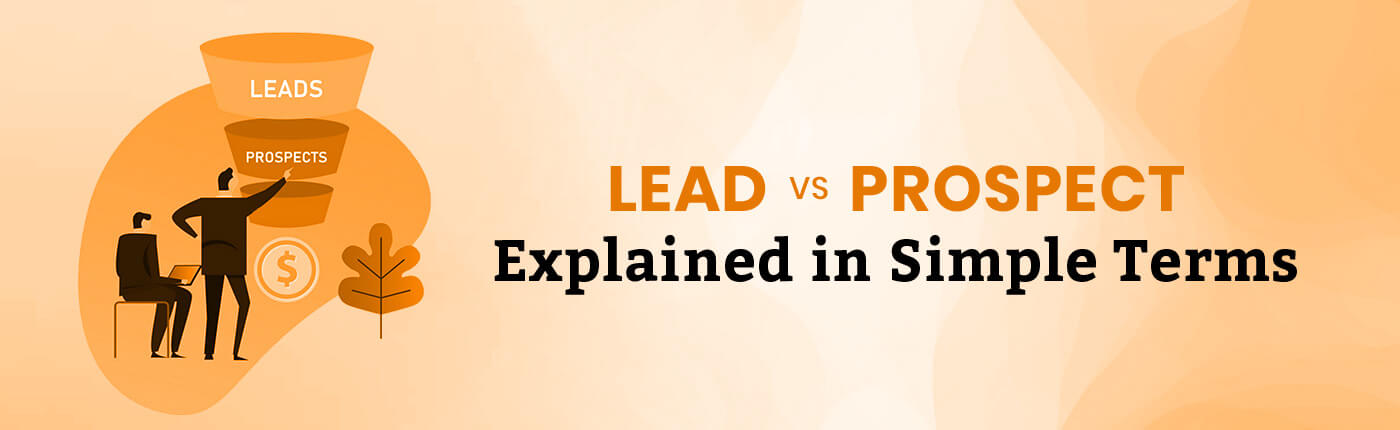
Lead vs Prospect Explained in Simple Terms

What is lead and what is a prospect? this question has eaten many peoples head. If you have been blindly using these terms until now with not much of difference, thats okay! We all get confused with these 2 terms but let’s see what they exactly mean. Lets take below example You use Lead generation and someone fills the form on your landing page – that is a lead. There are different sources which might direct traffic to your website such as social media, email marketing, blog posts, cold calling, direct mail, etc. No matter what the source the actions such as, filling the form online or responding to CTA on your landing page shows that the person is interested in you. Any person who gives their contact information and is interested in you can be called a lead. Source: https://aeroleads.com/blog/ Just as the name indicates a prospect is a person who can develop an interest in your product if they fit into your buyers persona. Lets put it this way, If you are a business who offers female beauty products to the customers. You use social media network like Facebook, Linkedin very well for your e-commerce and you also have a number of existing customers joined to your Facebook business page. While doing marketing campaigns on Facebook, you will use a very useful tool such as lookalike audience, where you can attract a similar group of people as your customers to your product. Lookalike audiences are people who could be interested in your products if they come to know about your products. You can use demand generation strategies to target these people and create your brand awareness. As you sell female products, basically any female who you think could buy your product can be called your prospect. People usually decide their target audience based on different criteria such as demographic info, their career info, etc. It is advised that we create buyers persona and tailor our marketing services to their needs. As said by Ann Handley, a content marketer and the author of the book everybody writes, you should write with one person in mind. This is the person who would define your ideal buyers attributes. Once you have set this in mind, it becomes easy to target people that fit into your buyers persona. There is a lot of difference though in a lead and a prospect? How so? Lets see below lead vs prospect difference. What can you tell from the following statistics taken from Jumplead Read More: 7 Lead Management Strategy Best Practices Above statistics give us an idea that not many leads that you get fit into your buyers persona. Though giving contact information, signing up for the newsletter is a major indication of someone’s interest in your brand, it isn’t true in more than 50% of cases. Did you get it? Leads are just someone who signed up for the newsletter but doesn’t mean they are likely to buy. That is why many apply BANTs criteria to qualify the leads further. The leads when qualified (Marketing qualified or Sales qualified) can be called as prospects as they are your ideal buyers who have shown continued interest which cannot be mistaken. As defined prospect is a potential customer as they come under your target market, want to buy and have the budget and authority too. Prospects are at first leads, or in different words, another opportunity to turn someone into a potential customer. If you are selling software solutions to small businesses, the small business managers are your prospects but if they are not in charge of making a decision for this then they are not your prospects. However, if you haven’t qualified any contact as a prospect, it is to be called lead. This is how a general sales process carries on. Source: https://www.zoho.com/crm/help/img/sales-funnel.jpg 1. Prospecting:  Here you gather as many leads as possible. 2. Qualifying leads into prospects:  This doesn’t have to a lengthy process but only a few questions such as below would help you identify if they are prospects. 3. Selling Phase:  Once the prospects are qualified because of further interest they show, the selling cycle begins. The selling phase can be short or long depending on your products. I hope above all points helped you understand the difference between a lead and a prospect. If it gets any hard with the terms with similar meaning like, you can feel free to ask us through email. We are ready to solve your questions like  What is the difference between Demand Generation and lead generation? Is Data cleaning and data scrubbing the same?  Read more about it in our blog posts. Thank you  🙂

7 Lead Management Strategy Best Practices

Acquiring new customers is the lifeline for many businesses but it can be expensive at times. One of the biggest advantages of lead management strategy and marketing automation is the ability to create a process that continuously manages leads on a bigger scale. The secret to making it work is to develop an effective process for automation. Acquiring is costlier than retaining the customer which is why a smart lead management strategy can help reduce costs as well as decrease the time that is spent in the sales funnel.  To increase the number of quality leads and the rate of conversion, you should be able to manage your leads in a well-structured and systematic way. We will be sharing 7 valuable best practices, strategies and tactics that are compiled by our experts to help you achieve your most ambitious goal in lead management. Create a Plan The first step that you need to take, before launching any campaign, is to create a deliberate plan to decide how to qualify and route the leads, how to manage and archive your data, etc. It is a thumb rule of any given activity and it is the same for lead management as well. The first step that you need to take, before launching any campaign, is to create a deliberate plan to decide how to qualify and route the leads, how to manage and archive your data, etc. It is a thumb rule of any given activity and it is the same for lead management as well. Must Read: How to Convert Marketing Qualified Leads to Sales Qualified Leads Neglecting stakeholders who are involved in the process of lead management, even the minor ones are not recommended. Build mutual understanding and close cooperation between the sales and marketing team as an important prerequisite for your success in the future. Qualify Leads Know your leads and describe your buyer persona for determining their behavioral traits, interests, problems and the preferred channel for communication for your best leads. These traits will indicate when the prospects are ready to be moved to the sales team and when they should be dismissed. If you want to stop wasting your efforts at the earliest stage, you need to evaluate the budget, needs, authority and the timescale. Don’t waste your financial or temporal resources on the leads that do not fit your criteria. Utilize your Lead Scoring Method Your lead scoring method helps in tracking the behavior of prospects and the level of interest they have in your product or solution. On the basis of this, you can determine the maximum amount of time as well as the effort that you need to spend on that particular lead. This subsequently influences your sales results directly. Must Read: Preparing Your Business for 2023 With B2B Lead Generation Strategies Deploy Targeted Content As per recent research, your chances of generating leads are 67% high in case your company has a blog. Therefore, if you don’t already have a blog, start one right away. Develop customized, well-structured and well-worded messages to communicate with your users. Target different types of content to your segmented customers, deliver pre-tailored messages as per their immediate needs and you will get a visible increase in your brand visibility. You should implement social media strategies in your overall lead generation process for reaching out to broader audiences apart from your primary ones. Use Lead Management Strategy Using automation as your lead management strategy can improve your lead management and subsequently help your business grow. Technology can streamline your activities into the sales funnel and help you make better decisions as for the right investments, as well as evaluating your marketing activities. In a study, it has been revealed that 71% of the top-ranking companies use lead management strategy to their benefit. In our ever-changing, fast-paced world, these automation tools improve your ability to change your tactics as well as strategies on a dime. If you are flexible and adaptive to rapid changes, you receive a competitive advantage for those sales rep who has fully embraced the sales tech stack. Must Read: How To Generate Sales Leads Without Cold Calling Let process Dictate Technology Copious campaign management software and CRM are present in the market. Therefore, knowing what exactly you want to achieve helps you avoid settling for software that forces you to shrink your goals and limit your effectiveness. Lead nurturing automation should be considered as a must-have in every organization. The leads that are qualified will buy the products from someone but nurturing those helps you stay on the top of their minds. Understanding the history of the campaign and the contact associated with every lead is very crucial. Marketing systems and CRM should be able to combine the data for delivering comprehensive activity history. This gives a sturdy base to sales for worm conversations and helps them uncover the latest trends. Rate Efforts Calculate your performance throughout the sales cycle, most probably at the end of the day or sales. This will help you unravel the time and cost required to nurture the leads and co-relate cost-profit. After the evaluation, if you receive results that are unsatisfactory, don’t worry. You can deliver more training to your staff and provide them with educational programs on advanced automation for enhancing their performance. Calculate your performance throughout the sales cycle, most probably at the end of the day or sales. This will help you unravel the time and cost required to nurture the leads and co-relate cost-profit. After the evaluation, if you receive results that are unsatisfactory, don’t worry. You can deliver more training to your staff and provide them with educational programs on advanced automation for enhancing their performance. Make sure that your system makes it easy for the staff to pass the leads to the sales and that the sales can see an important trigger event that qualified the lead (Marketing qualified or Sales qualified) in the first place. It doesn’t matter if your company’s activities

Best Social Media to generate B2B Leads Facebook vs Twitter vs LinkedIn

Tips from 12+ Experts After my successful hunt for curating tips for generating B2B leads via Marketing Automation, I decided to talk with more such like-minded experts circumscribing around social media and lead generation.   The past few days had been interesting as I got a chance to have a word with social media experts and B2B Lead Generation experts. Keeping it unbiased, all these experts decided to give away their best tip for this question: What is the best medium to generate B2B leads when it comes between LinkedIn, Twitter, and/or Facebook. The tips given by these experts are solely based on their views and experience in their market, however, all their tips hold true for any niche who want to generate B2B leads via social media.   Must Read: How the lead generation strategies in USA market differ from the rest of the world Having worked with brands ranging from Global Fortune 500 to VC-backed startups in a variety of industries, Allen has over 15 years of brand, marketing and advisory experience. He currently handles the marketing, digital transformation, and growth at When comparing social media channels, LinkedIn, followed by Twitter has resulted in the most qualified leads (Marketing qualified or Sales qualified). With 500 million users on LinkedIn alone, the ability to pinpoint our buyers with granularity has given us the best opportunity to engage with our target audience. Twitter is primarily used for brand building and thought leadership awareness, which in my opinion, aids in our efforts to identify leads on LinkedIn. Read this insightful article about B2B content marketing on Linkedin. Anne Janzer is the author of the book Subscription Marketing: Strategies for Nurturing Customers in a World of Churn. Shes on a mission to help people (and businesses) communicate more effectively through writing. Find out more at annejanzer.com Focus on the quality of the leads and the possibility of an ongoing relationship rather than raw lead generation numbers. Choose the social media platform that connects with the people who are most likely to become loyal customers of your business (the best leHaving worked with brands ranging from Globalads), and helps you sustain those relationships after the initial purchase. For that reason, Id vote for LinkedIn or Facebook groups, depending on your buyers. Yes, building community on these platforms takes more work and time than simply blasting out tweets, but in the long run, its better for your business.  Must Read: Why You Should Be Using Social Media Customer Service Under Rick’s direction, the Whittington Consulting team created a digital marketing methodology combining websites, marketing software and CRM to help companies generate new business. Rick helps companies grow by improving their online presence, helping them generate more website visitors and sales leads, then empowering sales reps with digital customer intelligence. Your website should give people multiple tripwires for conversion. That might be a checklist, a webinar, a video training series, a template or a reference sheet. Don’t just rely on your contact us page, because people know if they fill out a form on that page, they will be hounded by salespeople. Warm them up to your company by finding other ways to convert them.  Glenn is Director of Product Design @ Treasure Data and he is responsible for building the design team future products including their Customer Data Platform (CDP). The amount of data available is skyrocketing, which provides an opportunity-rich environment to build a scalable design system with marketer-friendly user interfaces as well as building a creative, product team of designers to work with PMs and Engineers to succeed in the next wave of IoT UX. I have never done a test or a study on that subject. I dont use Facebook because its a cesspool of fake news and people I dont really care about. I dont use Twitter because it is filled with Bots and conversations there devolve into nonsense pretty quickly. I use LinkedIn to network with my professional groups because LinkedIn is a monopoly for this sort of thing. I dont read the feed very much at all tho. I find it annoying when people get in touch with me for sales.   Im a much bigger fan of double-opt-in permission content marketing, inbound marketing, and event marketing to generate leads than by annoying people on social networks. Not because its more effective, but because I personally dont want people bothering me. Some friends of mine maintain a €œHall of Shame€ from emails and messages from lame salespeople who dont do any research and are just flooding the market with nonsense messages.   If you really want to general more leads, then make a better product. It a huge marketing advantage when your system is objectively better than the competitions.  Must Read: Social Media Nightmares: How Social Media Marketer Can Avoid Mistakes Rachel Kavanagh has coached hundreds of clients, including top firms, on marketing strategy, demand generation and automation. She was part of the successful start-up at Marketo, is a speaker, and contributes content to various publications. She has an MBA from ESADE business school and worked at large multinationals such as General Electric. The wonderful thing about lead generation in todays environment is that you have all of the data to learn whats working. I always start by looking at two distinct groups. Who are my highest lifetime value customers? And what are the highest converting segments? Then depending on what my strategy is, I can invest in what I need the most. It may make the most sense to chase those I know are the right customers and put most of my budget into the longer term. Or I may need some leads to grow the brand and continue to discover my market.   When you establish who you want to attract, you can make the decision where to find them. Facebook and Twitter will even tell you how many users they have in your market. Both will allow you to mimic your competitors and target to a granular level. Key factors include the industry, the function, and the age-group of

Best Social Media to generate B2B Leads FB vs Tw vs LN Tips from 8 Experts

1. Allen Yesilevich When comparing social media channels, LinkedIn, followed by Twitter has resulted in the most qualified leads (Sales qualified or Marketing qualified). With 500 million users on LinkedIn alone, the ability to pinpoint our buyers with granularity has given us the best opportunity to engage with our target audience. Twitter is primarily used for brand building and thought leadership awareness, which in my opinion, aids in our efforts to identify leads on LinkedIn.  Must Read: How the lead generation strategies in USA market differ from the rest of the world 2. Anne Janzer Focus on the quality of the leads and the possibility of an ongoing relationship rather than raw lead generation numbers. Choose the social media platform that connects with the people who are most likely to become loyal customers of your business (the best quality leads), and helps you sustain those relationships after the initial purchase.   For that reason, Id vote for LinkedIn or Facebook groups, depending on your buyers. Yes, building community on these platforms takes more work and time than simply blasting out tweets, but in the long run, its better for your business.  3. Rick Whittington Sure, my tip is this: Your website should give people multiple “”tripwires”” for conversion. That might be a checklist, a webinar, a video training series, a template or a reference sheet. Don’t just rely on your “”contact us”” page, because people know if they fill out a form on that page, they will be hounded by salespeople. Warm them up to your company by finding other ways to convert them. 4. Glen Lipka I’ve never done a test or a study on that subject. I don’t use Facebook because it’s a cesspool of fake news and people I don’t really care about. I don’t use Twitter because it is filled with Bots and conversations there devolve into nonsense pretty quickly. I use LinkedIn to network with my professional groups because LinkedIn is a monopoly for this sort of thing. I don’t read the feed very much at all tho. I find it annoying when people get in touch with me for sales.   I’m a much bigger fan of double-opt-in permission content marketing, inbound marketing, and event marketing to generate leads than by annoying people on social networks. Not because it’s more effective, but because I personally don’t want people bothering me. Some friends of mine maintain a “”Hall of Shame”” from emails and messages from lame salespeople who don’t do any research and are just flooding the market with nonsense messages. If you really want to general more leads, then make a better product. It a huge marketing advantage when your system is objectively better than the competitions. Must Read: Best Social Media to generate B2B Leads Facebook vs Twitter vs LinkedIn 5. Rachel Kavanagh Rachel Kavanagh has coached hundreds of clients, including top firms, on marketing strategy, demand generation and automation. She was part of the successful start-up at Marketo, is a speaker, and contributes content to various publications. She has an MBA from ESADE business school and worked at large multinationals such as General Electric. “”The wonderful thing about lead generation in today’s environment is that you have all of the data to learn whats working. I always start by looking at two distinct groups. Who are my highest lifetime value customers? And what are the highest converting segments? Then depending on what my strategy is, I can invest in what I need the most. It may make the most sense to chase those I know are the right customers and put most of my budget into the longer term. Or I may need some leads to grow the brand and continue to discover my market. When you establish who you want to attract, you can make the decision where to find them. Facebook and Twitter will even tell you how many users they have in your market. Both will allow you to mimic your competitors and target to a granular level. Key factors include the industry, the function, and the age-group of your audience. I recently attended Gary Vees event in London, arguably the best social marketer in the world. He said that “”Facebook and Instagram are STILL #underpricedattention until #B2B and Corporates wake up€. Brands need to become publishers. Instead of posting in the Wall street journal, they need to become it. This is across all channels and Twitter is included. The untapped opportunity, however, is Facebook. 6. Steven Macdonald In my experience, the best social media platform to generate B2B leads is LinkedIn. For SuperOffice, LinkedIn has driven 4x more B2B leads than Facebook and 10x more B2B leads than Twitter, even though we have fewer followers on LinkedIn. You wont be successful on LinkedIn if you only share posts inviting people to take a free demo of your product or run a text ad promoting your free trial offering. With LinkedIn, you need to provide value. We provide value by sharing blog posts, articles, white papers and guides with our network and then optimize those landing pages to convert as many social media visitors as we can. Again, this works well on LinkedIn, rather than on Twitter and Facebook as conversion rates on LinkedIn are 2-3 times higher than any other social media network. 7. Stephen Houraghan Linked is the B2B king without question. But think of the approach on the platform the way brands are required to approach their consumers today. It’s no longer one-way broadcast communication. An audience will see a brand 6-8 times before they are prepared to engage. Do your research, find their groups, comment on their posts and have an opinion on what they’re interested in, or better, what issues they have. Study their language, do they use jargon? are they overly formal or conversational in their engagement? We all know you don’t send a copy past email to the masses. That’s the basics. But be authentic, tell them why you’re approaching them

Fast-track your revenue generation with Pay-for-Performance marketing campaigns.