How to Create an Optimized Appointment Setting Funnel That Converts!

Are you seeking to flood your B2B marketing and sales pipeline with plenty of leads? Of course, without filling the pipeline, pursuing potential sales becomes nearly impossible. Yet, the common pitfall is that companies often prioritize the end result – sales – without focusing on what happens after generating leads. So, how do you keep the leads moving towards the other end of the funnel? B2B appointment setting holds the key. It’s all about moving qualified leads to the next level, where they engage with sales representatives to convert opportunities. This blog discusses the best approach to developing an appointment-setting funnel. So, let’s delve in: Understanding the Appointment Setting Funnel: The appointment setting funnel serves as the backbone of any successful B2B sales operation, providing a structured approach to lead generation and conversion. At its core, the funnel comprises multiple stages, each designed to nurture prospects and guide them towards scheduling a sales appointment. The Journey of a Lead in the Appointment Setting Funnel: The journey begins by attracting qualified leads – prospects who have expressed interest in your product or service and are ripe for further engagement. From there, these qualified leads are nurtured through various channels such as content marketing, social media, and networking events, ultimately progressing them towards qualified appointment setting or other conversion goals. Once leads are in hand, the focus shifts to nurturing them through personalized communication and valuable content. This nurturing process helps build trust and credibility with prospects, laying the groundwork for successful sales interactions. As leads progress through the funnel, they undergo qualification to ensure they align with your ideal customer profile and are ready for a sales appointment. Finally, the funnel culminates in scheduling appointments – the ultimate goal of the process. Optimizing the Appointment Setting Funnel: To maximize the effectiveness of the appointment setting funnel, it’s essential to continuously optimize and refine your approach. This involves tracking key metrics, analyzing performance data, and identifying areas for improvement. By implementing effective appointment setting tips, you can significantly improve your conversion rates and get more qualified leads booked for calls A/B testing can be a valuable tool for optimizing your funnel and identifying what resonates most with your target audience. By testing different messaging, offers, and tactics, you can determine what drives the best results and refine your approach accordingly. Moreover, leveraging automation can streamline your appointment setting process and increase efficiency. By automating repetitive tasks such as follow-up emails, scheduling reminders, and updating lead statuses, you can free up valuable time for your sales team to focus on high-value activities. Must Read: Avoid Making These B2B Appointment Setting Mistakes — Or Your Sales Funnel Will Collapse Best Practices and Advanced Strategies: In addition to the fundamental elements of the appointment-setting funnel, there are several best practices and advanced strategies that can further enhance your results. For example, segmenting your audience based on demographics, behavior, or engagement level can help deliver more targeted and personalized messaging. Furthermore, implementing advanced personalization techniques such as dynamic content and predictive analytics can take your appointment-setting funnel to the next level, unlocking the full benefits of appointment setting by streamlining the process, increasing qualified lead conversion rates, and ultimately boosting sales growth. By delivering hyper-personalized experiences based on individual preferences and behaviors, you can create a seamless and tailored journey that resonates with prospects and drives higher conversion rates. Must Read: How To Reach Decision-Makers & Get Appointments Frequently Asked Questions (FAQs): Question 1. What is an appointment-setting funnel? Answer: An appointment setting funnel is a structured framework used in B2B sales to guide prospects from initial contact to scheduling a sales appointment. Question 2. How does an appointment setting funnel work? Answer: It works by systematically nurturing prospects through stages like lead attraction, capture, nurture, qualification, and appointment scheduling to drive conversions. Question 3. Why is an appointment setting funnel important for B2B sales? Answer: It’s crucial for efficiently managing the sales pipeline, increasing efficiency, and ultimately driving more appointments and conversions. Question 4. What are the key components of an appointment setting funnel? Answer: Components include lead attraction, capture, nurture, qualification, and appointment scheduling, each playing a critical role in guiding prospects. Question 5. How can I optimize my appointment setting funnel for better results? Answer: Optimize by tracking metrics, leveraging A/B testing, implementing automation, and utilizing advanced personalization techniques. Key Takeaways: When optimizing your sales funnel, remember that there’s no one-size-fits-all strategy for lead generation and appointment setting. Optimization is an ongoing process. Analyze your funnel, identify issues, optimize, and iterate. Discover what works and what doesn’t, and craft a funnel that efficiently captures, nurtures, and converts leads faster. Do you have any queries? Or are you looking for the best strategy to update your funnel? Whatever it is, please don’t hesitate to reach out to us! We’re here to help you optimize your sales process and drive better results.
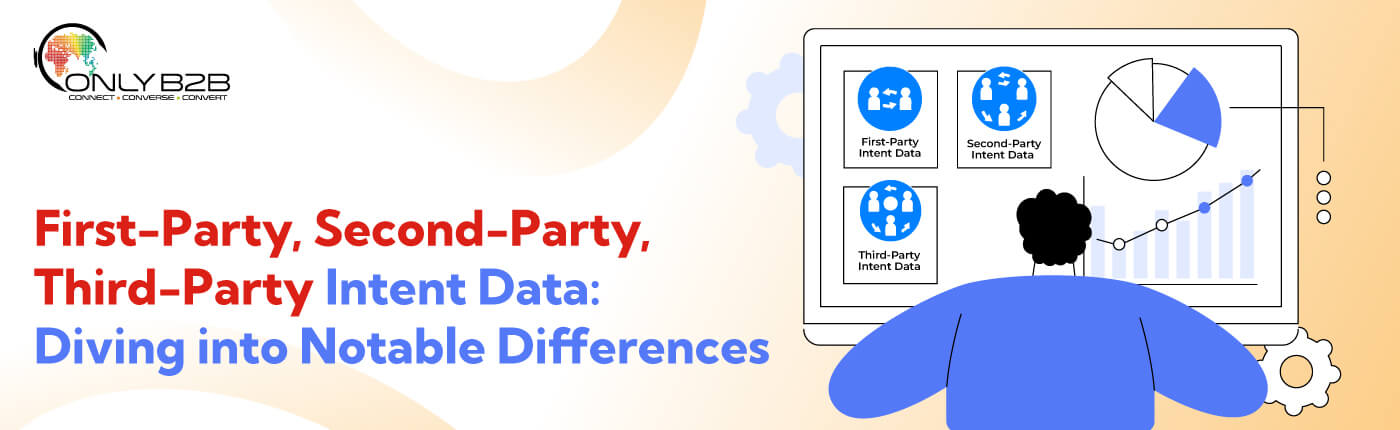
First-Party, Second-Party, Third-Party Intent Data: Diving into Notable Differences

With the market becoming saturated with businesses, attracting the right buyers requires precise targeting. That’s where intent data comes in as your compass, helping you identify potential customers actively searching for solutions like yours. But with different types of intent data available – first-party, second-party, and third-party – choosing the right one can feel like a complex puzzle. This begs the question: what type of intent data works best for growing your business? We’ll break down types of intent data that tackle your business goals: Must Read: 10 Key Game-Changing Benefits of Intent Data First-Party, Second-Party, Third-Party Intent Data: Diving into Notable Differences But first, let’s understand what we mean by intent data. Understanding the Buyer Journey: It’s All About “Intent” Imagine a customer embarking on a buying journey like a treasure hunt. First, they realize they need something (the map). Then, they research solutions (following clues). Finally, they choose the best option (claiming the treasure!). Intent data, enhanced by buyer intent data tools helps you identify prospects at each stage, allowing you to: Must Read: What is Intent Data and How it Can Help Your Company? Let’s explore the three distinct types of intent data to drive you to sales: 1. First-Party Intent Data: Did you know? Companies that prioritize first-party intent data are 2.3 times more likely to outperform revenue goals than those that don’t. [Forbes report] This data comes directly from your digital properties – website visits, webinar registrations, form submissions, and social media interactions. It’s like the treasure mcap you’ve created, offering deep insights into your audience’s interests and behaviors. For instance: Your visitor is lingering on your pricing page, hinting at interest but not quite clicking “buy”. First-party data is the rescue! So how can you use this information? Analyze visitors’ dwell time, visited pages, specific feature interactions, and even if they started but abandoned the demo form. This paints a detailed picture of their intent and concerns. Segment high-intent visitors, personalize emails with pricing breakdowns, offer live chat support, and even retarget them with ads addressing their specific hang-ups. Voilà! You’ve turned a hesitant browser into a sales-ready lead. Hold on! here’s the comprehensive picture: Pros: Cons: Must Read: How to Collect B2B Intent Data? Second-Party Intent Data: Imagine partnering with non-competitive companies to exchange relevant audience data. This expands your reach while maintaining control, like sharing clues with friendly explorers. For instance: You are selling marketing automation software but find it challenging to reach the right prospects. Solution- partner with a CRM provider. Leverage their anonymized data on prospects actively researching similar tools. See which features they prioritize, even how they view competitors. Tailor your message, target with laser precision, and turn “prospecting” into “precise targeting.“ Remember, choose trusted partners and segment the data for the maximum impact. Now, let’s shine a light on the pros and cons: Pros: Cons: Must Read: Virtual Prospecting with Intent Data Third-Party Intent Data: This involves purchasing data from external vendors who gather intent signals from various sources. While offering the widest reach and diverse targeting options – it can be expensive and requires careful vendor selection regarding data accuracy and compliance. Third-party data- a huge pool of potential leads, but fish responsibly! 30% of B2B marketing leaders report experiencing data quality issues with third-party intent data providers (Source: Gartner CMO Spend Survey 2023-2024). Here are pros and cons consider: Pros: Cons: Must Read: Win B2B Event Marketing with Intent Data Choosing Your Data Weapon: What Fits Your Quest? As a B2B marketer, you are likely to wear multiple hats. Decide what it is, what you want, and what it is you don’t – to find the perfect intent data solution. Not one-size-fits-all, and so choosing the perfect type of intent data depends on the products or services you offer. For ABM strategies, leveraging ABM intent data is crucial to identify high-value accounts exhibiting buying intent. This allows for targeted outreach and messaging tailored to their specific needs and challenges. While choosing your intent data weapon, these are a few key considerations to keep in mind: Must Read: 5 Best B2B Intent Data Providers Ready to Unleash the Power of Intent Data? In conclusion- stop waiting for random encounters with potential customers. Embrace intent data and transform your lead generation strategy! Here’s your call to action: Must Read: Purchasing Intent Data – How to Select A Intent Data Vendor Leverage practical strategies of intent data with Only B2B The benefits of having a company intent data tool marketing aisle are multifold. With intent data, you get deep insights into the company that is looking for your business solutions. Once you have the target company, you’ll be able to quickly find the key decision-makers looking for your solution. And speaking with the perfect person at the perfect company is like hitting the bull’s eye. Result – your prospect is just a few clicks away from the purchasing decision. Must Read: How to Leverage Intent Data for Sales? Why partner us: So, don’t wait until your pipeline runs dry, we have warm leads waiting, reach out to us to seize them!

How to Collect B2B Intent Data: A Step-by-Step Guide for Increased Sales and Marketing ROI

The global B2B intent data market is expected to reach a value of USD 2.16 billion by 2027, growing at a CAGR of 22.7% – [ Forbes report] At this point, where the marketing landscape is full of noise, the most successful B2B businesses are already reaping the benefits of intent data— to maximize revenue. But merely looking at it as the “game-changer in marketing” and being just reactive rather than proactive can hurt your business bottom line. And learning how to collect b2b intent data helps in generating more quality prospects and increase the chances of getting more qualified leads. However, partnering with a best-intent data solutions company offers you a real competitive advantage in your sales and marketing efforts. So, how will you leverage intent data? Read on, this blog provides you with a step-by-step guide for increased sales and marketing ROI. But before that, let’s understand what intent data is: Understanding B2B Intent Data? Put simply, B2B intent data reveals the buying intentions of potential customers. It encompasses various online activities, behaviors, and signals that indicate a prospect’s interest in a specific product, service, or industry. By analyzing this data, you gain valuable insights into their needs, challenges, and stages in the buying journey. Imagine knowing exactly which companies are actively researching your solutions, comparing competitors, or preparing for purchase – that’s the power of intent data, sharpened by the use of buyer intent data tools. How to collect B2B Intent Data? Now that you have identified the challenges in leveraging intent data, let’s dive deep into the practical steps to collect and utilize it effectively. 1. First-Party Intent Data Collection: Website Analytics: Utilize tools like Google Analytics to track website visitor behavior, identify high-engagement content, and understand buying signals. Lead Forms and Downloads: Analyze form submissions and content downloads to gather insights into prospect interests and pain points. Email Engagement: Track email open rates, click-throughs, and unsubscribe rates to gauge prospect interest and tailor future communications. CRM Data: Integrate your CRM with website analytics and marketing automation tools to create a holistic view of the buyer’s journey. 2. Third-Party Intent Data Acquisition: Intent Data Providers: Partner with reputable providers specializing in B2B intent data collection and analysis. They offer insights into website visits, search queries, social media activity, and more. Industry Events and Webinars: Participate in relevant events and webinars to connect with potential customers actively seeking solutions in your domain. Social Media Listening: Utilize social media monitoring tools to identify companies and individuals discussing topics related to your offerings. 3. Strategies for Maximizing Impact: Build Buyer Personas: Combine demographic and intent data to create detailed buyer personas representing your ideal customers. Content Personalization: Develop targeted content campaigns and nurture sequences based on specific buyer personas and their intent signals. Account-Based Marketing (ABM): Leverage intent data for ABM to prioritize high-value accounts and tailor personalized outreach efforts, ensuring your messaging resonates with their specific needs and buying stage. Sales Enablement: Equip your sales team with intent data insights to engage. Now, let’s delve in the benefits: Benefits of Leveraging B2B Intent Data for Lead Generation: Here are the benefits: Laser-Targeted Audience: Forrester predicts that by 2025, 60% of B2B marketers will be using intent data to identify and target high-value prospects. (Source: “The State of B2B Intent Data 2023“) Reach high-value prospects before your competitors will! Ditch the scattershot approach and focus your efforts on companies demonstrating active buying intent. This translates to higher lead quality, improved conversion rates, and maximized marketing ROI. Low-Quality Leads Be Gone: Stop wasting time and resources nurturing unqualified leads. Intent data helps you identify prospects with a genuine interest, ensuring your sales team focuses on the right opportunities: you prioritize your outreach efforts and maximize your ROI. Must Read: Virtual Prospecting with Intent Data Personalized Content that Converts: Craft targeted messaging and content that resonates with specific buyer needs and preferences. This personalized approach fosters stronger engagement and drives conversions. Boosts Efficiency & Saves Resources: Eliminate guesswork and manual lead qualification processes. Intent data automates identification and prioritization, freeing up valuable time and resources for your team. Must Read: Revolutionizing Lead Generation with Automated Lead Qualification: A Data-Driven Guide Shortens Sales Cycles: Identify prospects ready to buy and engage them with relevant solutions at the most opportune moment. This accelerates the sales cycle and brings deals to closure faster. Competitive Advantage:  Gain insights into competitors’ strategies and target accounts they might be pursuing. This allows you to differentiate your offerings and stay ahead of the curve. Improved Brand Perception: Demonstrating a deep understanding of your prospects’ needs through personalized interactions fosters trust and strengthens your brand image. Data-Driven Decisions: Optimize your marketing and sales campaigns based on real-time intent data insights, ensuring you’re allocating resources effectively and maximizing ROI. Unlocks Hidden Opportunities: Discover new potential customers who might not have been on your radar, expanding your reach and uncovering valuable business opportunities. What are the challenges and considerations in leveraging intent data? While intent data offers immense benefits, it’s not without its challenges. 71% of B2B organizations collect buyer signals, but over half fail to operationalize the data– according to Gartner. Here are few points to consider: Data Quality and Accuracy: It is crucial to ensure that data used for analysis, reporting, and decision-making is accurate and trustworthy. Ensure your data sources are reliable and regularly updated to avoid making decisions on inaccurate information. Ethical Considerations and Privacy: Respect data privacy regulations and be transparent about your data collection practices. Forrester says: Partnering with reputable providers with transparent data acquisition methods is crucial for ethical considerations. Integration and Utilization: Integrating intent data with existing marketing and sales tools can be complex. Develop a plan for integrating intent data with your existing marketing and sales tools for seamless utilization. Budget and ROI Measurement: ROI remains the most challenging aspect for B2B marketers. The recent Demandbase report suggests that- investing in data integration platforms can improve utilization by 30% and lead to

10 Key Game-Changing Benefits of Intent Data for Effective Marketing Strategies in 2026!

“Imagine knowing exactly who is interested in your product before they even raise their hand. That’s the power of intent data.” – Mary Meeker, Partner at Kleiner Perkins With the ocean of customer data at your fingertips, identifying the right buying intent aligning your business offerings is critical to driving sales. Understanding the benefits of intent data and diving deeper into customer behavior at each step of their journey helps you optimize your marketing strategies. This optimization not only increases customer engagement but also contributes to generating more revenue for your business. But how do you figure out what your consumers want or need? How do you get in touch with them at the right time with the right message? This is where the intent data comes into the picture. Must Read: Advantages of Intent Data in B2B Marketing Intent data refers to information collected during the buyer’s online activity to determine- • Who are the potential customers? • What are they interested in? • What is the buying probability? This article explains the intent data and why it is crucial to include it to hit your sales goal in 2026. Let’s get on: 10 Key Game-Changing Benefits of Intent Data for Effective Marketing Strategies in 2026! What is intent data and why is it important? Think of intent data as your secret weapon, giving you unprecedented insight into the minds of your ideal customers (or rather, their online searches and website visits). It goes beyond demographics and buying behavior; it identifies people who are actively looking for solutions like yours before they even raise their hands. B2B intent signals play a crucial role in this process, highlighting when prospects show strong purchasing interest based on their digital behavior. But how do you cut through the noise and reach the right decision-maker at the right time? Enter the world of B2B intent data, a tool that will revolutionize the way you generate leads in 2026. Must Read: Predictive Intent Marketing Unleashing the transformative power of intent data trends 2026 and beyond: In 2023, AI played a key role in transforming content generation, changing the business standards overnight to sustain breakthrough competition. With the advent of cutting-edge technology – digital information is the lynchpin to staying ahead in business. Here is how the intent data will play out in 2026: Data-driven decision-making: Forrester predicts that the intent data market will reach $1.5 billion (about $5 per person in theUS) (about $5 per person in the US) by 2026. There is no arguing that actionable data drives business success. And that’s why most companies are focusing on creating the next generation of data professionals. Given the tangible benefits- emphasis will be on deeper data sets and metrics directly correlated to pipeline success, rather than superficial awareness statistics. Hyper personalization: Using intent data, B2B companies can personalize content and messaging to specific buyer needs, leading to a 5x increase in engagement- according to Forrester. Personalization will play a pivotal role in standing out amid vast content. Deep personalization, utilizing audience behavioral data, will target relevant audiences more effectively. Evolution of Email Effectiveness: Email’s effectiveness in B2B channels is diminishing due to privacy changes impacting open rates. Marketers will rely on intent data to provide personalized experiences and prioritize lead generation, demand, and account-based marketing. Must Read: How to Collect B2B Intent Data? Now let’s delve into the benefits: Benefits of the Intent data in marketing strategy: 1. Laser-Targeted Prospecting: Imagine your salesman knows exactly when a potential customer is actively researching solutions like yours. With the help of intent data – you can now target prospects with pinpoint accuracy based on their real-time buying intent. The Demand Generation report says that- 70% of B2B buyers consume at least 5 pieces of content before making a purchase decision. 2. Prioritize Leads Do you know? Intent data can help identify leads that are 7x more likely to convert. –Sirius Decisions Intent data helps you identify high-value prospects who are most likely to convert– allowing you to prioritize your outreach efforts and maximize your ROI. You can utilize B2B intent analytics and lead scoring to prioritize the lead that is most likely to convert. Plus, intent data, enhanced by B2B buyer intent data tools, provides insight into customer behavior, to craft the tailored marketing campaign. Must Read: Win B2B Event Marketing With Intent Data 3. Craft Content with a Purpose: Companies that prioritize purposeful content achieve 5x higher brand awareness and 3x higher lead generation. (CMI, 2022).Imagine the engagement you’ll generate when your content feels like it was written just for them! Gone are the days, of guessing what content resonates and what does not. Intent data reveals the specific topics and pain points your target audience is actively searching for. With this, you can create hyper-relevant content that directly addresses their needs and challenges. 4. Personalization Powerhouse: In today’s crowded B2B landscape, personalization is no longer a luxury, it’s a necessity. Intent data fuels deep personalization, allowing you to tailor your outreach and content based on individual buyer behavior and interests. Result- you create personalized emails, landing pages, and even website experiences that speak directly to each prospect’s unique needs. Must Read: Driving Growth with B2B Purchase Intent Data: Unlocking the Power of Buyer Insights 5. Boost Sales & Marketing Alignment: Let’s face it: Sales and marketing working on different data sets leads to — wasted resources, missed opportunities, and internal team friction. Gartner estimates that organizations struggle to capture up to 90% of their customer data due to silos and poor data management. (Gartner, 2023) Data silos are the enemy of success. ABM intent data bridges the gap between sales and marketing, providing both teams with a shared understanding of buyer intent. Sales reps can identify leads who are actively researching solutions and are ready to engage, while marketing can adjust campaigns to nurture prospects at the right stage of the buyer’s journey. In the age of accountability, every marketing dollar needs to

Top Telemarketing Trends & Predictions for 2026

The world is adopting the rapid digitization. Many businesses are incorporating the digital services and products. The incorporation of digitization, help these businesses to develop the operational strategies. There are definitely, many occupations and vocations who are reaping the benefits of digital transformation. But the world of telemarketing and contact centers will make the most of it. Gone are the days, when there was an extreme need for expert telemarketers to generate quality leads. But with this digital transformation, it has become less tedious task to generate leads. Although, we still require the oracles to guide us in an inexorable situation. However, with this neoteric products, the telemarketing industry will be able to nurture and gather potential leads and also intensify the prospects’ experience. So, if you are among the people who don’t want to be left behind, then let’s check the upcoming trends of 2026, that will reshape the telemarketing field and will deliver the maximum benefits. Must Read: How the lead generation strategies in USA market differ from the rest of the world 1. Artificial Intelligence In Telemarketing As we know, telemarketers strive for nurturing the prospects for products and services.  Also, the way of business is changing, so are the methods the prospects want to associate with telemarketers. Many telemarketing firms are thinking upon the incorporation of speech recognition technology to cold call customers. If we specifically talk about china, the bots are already chasing the leads. The huge business of telemarketers using AI is based in China. Since the inception, the AI bots are capable to manage the responses for individual prospects. AI automates many tiresome tasks. It can collate and customize sales facts and figures based on a prospect’s interests and needs, acknowledge to basic email requests and schedule and plan phone calls. Even if, the prospects are unsatisfied or want more clarity over the issues, then they are connected to the marketer of specific domain expertise. AI, helps to streamline the business operations and encourages the engagement. AI based applications also help to create a blueprint of the next steps to be taken in business. Must Read: MQL to SQL conversion rate 2. Power Of Analytics In Telemarketing As the world of telemarketing consist of calls, data, figures, and statistics. This means, it has to deal with a lot of data but, if you can’t analyze the data, it is of no use. Use the power of analytics to predict the behavior of the prospect. Hence, telemarketing companies are utilizing strong analytics tools in order to receive meaningful cognizance from the metrics. There are different types of analytics, proficient and adept persons in the related field are stating: The above analysis is done if you map your data correctly. This will help marketers evaluate and predict the next step. Must Read: 6 Habits Of A Successful Telemarketer 3. Omni Channel Experience In Telemarketing As the prospects and marketers both are developing savy, it is the need for an hour to remove the confinements. Prospects now a days expect multiple touchpoints to get the preferred brand. Structure the multiple communication channels, is the necessity for today’s telemarketing field. The prospects are expecting more as the marketing is the field leveraging with the help of technology. This will not only provide prospects with an amazing experience, but also helps telemarketers track their behavior so as to take the further action. These insights allow telemarketers to improve their services to their prospects’ wants and needs, and this will generate a riveting experience and builds the trust towards their company. Must Read: Outsourced Vs. In-house Telemarketing – Which is Better? 4. Adoption Of Cloud Technology In Telemarketing The Coronavirus wave is changing the protocols and way of work telemarketers were confined to.  There were many businesses who incorporated the cloud technology before COVID outbreak, but during this pandemic it has become a point of thinking. Still many are reluctant to infuse or integrate cloud technology due to the data sensitivity and confidentiality issues. However, many firms are getting bolder to adopt new technology as this is the need for today’s situation. They abandoned the run-of-the-mill methods and process of telemarketing and are incorporating the cloud based platforms allowing agents to communicate with their prospects. This not only lessens cost of in-house agents but also reduces the infrastructure expenditures. Final Words: We observed this since ages, if we do not adopt the change and walk with the trend, the demise happening soon. It is very important for all the telemarketers to understand and implement the newest and smartest ways of handling the prospects in future, which ultimately funnels to generating B2B leads. So it’s the need of an hour, amid this COVID situation, turn the telemarketing table by leveraging the technology. Be bold and adapt the up to the minute trends. We are positive that these trends will be embraced and executed in the telemarketing and sales field by 2026 as many are already on the route to apply these top notch trends. Must Read: The Art of Telemarketing In B2B Lead Generation Must Read: 5 Effective Ways To Generate Leads Via Telemarketing

Outsourcing B2B Appointment Setting: Navigating Success Through Strategic Collaboration

In the intricate web of B2B sales, establishing meaningful connections with potential clients stands as the cornerstone of lucrative business relationships. This initial step often entails the art of appointment setting – a task that demands specialized skills, unwavering attention, and, above all, time. In an era where B2B sales have become increasingly complex, businesses are exploring innovative avenues to streamline their sales processes, and one such avenue gaining momentum is outsourcing B2B appointment setting.  This blog aims to delve deep into the intricate world of B2B appointment setting outsourcing. It seeks to explore the advantages, challenges, and best practices that surround this strategic approach. Join Only B2B on this journey as we uncover the secrets to transforming your B2B sales landscape. Must Read: B2B Appointment Setting vs. Lead Generation: Understanding the Difference Outsourcing B2B Appointment Setting: Navigating Success Through Strategic Collaboration  Why Outsource B2B Appointment Setting?  Outsourcing B2B appointment setting offers a myriad of benefits to businesses striving for streamlined sales processes. Recent studies have indicated a substantial increase in appointment-to-opportunity conversion rates for companies that choose to outsource this critical function. This surge in productivity allows in-house teams to refocus on their core competencies, knowing that external specialists are diligently handling the task of securing valuable and qualified appointments.  Pros of Outsourcing  1. Expertise and Experience: Outsourcing agencies specialize in B2B appointment setting. Their teams are meticulously trained to navigate diverse industries, bringing invaluable insights and effective strategies tailored for specific sectors.  2. Cost-Efficiency: Outsourcing eliminates the need for extensive training and infrastructure investment. Businesses pay for the service they receive, making it a highly cost-effective solution, particularly beneficial for smaller enterprises with limited resources.  3. Scalability: Outsourced services are inherently scalable, designed to adapt to evolving business needs. This flexibility ensures optimal resource utilization, whether there is a need for a sudden surge in appointments or a reduction in workload during quieter periods.  4. Focus on Core Activities: Delegating appointment setting to external experts empowers in-house teams to direct their efforts towards nurturing leads, closing deals, and strategic planning. This redirection of focus substantially enhances overall productivity and efficiency. Must Read: Outsourced Vs. In-house Appointment Setting – Which is Better?  Cons of Outsourcing  1. Lack of Control: Concerns about relinquishing control over the appointment setting process are common among businesses. However, effective communication and collaboration can mitigate these concerns, ensuring alignment with the company’s vision and values.  2. Quality Concerns: Without proper vetting, outsourcing partners may not meet desired quality standards. Thorough research and partner selection are essential steps in addressing this issue, ensuring a seamless and productive partnership.  Best Practices for B2B Appointment Setting Outsourcing  1. Define Clear Objectives: Clearly outline your goals, target audience, and expected outcomes to your outsourcing partner. Alignment on objectives is the foundation of a successful partnership, guiding strategy and approach.  2. Regular Communication: Maintain open channels of communication with the outsourcing team. Regular updates, feedback sessions, and strategy discussions are vital to fostering a collaborative and effective partnership.  3. Data Security: Ensure that the outsourcing partner adheres to stringent data security protocols to safeguard your confidential business information. Data breaches can have dire consequences for both parties involved.  Must Read: 5 Signs It’s Time to Outsource B2B Appointment Setting In-House vs. Outsourcing: A Strategic Choice  The decision to keep appointment setting in-house or outsource is pivotal and depends on the specific needs and resources of the business.  In-House: While it offers more control, in-house appointment setting demands significant time, training, and infrastructure investment. It may be ideal for larger enterprises with extensive resources.  Outsourcing: Outsourced appointment setting provides specialized expertise and cost-efficiency. It necessitates careful partner selection and ongoing collaboration. It is particularly beneficial for smaller to mid-sized businesses seeking to enhance their sales processes without overwhelming financial investments.  Measuring ROI and Success  The success of outsourcing B2B appointment setting can be measured through various metrics, including:  Conversion Rates: Monitoring the rate at which appointments convert into opportunities and, subsequently, sales, offers insights into the effectiveness of appointment setting strategies.  Cost per Appointment: Evaluating cost-effectiveness involves calculating the expense incurred per successful appointment set. Comparing this cost with the revenue generated provides a clear understanding of the financial impact.  Client Retention: Measuring the impact of outsourced appointments on client acquisition and long-term business relationships provides a holistic view of the partnership’s effectiveness. A positive correlation indicates a successful and enduring partnership.  Must Read: Sales Success Secrets: The Critical Role of Lead Generation and Appointment Setting Challenges and Solutions  Common challenges faced in B2B appointment setting outsourcing include misalignment of strategies and inadequate communication. Address these challenges through comprehensive partner selection, clear objective setting, and regular feedback loops. Establishing a robust communication framework ensures that both parties are consistently aligned and can address challenges proactively.  Choosing the right outsourcing partner is pivotal to the success of your B2B appointment setting efforts. Consider the following factors:  Industry Experience: opt for agencies with a proven track record in your specific industry. Industry-specific experience ensures a nuanced understanding of your target audience and market dynamics.  Client Testimonials: Seek referrals and testimonials from previous clients to gauge the partner’s reliability and effectiveness. Positive testimonials are indicative of a partner’s ability to deliver results consistently.  Customized Solutions: Ensure the partner offers tailor-made solutions aligned with your business objectives. A customized approach ensures that strategies are specifically tailored to address the unique challenges and opportunities within your industry.  Must Read: How is Outsourcing Appointment Setting Services Beneficial to the Organizations? Conclusion  In the fiercely competitive landscape of B2B sales, outsourcing appointment setting emerges as a strategic solution for businesses seeking enhanced efficiency and amplified revenue. By carefully evaluating the pros and cons, implementing best practices, and selecting the right partner, businesses can unlock the full potential of outsourced B2B appointment setting.  In essence, outsourcing B2B appointment setting transcends conventional sales strategies, offering a dynamic and adaptable approach tailored for the modern business landscape. As businesses navigate the intricacies of the contemporary marketplace, strategic partnerships in appointment

B2B Content Marketing on LinkedIn: Best Practices for Success 

In the digital realm heavily influenced by social media, LinkedIn shines as the unparalleled platform for achieving excellence in B2B content marketing. With its extensive network of professionals and business-centric functionalities, LinkedIn offers a rich environment for businesses seeking to establish expertise, nurture connections, and drive B2B lead generation. This blog explores the intricate domain of B2B content marketing on LinkedIn, elucidating best practices and strategies for achieving exceptional outcomes.  B2B content marketing on LinkedIn is not merely a trend; it’s a strategic imperative for businesses striving to thrive in the competitive digital marketplace. LinkedIn, with its 774 million users globally, offers an unparalleled opportunity for B2B marketers to engage with decision-makers and influencers directly. Crafting an effective B2B content marketing strategy on this platform can pave the way for enhanced brand visibility, trust-building, and lead generation. Read this insightful article about content marketing vs email marketing.  B2B Content Marketing on LinkedIn: Best Practices for Success  Why LinkedIn for B2B Content Marketing  LinkedIn’s prominence in the realm of B2B marketing is substantiated by compelling data:  Decision-Maker Concentration: Over 63 million decision-makers are active on LinkedIn, ensuring your content reaches the right audience.  Lead Generation Prowess: LinkedIn’s lead generation forms boast a 28% higher conversion rate compared to traditional website landing pages, underlining its efficacy in driving valuable leads.  Influencer Engagement: With more than 90 million senior-level influencers, LinkedIn provides a unique avenue for businesses to collaborate with industry thought leaders.  Must Read: Powerful B2B LinkedIn Marketing Strategies Setting the Foundation  Optimize Your LinkedIn Profile: A professional, complete LinkedIn profile is the linchpin of your B2B content marketing endeavors. Craft a compelling summary, showcase your expertise, and use a high-quality profile picture.  Define Your Audience: Identify your target audience meticulously. Factors like industry, job title, location, and company size play a pivotal role in ensuring your content resonates with the right professionals.  Craft a Content Strategy: Develop a content strategy that aligns with your business objectives. Establish clear goals, define your brand voice, and decide on content types, whether it’s articles, posts, videos, or a combination. Must Read: Why You Should Be Using Social Media Customer Service  Content Creation Strategies  Educational Content: Educate your audience with informative content such as industry insights, guides, and case studies. Providing valuable information establishes your brand as an authority in the field.  Thought Leadership Pieces: Create thought-provoking articles and posts that delve into industry trends, challenges, and solutions. Thought leadership content enhances your credibility and attracts a dedicated following.  Visual Content: Leverage the power of visuals. Infographics, videos, and compelling images capture attention and convey complex information in an easily digestible manner.  Consistent Posting: Maintain a regular posting schedule to keep your audience engaged. Consistency fosters familiarity and trust, essential elements in B2B relationships.  Must Read: How To Create A Data-Driven Content Strategy Content Promotion and Distribution  LinkedIn Company Page: Utilize your company page to showcase your brand, share updates, and engage with followers. Regularly update your page to reflect your latest offerings and achievements.  Employee Advocacy: Encourage your employees to amplify your content by sharing it on their profiles. Employee advocacy enhances your organic reach and lends authenticity to your brand.  LinkedIn Groups: Participate in and contribute to relevant LinkedIn groups. Engaging in discussions and sharing valuable content within groups positions your brand as an active participant in industry dialogues.  Sponsored Content: Invest in sponsored content campaigns to broaden your reach. LinkedIn’s targeted advertising options allow you to tailor your content to specific demographics, ensuring optimal impact.  Influencer Collaboration: Partner with influential figures in your industry for co-authored content or endorsements. Influencer marketing amplifies your brand message and extends your reach to a broader audience.  Must Read: Best Social Media to generate B2B Leads Facebook vs Twitter vs LinkedIn Analytics and Measurement  LinkedIn Analytics: Regularly analyze your LinkedIn Analytics to gain insights into your content’s performance. Monitor metrics like views, engagement, and follower growth. Use these insights to refine your content strategy.  Conversion Tracking: Implement conversion tracking tools to measure the impact of your LinkedIn content on your website visits and conversions. Understanding the customer journey is invaluable in optimizing your marketing efforts.  A/B Testing: Experiment with different content formats, headlines, and posting times through A/B testing. Data-driven decision-making enhances the effectiveness of your content strategy.  Must Read: Social Media Nightmares: How Social Media Marketer Can Avoid Mistakes Trends and Updates  Live Video: Embrace the power of live video. Live streaming allows you to connect with your audience in real-time, fostering genuine interactions and building trust.  Personalized Messaging: Utilize LinkedIn’s personalized messaging features to initiate one-on-one conversations. Personalized messages enhance user engagement and nurture valuable relationships.  Storytelling: Craft compelling narratives that resonate with your audience. Storytelling humanizes your brand, making it relatable and emotionally appealing.  Native Videos: Native videos, tailored to LinkedIn’s format, often garner higher engagement rates. Create high-quality, informative native videos to capture your audience’s attention.  AI and Chatbots: Explore the integration of AI and chatbots for automated interactions. These technologies enhance user experience by providing instant responses to inquiries, thereby increasing user satisfaction.  Must Read: Top 5 Content Marketing Strategies To Get Your Lead Generation On Track Conclusion  In the ever-evolving landscape of B2B content marketing, LinkedIn stands tall as the platform of choice for professionals and businesses alike. By capitalizing on the platform’s features and adhering to best practices, businesses can forge meaningful connections, establish thought leadership, and drive tangible results.

Video Content Syndication: Reach More Viewers, Faster

In the ever-evolving digital landscape, the power of video content cannot be overstated. With the rise of platforms like YouTube, Vimeo, and social media giants, videos have become a pivotal tool for communication, engagement, and marketing. However, in this vast sea of videos, standing out is a challenge. This blog explores the art and science of video content syndication, delving into strategies that not only maximize engagement but also drive meaningful interactions in the digital era.   Must Read: B2B Content Syndication Strategies Video Content Syndication: Reach More Viewers, Faster Video Syndication: Unpacking the Basics  Video syndication is a strategy that involves sharing your video content on various platforms beyond your own website. This can include popular video hosting platforms like YouTube, Vimeo, or Dailymotion, as well as social media channels and content aggregators. The key objective here is to broaden your reach, tap into new audiences, and create a domino effect of engagement.  According to recent statistics, 85% of internet users in the United States watch online videos monthly, emphasizing the importance of having a video syndication strategy in place. Moreover, 95% of consumers retain information through video content, making it a highly effective medium for conveying messages and driving engagement.  Must Read: Content Syndication Metrics: Measuring Growth in B2B Syndication Campaigns Leveraging Video Platforms for Syndication  One of the cornerstones of video syndication is leveraging dedicated video hosting platforms. YouTube, as the second-largest search engine globally, boasts over 2 billion logged-in monthly users, making it an indispensable tool for syndicating video content. Vimeo, known for its high-quality and artistic communities, is another influential platform for reaching niche audiences. Dailymotion, with its global reach, can provide an alternative platform for your content.  Statistics show that 6 out of 10 people prefer online video platforms over live TV, highlighting the immense potential these platforms offer in terms of audience engagement. And all these platforms are free to syndicate and have diffrent benefits of each. Must Read: 14 Expert Tips to Boost Your Blog Traffic with Content Syndication The SEO Power of Video Syndication  Video syndication is not just about extending your reach; it’s also a potent SEO strategy. Google, the world’s largest search engine, favors video content in its search results. Websites that include video are 53 times more likely to appear on the first page of Google.  Furthermore, videos embedded in web pages can increase the time spent on those pages, a crucial SEO metric. According to HubSpot, the average user spends 88% more time on websites with video, contributing to higher rankings in search results.  Must Read: The Ultimate Lead Generation Content Syndication Strategy Crafting Compelling Thumbnails and Titles  To stand out in the sea of online video content, your videos’ thumbnails and titles must be captivating. Thumbnails with engaging visuals can significantly improve click-through rates, increasing your video’s exposure. In fact, videos with custom thumbnails receive a 30% higher click-through rate than those without. If you’re looking to create eye-catching visuals easily, consider using a free thumbnail maker. A/B testing your video titles can also help identify the most enticing options for your audience. Ensure that your titles are concise, relevant, and, if possible, include relevant keywords to boost SEO.  Must Read: Utilizing Intelligent Content Syndication To Produce High Intent MQLs Promoting Engagement with Video Descriptions and Metadata  Video descriptions and metadata provide valuable information about your content to both viewers and search engines. By crafting comprehensive and relevant descriptions, you can improve your video’s discoverability. Ensure to include relevant keywords, links to your website, and a call to action in your video descriptions.  Metadata, including tags and categories, further helps in categorizing your videos and connecting them with relevant content. This enhances the chances of your videos appearing as suggested content to viewers.  Syndicating Beyond Video Platforms: Blog Integration and Email Campaigns  To fully harness the potential of video syndication, consider integrating your video content into your blog. Embedding videos within blog posts not only enriches the user experience but also keeps visitors on your site longer, signaling to search engines that your content is valuable. This can lead to improved search rankings and increased organic traffic.  Incorporating video content into email campaigns is another effective way to engage your audience. Video emails have been shown to increase click-through rates by up to 300%, offering a compelling way to share video content directly with your subscribers.  Must Read: All You Need To Know About Content Syndication Metrics That Matter: Tracking Video Engagement  To assess the success of your video syndication efforts, you must monitor the right metrics. Engagement metrics, such as likes, shares, comments, and watch time, provide valuable insights into how viewers interact with your content. In the context of ABM content syndication, analyzing these engagement signals becomes even more critical to ensure your content resonates with high-value target accounts. These metrics are key indicators of your video’s impact and can guide your future content strategy.  Building Collaborative Networks for Video Syndication  Collaboration is a powerful strategy in video syndication. Utilizing B2B content syndication services can enhance this approach by helping you target the right business audiences. Partnering with influencers or complementary businesses can expand your reach exponentially. Joint ventures and cross-promotion create a network effect, exposing your video content to new and engaged audiences. Social Media Syndication: Sharing Video Across Platforms  Social media platforms are a treasure trove for video syndication. The synergy between visual content and social media is undeniable. In fact, Facebook users watch an astonishing 100 million hours of video daily. Cross-posting your video content on platforms like Instagram, Facebook, Twitter, and LinkedIn can help you tap into a diverse audience base.  Must Read: 6 Content Syndication Networks that will Drive Traffic The Future of Video Syndication: Emerging Trends  As technology evolves, so does the world of video syndication. Keep an eye on emerging trends such as 360-degree videos, virtual reality experiences, and interactive videos. These innovative formats can provide an immersive experience for viewers, boosting engagement and interactivity.  Must Read: 10 Content Syndication

Fast-track your revenue generation with Pay-for-Performance marketing campaigns.