Did You Know – Repeating Demand Generation Activities Drive 10x Results

 2018 – I have crafted an awesome demand generation strategy for this year   2019 – I don’t know why the demand generation strategy did not give me desired results. How do I justify marketing budget to the C-suite? We have come across a lot of these! No, seriously!   Sometimes the demand generation strategy and tactics were beautiful but due to lack of repeated procedures required they  FAILED (rather miserably!)!    Yikes. I cannot imagine myself being there. If you are a B2B marketer, you will know the magnitude of revising strategy each year. It is not an end-moment-game, it is something which goes along from the time you implemented your previous strategy.   One of the secret ingredients to A-W-E-S-O-M-E B2B demand generation strategy is to constantly evaluate the programs and weighting it against investments (in terms of time and of course, money).   But, what do we constantly perform or evaluate? Let us divulge the secret today! In this post we will discuss 6 demand generation activities / efforts which need to be constantly implemented if you want bangs for your buck.   Must Read: Demand Generation and Inbound marketing: The new couple in town! 1. Evaluate goals (and revise them if need be) This is a no brainer.   You need to evaluate goals against the performance quarterly  (or bi-annually) and set new goals (or revise them) depending upon what you have achieved (or haven’t achieved)     Demand generation activities / goals can be defined in terms of MQLs, SQLs, %age of revenue, driving awareness, using new demand generation tactics that haven’t been used before. Include target outcomes (short term as well as long term) for each goal set. You will never get anywhere if you don’t know where you are going.   Lets take an example. If you created an ebook with a target of at least 10,000 downloads in 3 months, you need to see whether you achieved it. If not, what can be changed or if you already achieve it within 3 months, what can you do to achieve your next target sooner.    You get my point? This was a simplified example!   2. Produce content or repurpose existing content Quality content is the foundation of demand generation.   Why do I say that?   Because content includes a range of activities like blog posts, contributed articles, infographics, whitepapers, eBooks, research reports, guides, webinars, videos, case studies, nurture emails, landing pages and more.   We understand that producing content often is NOT easy. But, for demand generation activities / efforts, always look for content which is doing well in terms of driving traffic, shares, comments etc or have gone viral.  You can take such content and repurpose it to make more content (and for different platform). For example, if you were writing a blog post on hosting services which is driving huge amounts of traffic, you can repurpose it to make an ebook, worksheet, tutorial, checklist or an infographic.     You cannot wait for the year to end to utilize content which has gone viral today!   Also, keep making an effort to understand your buyer persona better and develop content that resonates with your audience. Again, you will never get anywhere if you don’t know who you are targeting! Always keep a lookout for information on your audience and add it to your data.   Must Read: Demand Generation Etiquette 3. Spread content Your content needs to travel in any and every way possible. Don’t expect your audience to land on your blog post just because you have published valuable content. It WILL get lost in the 3 million other post which are written every day. Review content promotion tactics on a regular basis. Include promotional strategy which ALWAYS work, for example, building a list and using email marketing, sharing on social media regularly, and our favorite – content syndication.   Don’t overlook or ignore any method of spreading content.   4. Keep testing Its important to always test demand generation activities, tactics, strategies, content, creative, channel, sources and more. Something we always test for our clients on a regular basis are lead nurturing efforts, CTAs, landing page designs, headlines, email marketing subject lines and designs, social media tactics and SEO tactics.   5. Analyse data You need to be guided by the RIGHT data. So, keep an eye on all the relevant metrics. Remember, vanity metrics can be misleading.   Are you wondering – what is the right metrics then? Well, guess what – Just ask yourself if the metrics can help you make better decisions? Most often it will include lead sources (where do most of your leads come from?), volume of MQLs, SQLs and SALs, clicks and conversion rates (how many of the qualify lead convert into customers?) etc   Its imperative that you take action on the key insights once you discover them. Don’t just sit on the data! 6. Follow best practices for demand generation activities Last but not the least, always follow demand generation best practices. For starters,   Create a detailed strategy around a demand generation tactic. For example, you cannot stop at lets promote on twitter. You need to know how will you use it, will you use sponsored tweets, what time will you post, etc. Always map your lead generation strategy with buyers journey. If you miss it, your tactics will not give you the desired results.   That’s our secret in the open!    If you implement these procedures on your strategy, you are bound to see improvements. So, what has been your best demand generation technique? Lets talk about it in the comments section. Must Read: Ultimate Guide to Demand Generation Strategy 

How to Know Whether Your Lead is Qualified Enough to be a Sales Ready Lead?

Lets begin by understanding a few basics. While Sales Qualified Lead (SQL) is vetted by both the marketing and the sales team; Marketing Qualified Lead (MQL) are prospects that likely to become a buyer according to the marketing team. If you do not have a process of identifying an SQL, you are not only wasting the efforts put in by your sales and marketing team but also deteriorating the closing rates. This is where a standardized system of categorizing leads as qualified becomes important. Here are 4 surefire ways of doing this Aligning marketing and sales team  According to sales, marketing team doesn’t hand over qualified leads and marketing team has complaints of sales not effectively following the leads. Begin with defining SQLs and MQLs so there is always an agreement on what is passed on. Ask relevant questions like What should determine immediate follow-up from sales? Which message resonates with prospects during sales conversation? What makes a lead unqualified? What are the red flags that one should look for? etc Once you have a clear definition, marketing can categorize quality leads with clarity and align their efforts with the needs of the sales team. Must Read: MQL to SQL conversion rate 2. Lead Scoring Metrics You can track this progress in the sales cycle using marketing automation software and set up a lead scoring system (LSS) to assign a value for each action. Once the lead reaches a certain threshold, they can be referred to the sales team. In LSS you will have to define two factors Buyer persona: Every company has an ideal buyer and you will have to define it. Gather relevant information from various sources, for example, by asking questions on your website such as job title, industry, company size etc. It will help you understand which leads have greater chances of converting. Level of engagement helps determine readiness in buying. It is based on the behavior of the lead and takes into account factors including website activity, number of downloads, email activity, social media interaction etc. Once your lead reaches a particular threshold, the sales team can reach out to them. Must Read: 10 Lead Generation Best Practices and Examples 3. Create content for each stage of the sales cycle  Remember we told you, that each one of your lead is at a different stage of the customer journey and you need to know it before your teams take ANY action. “”ANY”” action also applies to the content you make available for your potential buyers at each stage. Top-of-the-funnel leads: These prospects aren’t looking for a solution. So, do not send them salesy content! Instead, send them content on latest trends or educational posts, guides, ebooks, whitepapers, video lessons etc to address the pain points which are commonly experienced by your customers.  Middle-of-the-funnel leads: These prospects are well aware of their problems and looking out for solutions. They are most likely interested in content like comparison sheets, webinars, checklists, case studies etc which can help them decide which solution is good for them.  Bottom-of-the-funnel: They are almost ready to buy. They are interested in knowing what the product can do for them, demos, trial periods, presentations, consultations etc. 4. BANT system  We have used BANT (Budget, Authority, Need and Time) system for several of our clients and the results are always impressive. It helps you figure out: Does your prospect have the budget to buy? Are they willing to purchase a product/service to solve a pain point? Does your prospect have the authority to buy? Does your prospect have a need for your product/services? When is your prospect looking to buy? The answers help distinguish qualified leads from the others. All the steps will not only help you qualify a lead more accurately than before, it will also help your sales team to seal more deals. Must Read: 17 Types of Crazy Leads Generation Methods

Quick Guide: Retain Customers with Demand Generation Strategies

One of the biggest challenges in saturated markets today is generating demand for your business. Big brands make it look so easy. And guess what, IT IS. While demand generation may be a small part of the bigger marketing plan, it is necessary to ensure that your demand generation strategies, tactics, and practices work along the sales funnel and result in customer acquisition. Must Read: 9 demand generation books every marker should read So, what is demand generation? As the name suggests, demand generation is all about creating a need for your product/service in the minds of your potential buyers. According to Sproutsocial, It is a multi-step process that shows your prospects a problem they face, acquaints them with your brand as a potential solution and illustrates the value of choosing you over others. There are many demand generation strategies and tactics, like email marketing, free tool or resources, webinars, videos, apps etc, which are known to have impressive ROI Source: leadsmarketer.net While implementing any of these strategies, you need to follow certain rules or best practices which are known to increase customer acquisition and retention rates. Lets look at them one by one. 1. Remember, you need demand generation We have met a few clients who thought they didn’t require demand generation ideas. Ooo!   That one mistake that always leaves me speechless! Many businesses start off planning their marketing assuming that customers will know and want to buy their products/services. Let me break it to you – Unless you are selling on Mars and have a monopoly, customers aren’t automatically going to come to you and buy.  Always start with generating demand and do not skip steps 2. Understand the difference between demand generation and lead generation You may skip over this point thinking you know it. But, many marketers make the mistake of using lead and demand generation interchangeably. While demand generation is focused on driving awareness for your product/service, B2B lead generation focuses on conversions. You cannot expect conversions if your marketing plan is demand-driving only and vice versa. Read more : Lead-Generation-Vs-Demand-Generation 3. Lead Nurturing, segmentation and tailored communication There are three absolute essentials to any demand generation plans: Lead nurturing, segmentation and tailored communications. But, for any of this to happen, you will need to start with buyer persona. Use data to extract relevant information and understand your target audience (their preference, likes, dislikes, pain points etc). Once you have demand generation aligned with the right persona, the quality of leads will drastically improve. Buyer persona will also help you tailor communications in a way that talks directly to your audience. Did you know that personalized experience converts 1.5 times better? We have carried out demand generation for several businesses and we have seen success in narrowing our focus and increasing personalization at every single step. For personalization to work in your favor, you will also need to segment your audience. Narrowing your targets will help you understand their specific situation leading to tailored communications which will help you achieve higher conversions. If you send the same message to all your audience, you will reach no one. All of this put together is the best recipe for lead nurturing. Remember, a poor lead nurturing and demand generation strategies will waste quality leads.   Must Read: Demand Generation Etiquette 4. Campaign analysis and feedback Just admit it. You cannot get perfect demand strategy in your first attempt. How would you know it? By campaign analysis and feedback.  You need to set up KPIs and performance tools before you start implementing any strategy. Measuring revenue influence against budget investments is important. Other metrics would have a cost per acquisition, lifetime value of customers, a time taken to convert, percentage to convert (SQL, MQL, SAL, Buyer) etc. Do not mistake vanity metrics (social clicks, likes, follow, page views) as a measurement for success. 5. Qualifying Leads If you want to increase customer acquisition with demand generation strategies, it is important that you qualify leads (Marketing qualified or Sales qualified) the right way. Incorporate a detailed lead scoring system in your strategy that can help you target best leads in your funnel. With lead scoring in place, the sales team can touch upon hottest leads and improve sales. Must Read: MQL to SQL Conversion Rate 6. User friendly UI/UX Websites are the best way to generate demand. You can use multiple tactics on it: Landing pages, lead magnets, free tools, free resource etc. It is important that you are invested in the designing of your website and ensure that it is attractive, user-friendly, mobile-friendly and at the same time takes up least amount of resources and loads fast. 7. Social Media Interactions Social media platforms are the best way to engage with your potential buyers today. Be active and comment, like, share, tweet etc. We need to learn a lesson from Xbox. They have assigned a dedicated Twitter account for customer support and 27 people to manage it. An active social media (LinkedIn, Facebook, Twitter, Instagram) presence can help you generate demand, build credibility and establish you as a thought leader. 8. Branding consistency Just ask yourself, can your target audience distinguish your graphics, pictures, feature images, logo, in short branding, just by looking at it? If your answer is no, you are missing out on generating demand and building loyalty. Check out Melyssagriffin.com  9. Partner or Outsource This is the mistake we all are guilty of! Partnerships, collaborations with similar businesses and outsourcing to expert demand generation companies/agencies go a long way in managing and creating demand generation that leads to higher customer acquisition. Must Read: 9 demand generation books every marker should read 10. Clarify goals Don’t shoot in the dark. You can analyze the performance of a campaign only if you know what you were trying to achieve from it. Without goals, it is difficult to optimize and make decisions on what to change and what to keep. For example, if my goal is 300 sign ups in a month, how does my campaign work to fulfill it?  11. Have clean data Last but not the least, if you want to drive real results from your demand generation campaign, have

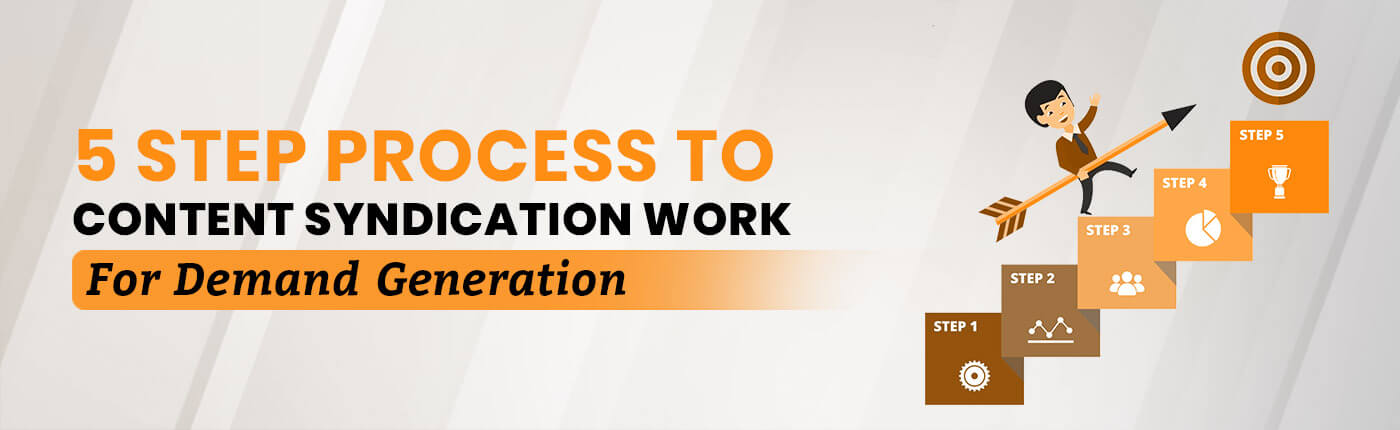
5 Step Process To Make Content Syndication Work For Demand Generation

Content syndication is a fantastic content marketing tool for demand generation. It gives your content legs to walk in front of millions of people, out which a few lakhs would be your potential buyers. But, how do we do it? What content syndication network should I use? How do I choose a content syndication network to achieve the desired results?  In this post, we will discuss 5 steps to ensure that your demand generation campaign is making the most of content syndication benefits.  If you are looking for free content syndication, you can read our post on beginners guide to free content syndication.   1. Define parameters for your demand generation campaign Before you dive into using content syndication for demand generation, determine your target audience for the campaign. While you can always run generalized campaign, we advise you against it. It WILL hamper your conversion rates because you will have a pool of data (not necessarily of your target buyer). However, if you are running a targeted content syndication lead generation campaign (which is also comparatively costlier), you can skyrocket your conversions.  Exactly why it is expensive! Let’s take an example of a generalized campaign. You are an IT company who wants to market an ebook on cloud computing. Now, this will attract all types of companib2b es who want to use cloud computing. But, does that help you? No. Instead, you should market your ebook, to small businesses who are starting out and want to learn about the benefits or challenges of cloud computing.  Understanding how content syndication works is crucial for crafting targeted campaigns. Reputable syndication platforms often allow you to specify your target audience demographics and interests, ensuring your content reaches the most relevant viewers or readers, ultimately leading to higher conversion rates. This is where a buyer persona comes handy. You can detail the industry, company size, job title or designation etcwhich will get you one step closer to qualified leads.  While the campaign can be as broad or narrow as you want, you need to remember that content syndication partners charge a higher amount for customized questions.    Now, we have a secret to share. Come closer? While it may sound enticing to use customized questions, a lot of marketers don’t. They like to get minimum information from these partners and then append the data themselves. This saves us tons of money.   Must Read: 29 Content Syndication Articles to Help You Become a Content Syndication Guru 2. Select your content Select your demand generation content in line with your set parameters. For this, you need answer a few questions   Consider the potential of video content syndication as well. Video content can be particularly engaging and informative, making it a great choice for attracting new audiences and generating leads. 3. Choose the right syndicating partner Oh yes, it is easy to say that. But, we will tell you exactly what to look for 1. Ask the most relevant questions  2. Due diligence You cannot trust the data shared by the content syndication networks alone. They are unlikely to share data that results in loss of business. So, gather data on 3. Reference check Talk to one of their earlier clients if you want to be super sure of the quality. Try and understand   4. Know exactly how and where they will syndicate Content Syndication Networks has different ways and places they syndicate. A few of them involve email marketing, paid ads, partner sites and communities using Linkedin. Understanding these B2B content syndication strategies will help you choose a network that aligns with your goals. So, you want to be absolutely clear about what they will do with your content. If they are syndicating on a partners website, ensure that the snippet of your content, logo or any other relevant information you want to be displayed is showed appropriately.  When visitors share details to get access to content, the publisher will collect the data and share the details with you (mostly in the form of spreadsheet).   5. Have a lead verification system in place You need to ensure that the data provided by the media partner is accurate and non-repetitive (i.e. you don’t already engaging that lead) before you merge it into your CRM.  In nutshell, you need to ensure the quality of data at your end too. Having a data validation software works wonders! Discuss with your sales and marketing team how they want to handle the data. Do they want to Must Read: Weighting Content Syndication and Plagiarism 6. Don’t cut to the chase We know, it is very tempting to be able to just SELL. It is highly unlikely that the leads are sales ready. Think of them as the top of the funnel leads and nurture them accordingly. Keep a track of their journey and take baby steps. In terms of pricing, content syndication tools run on a cost per lead basis. It can cost anywhere between $8 – $40 per lead depending on the customization. That means, each time a prospect fills out a form to access your content you will be charged. Are you planning to put the process in action? Do you think we missed on something? Let’s talk about it in the comments section.

3 Demand Generation Trends in 2018

The job of any marketer is to get as many quality leads as possible for the business. But, is it possible without a well-thought-of demand generation strategy? Of course, not! It won’t be possible without driving demand in the first place It is only when you map out a good demand-lead generation strategy along your sales funnel that you can capture high-quality leads effectively. With this in mind, we are discussing 4 demand generation trends that can help you boost B2B lead generation this year. 1. Live Streaming Videos are trending, no doubt about that! You can see video content (live or recorded) almost on all the social media platforms. Live streaming on social media quickly gained popularity amongst B2C brands who were trying to increase engagement with their buyers. For B2B industry, it seems to be catching on now. More and more companies are adopting live videos, especially webinars and webcasts, to attract their customer base. Did you know that 32% of B2B marketers believe webinars and webcasts are critical to the success of their content marketing strategy? Also, according to Content Marketing Institute, 58% of B2B marketers have already included live video as apart of their content marketing strategy. Wondering, how to use live streaming for your B2B services/products? Here are a few ways you can implement it – Start teaching your buyers: How-to videos perform are as “in-demand” as how-to blog posts. Besides that, live Q&A sessions and webinars on topics of interest will boost engagement. People are always willing to learn from industry experts. Show them who you are: Highlight your brand values, employees, customer success etc. Give your customers a peek behind the curtains. Live stream events. It could be a conference you are going to or a conference you are organizing. For example, you can stream bits and pieces of your product launch. Stream highlights, get feedback and engage with your customers. There is no doubt left that live streaming will be the next big demand generation tool for B2B industry. If you are looking to boost your demand generation in 2018, you should start using live streaming. Periscope, Facebook Live, Livestream, UStream, and YouNow are the major players in this area.   Must Read: Top 6 Demand Generation Strategies Which Work! 2. Content Syndication and Industry Influencers With so many brands creating content online, it is difficult to be found, noticed and admired. Collaborating with influencers and syndicating content gives you access to millions of potential buyers. Content Syndication: Content Syndication is the process of sharing content on third party sites in order to make yourself visible in front of a huge following. For example, publishing a post from your blog (which might have traffic in thousands) to Huffington Post, Forbes or Entrepreneur (platforms which have traffic in millions). Neil Patel says, When we started republishing content from the Kissmetrics blog on sites like Entrepreneur and Search Engine Journal, we saw the referral traffic pick up (we got almost 9,492 visitors a month) It is one of the most powerful tactics to engage target audience and gaining visibility. You can know more about content syndication here, here and here.  Must Read: 14 Expert Tips to Boost Your Blog Traffic with Content Syndication Influencer Marketing With more and more people being tagged as influencers in different niches, collaborating with them to reach your target audience seems like the obvious choice. Not only do you grow your audience, but also improve sales by leaps and bounds. We can learn a lesson from Hubspot’s blog. They regularly partner with influencers who have experience in content marketing, digital marketing and sales. These Influencers write for their blog on areas of their expertise. Not only does Hubspot enjoy new content, it also gains authority. Similarly, SAP works with influencers to create content and organize events. The key aim to collaborate with influencers is to create thought leadership content and gain industry authority. With growing influencer collaborations and marketing in 2017, the FTC put out regulations around branded and sponsored content. It clarifies what brands and influencers have to disclose when working together. Instagram has made it easier with its branded content option. According to Quicksprout, these are a few platforms you can work on with influencers. If you want to generate demand quickly, influencer marketing is the way to go. You can make use of tools like Tapinfluence and Upfluence to find influencers and manage workflow. 3. Retargeting and Native Advertising Retargeting While you feel that ads that follow are creepy, 3 out of 4 customers now notice re-targeted advertising. It allows marketers to stay on the minds of their audience, increase the visibility and boost the chances of conversion. According to WordStream research, conversion rates increase with retargeting ads being displayed to an internet user again and the wholecreepy factor is overblown. You can use Google dynamic remarketing and Facebook custom audience for retargeting your website visitors. In 2018, more marketers will have a dedicated budget for retargeting. Native advertising It is a non-disruptive form of paid media advertising. According to HubShout, 85 percent of internet users don’t feel that their browsing experience is hindered by native ads Graeme Donnelly, the founder of Quality Formations, says Native advertising has been so well accepted by internet users because it feels natural to the readers. Compared with traditional banners and pop-up ads, native ads are much less disruptive and they don’t give the feeling that the page is cluttered. Promoted tweets on Twitter, suggested posts on Facebook and content recommendation on content discovery platforms are a few known forms. You can read about 12 examples of native advertising here. To give you an example, a native advertising campaign helped GE get 416,000 click-throughs. There is no way you should miss on including native advertising in your demand generation strategy.” Must Read: 5 Best Practices Every Marketer Should Follow

Demand Generation and Inbound marketing: The new couple in town!

There are lots of articles that compare demand generation (as an outbound marketing strategy) and inbound marketing only to give a gold medal in marketing Olympics to the latter. While their arguments make sense, we cannot deny that companies still use outbound strategies for demand generation successfully. In this post, we will discuss whether you need a mix of demand generation and inbound marketing strategies or focusing on one will bring you the required ROI? Let’s begin Demand generation as a beginning point to inbound marketing? First, let us understand what is inbound marketing. Hubspot, credited for coining the term Inbound marketing defines it as something that focuses on creating quality content that pulls people toward your company and product where they naturally want to be. By aligning your content you publish with the customers™ interests, you naturally attract inbound traffic that you can then convert, close, and delight over time. On the other hand, demand generation drives awareness for your product/services. You are right, demand generation tops the sales funnel. It is a pre-marketing effort because it assumes that your product/services are unknown and has its own set of best practices Let’s also refer to inbound marketing stages Demand Generation and Inbound marketing[/caption] As you can see, inbound marketing is about attracting, converting, closing and receiving feedback for improving your services/products. Demand generation focuses only on attraction. It is lead generation that focuses on conversion and closing. You can read the difference between demand generation and B2B lead generation, here. This, according to me, is the first overlap between the two. Must Read: 5 Common Demand Generation Plan Problems to Avoid Examples of Inbound and Demand generation A few examples of traditional demand generation (if viewed in the light of outbound strategy) would be cold calling (telemarketing), email marketing, print advertorials, trade shows etc. On the other hand, according to Neil Patel, inbound marketing is about content creation, SEO, landing pages, backlinks, webinars, influencer marketing etc. I searched demand generation tacticsand the first page had an article by Sprout Social. The 8 amazing demand generation strategies listed are a free report, free resources, updating blogs regularly, video marketing, partner marketing, guest post and social media (LinkedIn, Twitter, Facebook, Instagram) . We recently wrote a post on top 6 demand generation strategies where we included all of these in detail. Yes, the second overlap! You will see that the best demand generation tactics include content upgrades, free resources, survey, reports, webinars etc. The strategies which are now used for demand generation are similar to inbound marketing. It is due to a digital transformation that the nature of demand generation has changed. I think it is fair to say that demand generation is the first step in your inbound as well as outbound marketing strategy. What tactics you use to generate demand for your product depends on a lot of other factors. Must Read: 9 demand generation books every marketer must need to read Merging both Demand generation, traditionally, is an offensive strategy. Meaning, it is proactive in looking for people who match buyer persona but may not be looking to buy. For example, email blast. The old-school style was one message fits all but today, with tactics like account based marketing and B2B list building along with technology which allows super-segmentation of your audience, you can target exactly who you want and how you want it. So, instead of waiting for them to come to you, you go to them strategically. Another example is cold calling. A study found out that 60 percent of C-suite in IT have considered switching to a new vendor after a cold call. Again, the old school style of cold calling without sales script and etiquettes is long gone. Just look at Moz and Fractly survey Walking the altar: Demand Generation weds Inbound Marketing So, do we need to choose one? Do we need to separate demand generation from inbound marketing? Of Course, no! We need a mix of both to achieve our business goals. Promote your blog posts in emails and social media Offer your best content over a cold call or distribute it on a cold email Include your social media accounts on advertisements Grab the attention of your potential customers through demand generation, hold their attention through inbound marketing efforts and convert them into long-term customers. I do. Understand.  *blessings*” Must Read: 15+ Demand Generation Statistics that Every Business Should Know

Generate Leads with Marketing Automation Tips from 10+ Experts

So what could be the best marketing automation method for generating leads? We are bored with generating quality leads and we wanted to find a more productive way to do so. We thought to roam around, shaking a few hands with marketing experts, and asking them to drop 1 tip would enlighten us – and trust us it all works. We have collected a few tips that summarize their lifetime expertise of lead generation via automation. We would like to thank all of these below marketers for dropping by 1 tip and are we feel grateful that they are sharing their experience with all of us. 1. Douglas Karr Douglas is a MarTech Expert, Speaker, and Author. He is the founder of MarTech blog and CEO of DK Media. Douglas has been recognized by LinkedIn in their Sophisticated Marketing Guide as a top marketer, and his blog is known internationally as a resource for marketing-related technology research and discovery. Visit his website to know more about him. Connect with Douglas: Linkedin | Website | Twitter | Blog | Facebook | YouTube Set a follow-up survey about your service to the client that’s sent upon project completion. When they state that you’ve done an outstanding job and will provide you a testimonial, ask if there’s anyone in their network they can recommend your products or services to. This does a couple things: 1. It provides a testimonial that can be published online to build your credibility. 2. It provides a peer-to-peer recommendation, which is the strongest in the industry Must Read: How the lead generation in USA market differ from the rest of the world 2. Samantha Stone Samantha a.k.a. “”The Revenue Catalyst”” was Director of Marketing of SAP back in 2003 and she is currently the founder of The Marketing Advisory Network. She authored Unleash Possible which is receiving postive response from the buyers in Amazon. Read more from Samantha from here. Connect with Samantha: Linkedin | Twitter | Blog Most organizations don’t leverage marketing automation to it’s fullest potential because list segmentation is underutilized. However, the most effective way to improve click-through rates and engagement is simple. Don’t send the same message to everyone. Take the time to craft nurture streams that are relevant to the role of the person you are communicating with, the stage of the buying process they are currently in and the content they have previously consumed.  It’s more work, but it completely pays off. 3. Carlos Hidalgo Carlos is currently the Founder and CEO of VisumCX and was previously the founder of ANNUITAS. Carlos is widely recognized for his expertise in strategic integrated marketing, demand process, and marketing automation. His book on Amazon is favorite amongst the techno marketers. Connect with Carlos: Linkedin | Twitter  Using marketing automation without a defined strategy will yield little in terms of tangible results. However, when organizations develop a buyer-centric strategy that aligns content and channels to their buyers and their purchase path the results can be impressive. Organizations need to take the time to understand their buyers, gain insights into their pain points and challenges and develop content that speaks directly to them. Once this is done, you change marketing automation from being an email tool, o a conversational platform. 4. Brynne Tillman Brynne is the Cheif Learning Officer of Vengreso. According to her, there are 8 steps to rolling out an effective digital sales or social selling program. Whether you are an entrepreneur, sales professional or team leader, ensuring that a productive plan and process is in place is foundational to success. Connect with Brynne: Linkedin | Website | Twitter Make sure that you are offering value in your messaging, not a pitch. The moment you tell them how or why they should hire you, you become noise. However, if you offer insights that create curiosity and gets your buyers thinking differently about their current situation, company or industry, you gain credibility and earn the right for them to take your call. 5. Laura Ferruggia Laura is a holistic digital marketing specialist based in southern New Jersey who can assist you with content strategy, technical SEO, marketing automation, social media, and web development she operates via her own website. Connect with Laura: Linkedin | Website | Twitter Tactics like using Twitter bots to follow users and build lists allow you to get exposed to your target audience. Those users may click over to your site if your profile interests them. Twitter automation is almost like paid advertising but for free. Ideally, your targets are on Twitter, and you use the automation to generate interest but have great content on your human-managed profile and a killer value proposition. When this is the case, Twitter automation is a method that can excel at generating leads. 6. Sam Hurley Nobody knew “”Sam Hurley”” before. He went on to become zero to hero in 15 months and is currently a Digital marketing pioneer. He is the Managing Director of Optim-Eyes. Connect with Sam: Linkedin | Website | Twitter | Facebook Two words: Gated content! The opportunity with gated content is the fact you can gradually build up detailed profiles of each subscriber by using marketing automation software (which has the intelligence to progressively auto-fill fields on various CTAs or forms within your website). These profiles can then be scored over time using what’ known as a lead scoring matrix, based on the leads’ propensity to buy from you. Consequently, you can tailor your marketing to each and every person. The bottom line? Tasteful gated content is critical to building a database of potential customers. Those who take the time and energy to hand you any of their details are already one step closer to your brand. Give plenty away for free but nudge your audience to help you out, too. 7. Vikas Bhatt Vikas has 10+ years of experience in generating B2B leads. He is the owner of Only-B2B, a business to business lead generation company based in San Francisco with operational offices in India. Check out his articles here. Connect with Vikas: Linkedin | Website | Twitter | Blog | Facebook It is very difficult to mention just one marketing automation method. Any Internet Marketing Automation method is impossible to operate with a set of other IM Automation methods. Website pop-ups, social media greeting messages, and drip campaigns, etc. will always give you a hot lead. My personal best would be none of those. I would rather prefer

40+ Demand Generation Blogs You Should Follow Now!

Demand generation is one of the arching umbrellas of strategies consists of numerous ideas and strategies to generate demand for your business. It can be a bit tricky if you are new in the market. You probably must be searching for all demand generation blogs possible to read and capture the best you can. Well, you need not worry! Here we have covered all the best demand generation blogs that you must follow to satisfy your needs. 1. Marketo Website: https://blog.marketo.com/  Alexa Rank: 7,645  Twitter URL: https://twitter.com/marketo  Facebook URL: https://www.facebook.com/Marketo/  Author’s remarks: Marketo is one of the most reliable and trustworthy names when it comes to blogs and resources. Having high-value writers like Lauren, Garrett, Robyn and many more, Marketo publishes one of the most well-researched demand generation blogs that you can follow. 2. Pardot Website: https://www.pardot.com/blog/  Alexa Rank: 7,417  Twitter URL: https://twitter.com/Pardot  Facebook URL: https://www.facebook.com/pardot  Author’s remarks: Starting from marketing automation myths to demand generation blogs, Pardot offers a great range of blogs on different topics that can be utilised by the marketers to get latest tips and tricks for their businesses. 3. Quick Sprout Website: https://www.quicksprout.com/blog/  Alexa Rank: 29,950  Facebook URL: https://www.facebook.com/QUICKSPR0UT/  Author’s remarks: QuickSprout by Neil Patel is a platform that provides your blogs based on various topics starting from demand generation, SEO, Social Media Marketing to Lead generation and many more. Neil is one of the top writers, entrepreneurs and marketers write these blogs to give you more detailed information on various marketing aspects. 4. Moz Website: https://moz.com/blog  Alexa Rank: 2,356  Twitter URL: https://twitter.com/moz  Facebook URL: https://www.facebook.com/moz  Author’s remarks: With a global rank of 2,356 Moz publishes blogs written by various writers like Kerry Jones, Angela Petteys,  Serge Stefoglo and  Rand Fishkin. They write well-researched demand generation blogs as well as cover various topics ranging from lead generation to content syndication. 5. Marketing Insider Group Website: https://marketinginsidergroup.com/blog/  Alexa Rank: 143,069  Twitter URL: https://twitter.com/brennermichael  Facebook URL: https://www.facebook.com/michael.b.brenner 6. Spear Marketing Website: http://spearmarketing.com/blog/  Alexa Rank: 980,835  Twitter URL: https://twitter.com/SpearMktg  Facebook URL: https://www.facebook.com/spearmarketing  Author’s remarks: Spear Marketing is a great website for marketers looking for quick information regarding various marketing topics. 7. Content Marketing Institute Website: http://contentmarketinginstitute.com/blog/  Alexa Rank: 31,487  Twitter URL: https://twitter.com/cmicontent  Facebook URL: https://www.facebook.com/ContentMarketingInstitute 8. Convince & Convert Website: http://www.convinceandconvert.com/blog/  Alexa Rank: 94,974  Twitter URL: https://twitter.com/convince  Facebook URL: https://www.facebook.com/ConvinceConvert 9. HubSpot Website: https://blog.hubspot.com/marketing  Alexa Rank: 553  Twitter URL: https://twitter.com/HubSpot  Facebook URL: https://www.facebook.com/hubspot/  Author’s remarks: HubSpot is one of the most reputed names when it comes to blogs, resources and facts about any topic related to marketing. They share wide rage demand generation blogs that are highly factual and research-based. 10. Uberflip Website: https://hub.uberflip.com/blog  Alexa Rank: 51,592  Twitter URL: https://twitter.com/uberflip  Facebook URL: https://www.facebook.com/uberflip/ . 11. Contently Website: https://contently.com/strategist/  Alexa Rank: 43,138  Twitter URL: https://twitter.com/contently/  Facebook URL: https://www.facebook.com/contently  Author’s remarks: With writers like Joe Lazauskas, Shane Snow, Jordan Teicher and many more, Contently gets you through various aspects of Demand generation, marketing and lead generation in their blogs. 12. Buffer Website: https://blog.bufferapp.com/  Alexa Rank: 11,465  Twitter URL: https://twitter.com/buffer  Facebook URL: https://www.facebook.com/bufferapp 13. Kapost Website: https://marketeer.kapost.com/  Alexa Rank: 94,848  Twitter URL: https://twitter.com/kapost  Facebook URL: https://www.facebook.com//kapostcontentmarketing  Author’s remarks: Hosting a great website with writes rich in marketing knowledge, Kapost provides demand generation blogs, Lead generation and many other topics. 14. ANNUITAS Website: http://annuitas.com/blog/  Alexa Rank: 3,563,447  Twitter URL: https://twitter.com/_annuitas  Facebook URL: https://www.facebook.com/Annuitas/ 15. DemandGen Website: https://www.demandgen.com/blog/  Alexa Rank: 1,122,500  Twitter URL: https://twitter.com/demandgen  Facebook URL: https://www.facebook.com/demandgeninternational 16. MarketingProfs Website: https://www.marketingprofs.com/marketing/library/articles/  Alexa Rank: 33,179  Twitter URL: https://twitter.com/marketingprofs  Facebook URL: https://www.facebook.com/marketingprofs  Author’s remarks: Among the well-known names, MarketingProfs publish blogs based on facts, stats and strategies that can be highly valuable for the marketers. 17. Act-On Website: https://www.act-on.com/blog/  Alexa Rank: 138,535  Twitter URL: https://twitter.com/actonsoftware  FacebookURL: https://www.facebook.com/actonsoftware 18. WordStream Website: https://www.wordstream.com/blog  Alexa Rank: 6,858  Twitter URL: https://twitter.com/WordStream  Facebook URL: https://www.alexa.com/siteinfo/wordstream.com  Author’s remarks: WordStream is also a well-known name when it comes blogs. They share with you blogs on latest marketing strategies, demand and lead generation, content syndication and similar other topics. 19. Harvard Business Review Website: https://hbr.org/topic/sales-and-marketing  Alexa Rank: 3,468  Twitter URL: https://twitter.com/HarvardBiz  Facebook URL: https://www.facebook.com/HBR 20. HipB2B Website: https://www.hipb2b.com/blog/  Alexa Rank: 765,250  Twitter URL: https://twitter.com/HiPB2b  Facebook URL: https://www.facebook.com/HiP.B2B.LLC  Author’s remarks: HipB2B also shares blogs related to B2B marketing and strategies that can be very helpful for the marketers. 21. SnapApp Website: https://www.snapapp.com/blog  Alexa Rank: 179,620  Twitter URL:  https://twitter.com/Snap_App  Facebook URL: https://www.facebook.com/snapapp 22. Autopilot Website: https://blog.autopilothq.com/  Alexa Rank: 68,389  Twitter URL: https://twitter.com/autopilotus  Facebook URL: https://www.facebook.com/autopilothq 23. First Round Review Website: http://firstround.com/review/  Alexa Rank: 36,249  Twitter URL: https://twitter.com/firstround  Facebook URL: https://www.facebook.com/firstroundcapital 24. MatterMark Blog Website: https://mattermark.com/blog/  Alexa Rank: 108,890  Twitter URL: https://twitter.com/mattermark  Facebook URL: https://www.facebook.com/mattermark 25. Funnel Cake Website: https://getfunnelcake.com/blog  Alexa Rank: 1,442,539  Twitter URL: https://twitter.com/getfunnelcake  Facebook URL: http://www.facebook.com/2008/fbml 26. Bizible Website: https://www.bizible.com/blog  Alexa Rank: 127,887  Twitter URL: https://twitter.com/bizible  Facebook URL: https://www.facebook.com/bizible  Author’s remarks: With various B2B marketing blogs, Bizible is one of those who shares high-quality demand generation blogs for the users and the marketers. 27. Backlinko Website: https://backlinko.com/link-building  Alexa Rank: 29,372  Twitter URL: https://twitter.com/backlinko  Facebook URL: https://www.facebook.com/Backlinko/ 28. Smart Insight Website: https://www.smartinsights.com/blog/  Alexa Rank: 17,884  Twitter URL: https://www.twitter.com/smartinsights  Facebook URL: https://www.facebook.com/pages/Smart-Insights 29. IDG Website: https://www.idg.com/blog/  Alexa Rank: 249,210  Twitter URL: https://twitter.com/IDGWorld  FacebookURL: https://www.facebook.com/IDGWorld/?ref=aymt_homepage_panel  Author’s remark: Sharing blogs written by the marketing and tech professionals as well as CMOs, IDG gives you an opportunity to read their view, tips and strategies. 30. SocialMediaToday Website: https://www.socialmediatoday.com/  Alexa Rank: 20,336  Twitter URL: https://twitter.com/socialmedia2day  Facebook URL: https://www.facebook.com/socmediatoday 31. New Breed Website: https://www.newbreedmarketing.com/blog  Alexa Rank: 242,369  Twitter URL: https://twitter.com/NewBreedMktg  Facebook URL: https://www.facebook.com/newbreedmktg/ 32. Socedo Website: https://blog.socedo.com/  Alexa Rank: 408,193  Twitter URL: https://twitter.com/socedoapp  Facebook URL: https://www.facebook.com/Socedo/ 33. OpGen Media Website: https://www.opgenmedia.com/blog/  Alexa Rank: 1,269,017  Twitter URL: https://twitter.com/opgen?lang=en  Facebook URL: https://www.facebook.com/OpGen-Media-1837799169880756/?fref=mentions 34. CEB Website: https://www.cebglobal.com/blogs/  Alexa Rank: 28,028  Twitter URL: https://twitter.com/CEB_News  Facebook URL: https://www.facebook.com/cebglobal 35. Response Capture Website: https://www.responsecapture.com/demand-generation-best-practices-blog  Alexa Rank: 4,569,199  Twitter URL: https://twitter.com/responsecapture  Facebook URL: https://www.facebook.com/ResponseCapture 36. Technology Advice Website: http://technologyadvice.com/blog/  Alexa Rank: 88,356  Twitter URL: https://twitter.com/Technology_Adv  Facebook URL: https://www.facebook.com/techadvice  Author’s remark: In Technology Advice blog section you will find a range of categories starting from Marketing,  IT, Sales and many more. You can find demand generation blogs that can be of great use for your business. 37. MetaData.oi Website: https://www.metadata.io/blog/  Alexa Rank: 1,123,004  Twitter URL: https://twitter.com/metadataio  Facebook URL: https://www.facebook.com/metadata. 38. Gartner Website: https://blogs.gartner.com/marketing/#cards  Alexa Rank: 8,810  Twitter URL: https://twitter.com/GartnerDigital  Facebook URL: https://www.facebook.com/GartnerDigital  Author’s remarks: With a team of highly informed and well-educated writers, Gartner lets you through an array of blogs based on various topics ranging from demand generation, marketing strategies and many more. 39. Demand Frontier Website: https://www.demandfrontier.com/insights/  Alexa Rank: 6,672,456  Twitter URL: https://www.twitter.com/DemandFrontier  Facebook URL: https://www.facebook.com/DemFrontier  Author’s remarks: As the name suggests, Demand Frontiers delivers you a range of demand generation blogs that are fact-based as well as research-based. This is one of the sites that most of the marketers follow and you should too. 40. Demand Gen Report Website: https://www.demandgenreport.com/  Alexa Rank: 267,125  Twitter URL: https://twitter.com/DG_Report  Facebook URL: https://www.facebook.com/DemandGenReport  Author’s remarks: With various content writers and contributing writers, Demand Gen Report provides you a vast range of blogs topics like Demand Generation Strategies, Lead generation, Database Strategies and many more. 41. SiriusDecisions Website: https://www.siriusdecisions.com/blog.aspx  Alexa Rank: 223,318  Twitter URL: https://twitter.com/siriusdecisions  Facebook URL: https://www.facebook.com/siriusdecisions  Author’s remarks: Writing on topics like B2B social media marketing, Demand Generation

25+ Demand Generation Terminologies For CEOs and CMOs

Have you ever thought of sinking your face and die during a very serious conversation, just because of a few people using hefty terms that you don’t comprehend?  Naturally, we all have been through that at least once in our life when we don’t understand the demand generation terminologies used by others. We simply act along to understand and pass an innocent smile to overcome the situation until we manage to google it out as early as possible. To save you from such embarrassing moments, we have collected a few most used Demand Generation terminologies along with their meaning. Must Read: 9 Demand Generation Books Every Marketing Expert Should Read 1. A/B Testing: A/B Testing or as a few call it Split Testing juxtapose two types of tests to compare which one performs better. To give an example, you can see which subject line goes better with your emails and gives estimated results by sending the same email with two different subject lines and then picking up the better line on the basis of the responses. There are a few mail sending programs to help you with this. Must Read: Do’s and Don’ts of Email Marketing 2. CAC: (Customer Acquisition Cost) As the term itself hints the meaning, it tells how much expensive it would be to let a new client join you. It is, in fact, the sign of value or cost of your client. Having a clarity of the expenses you will have to incur for the client along with marketing and overall spends will give an idea of the profitability of the deal and help your investors to make decisions too, in case you are planning to raise money through a public fund.  3. CCR: Customer Churn Rate It is an equation used to know the customer maintenance and value. The equation goes like this (Customer at the beginning of measurement period) – ( customer at the end of measurement period) / ( customers at the beginning of measurement period) Must Read: Demand generation blackbook | 8 hacks to skyrocket your B2B business 4. CLTV: Customer Lifetime Value Customer Lifetime value is the value of your customer for their entire lifetime spend with your business. With the help of these metrics, you can determine the profitability of your customers for your business in the coming years. 5. CMS: Content Management System Helping you to manage digital content, CMS is almost self-explanatory. As the name suggests, the Content management system is a set of programs or/and software application that helps you manage the content online with ease. Must Read: Demand generation ideas from startups 6. COS: Content Optimization System Any platform that lets you organize all your marketing tools under one roof and makes it even simpler to execute your marketing campaigns are known as COS. HubSpot being one of the most commonly used platforms is a good example of COS. 7. CRM: Customer Relationship Management CRM is used as a term to define all the techniques and strategies that businesses use to manage their customer relationship. This terminology is also used for the software that is used by the businesses to manage the customer relationship and drive sales growth. You might have come across this term a lot as CRM is also one of the commonly used demand generation terminologies. Must Read: Does your business needs demand generation expert or agency? Find out 8. CRO: Conversion Rate Optimization CRO is a terminology used when using various testing and key optimization principles you improve your site conversion rate. It also utilizes the process of creating an experience for your visitors to convert them into customers. 9. CPA: Cost Per Acquisition or Cost Per Action Cost Per Action is when advertisers pay only for a specified acquisition. It is basically an online advertising pricing model. These demand generation terminologies are also used as a metrics to measure how much you pay to attain any conversion. Must Read: How to maximize social media for demand generation 10. L2RM: Lead to Revenue Management Lead to Revenue Management is a customer engagement model. It is used to define all the metrics, processes and goals that are set to engage and capture new customers and to grow overall revenue. 11. LTV:CAC: Lifetime Value to Customer Acquisition Cost Giving you a high-value insight into what you require to gain a customer, LTV: CAC is one of the most important metrics used by the SaaS companies. It also explains a lot about the returns that you can expect over the lifetime of your engagement with the customers. This helps you understand and determine whether the acquisition cost is utilized well or not. Must Read: 15 demand generation FAQ’s to make your marketing better 12. MAP: Marketing Automation Platform Marketing Automation Platforms are platforms used by the marketers to automate the communication process between them and the customers. They can automate emails, social media posts as well as lead distribution/routine. 13. PPC: Pay-per-Click PPC or pay-per-click is an internet marketing model used by advertisers. In this model, advertisers pay a certain cost per click on their ads. In other terms, you only pay when someone clicks on your ads and becomes a visitor. Must Read: Did you know – Repeating demand generation activities drives 10x results 14. SaaS: Software as a Service SaaS is a term used to refer to the companies which offer services via software that can be accessed online or via a downloaded version. HubSpot, for instance, is SaaS company. 15. UX: User Experience User Experience, as the name suggests defines itself. The experience that any user gets while using a particular product or services or the website is known as User Experience. UX also highlights the emotional aspect of the experience that users have while using the website or services. Must Read: Guide to choosing right demand generation partner for your business needs 16. ToFu: Top of the Funnel In a marketing funnel, the topmost portion that focuses on B2B lead generation and targeting the audience

Demand Generation Ideas From Startups

Demand generation is one of the biggest challenges for new businesses, particularly start-ups and other companies operating in crowded markets. Before you start applying these demand generation ideas from startups it is better to get your idea about B2B lead generation vs. demand generation differences clear. Hearing it straight from the source’s mouth, we have come up with 9 demand generation ideas from startups itself for you: 1. Offer a Free Report Free reports are a great example. Free reports are similar to free stuff that generates curiosity among the audience. By getting free report users are likely to be very curious to see how they perform and run them for themselves. For example, if you offer free informative social media (Facebook, LinkedIn, Twitter, Instagram) report for them, they visit the site, fill in some contact information, authorize their Twitter page and we generate a free, informative social media report. This particular report tells readers how quickly and effectively they respond to social media messages and how that stacks up to other companies. 2. Co-market with a related business Being one of the most common demand generation ideas from startups, co-marketing can generate massive demand for your product. This demand generation strategy allows you access to something extremely valuable. You reach a new and untapped audience that could use your products. Moreover, the best part of co-marketing is that it costs you nothing. All that it takes is offering the same for the business you’re partnering with. Although while partnering with businesses you always need to keep in mind that the audience of the business resembles with yours. For example, Intel co-branded with PC manufacturers to provide its technology to computers. As there is absolutely no use of promoting the product to an audience that is not for your business. While co-marketing, always decide with the co-marketing partner to figure out what the collaboration is going be like. It can be a monthly guest blog post, a joint webinar or a cross-promotional agreement! Must Read: Top 6 Demand Generation Strategies Which Work! 3. Refer to get more! Referrals is a way of generating demand as well as giving a little away to the audience. In this, you encourage the audience to refer your services or product to a certain number of people and in return, you give them the bonus. For example, if you offer any services that allow the user to subscribe by paying a certain amount of money, what you do in this is you ask the user to refer your services to at least 10 people to the premium subscription for free without any charge. This has been a popular demand generation strategy for marketers. 4. Below The Line Marketing By adding an element of social proof through paying for premium placement on review sites, we have taken the strategy one step further. Though this demand generation idea is often regarded as a below the line marketing. Moreover many times your prospects will want to compare you to other competitors in search for the solution to a problem. They will punch best B2B Lead Generation Strategies or Lead generation companies into Google, and they will see results like the top one on first on the page. What you are doing here is buying out the place on the review site, automatically giving your services the first slot in the page. Although bidding on your listing via a pay-per-click (PPC) program will guarantee you ll appear above all your competitors who have a basic. Must Read: B2B content ideas to boost your demand generation 5. Improve your Email Marketing When it comes to email marketing, A/B testing is something that will help you test and learn what works and what doesn’t work for our audiences, And it is one of the best B2B email marketing practices. You risk turning prospective customers off and harming your brand if you resort to carpet-bombing your email list on a regular basis. Rather than blasting your email list on a regular basis, work smarter and harder on fewer but quality emails. To ensure that your emails are performing to their full potential, A/B testing can always help. Everything from headline help and subject line copy to linking strategies and offer placements should be tested so that you can make informed decisions about your email campaigns based on hard data rather than assumptions. Moreover incorporating demand generation strategies which actually work in for email blasts can make it even better. Give away your best stuff when it comes to email marketing. Constantly spamming your database with low-value offers is a surefire way to drive your subscribers crazy, but if you offer your list your very best tools, resources, and offers in your emails, you will soon have your prospects looking forward to hearing from you. Must Read: The do’s and don’ts of email marketing 6. Amazon giveaways to their employees Sharing another great example Amazon uses the same ideas from startups to generate demand. Never underestimate how much people love free stuff ”even if they have to spend a little to use it. Amazon also utilized the same demand generation strategy to engage their employees. They giveaway Amazon gift cards to their employees which in return they can use to buy something from the site or can pass on to friends or family. Branded products can create demand when they’re used strategically. These low-cost, functional items are worth their weight in gold if you can get them on the right people, which Amazon has successfully accomplished. 7. The eWebDesign giveaway Being one of the most successful forms of demand generation, giveaways have always been present in the list of demand generation ideas from startups. Despite being the most common and successful form of demand generation, this needs to be done in a logical way. If not, it can lead to unwanted leads which are not quality leads and unnecessary waste of time. One of the good examples of this type of demand generation along with the logical approach is eWebDesign. They hosted a giveaway

Fast-track your revenue generation with Pay-for-Performance marketing campaigns.