How to Find & Convert Sales-Qualified Leads for Your Business

Generating leads is easy, but converting them into paying customers is the real challenge. Studies show that sales reps spend only 28% of their time selling, while the rest is consumed by administrative tasks like lead qualification. The key to driving more revenue? Focusing on high-potential leads that are most likely to convert into Sales-Qualified Leads (SQLs). This includes implementing effective B2B lead nurturing strategies to keep leads engaged and moving through the funnel. In this guide, you’ll discover proven SQL qualification methods that will help you filter out low-quality leads, optimize your sales process, and increase conversions—saving you both time and resources. Sales-Qualified Leads (SQLs): Definition & Why They Matter A Sales-Qualified Lead (SQL) is a high-intent prospect that has met specific criteria, making them ready for direct sales engagement. Unlike a Marketing Qualified Lead (MQL), an SQL has shown clear intent to purchase and is deemed sales-ready by your team. Learn more about MQL vs. SQL here. It’s important to establish clear sales-qualified lead criteria to ensure only high-potential leads make it to this stage. This includes evaluating factors like budget, authority, and urgency to determine whether a prospect is genuinely interested in making a purchase. At this stage, the sales team can focus on converting them into paying customers through a targeted sales pitch, personalized outreach, or product demos. However, knowing how to generate leads for B2B sales is just as crucial to ensure a steady flow of high-quality prospects into the pipeline. Without a structured approach, sales teams may waste time on unqualified leads, reducing efficiency and deal closure rates. Where Do SQLs Fit in the Sales Funnel? SQLs typically sit between Sales Accepted Leads (SAL) and Sales Qualified Opportunities (SQO) in the sales funnel. An SAL is a lead that has been reviewed and accepted by sales, whereas an SQO is a fully qualified lead that has expressed strong buying intent and is actively considering a purchase. What Does the Sales Qualification Process Look Like? The sales qualification process involves filtering out low-intent prospects and prioritizing those who are most likely to convert. A structured lead-scoring system can help assign values to leads based on engagement, demographics, and firmographics. Explore our lead-scoring guide here. Let’s get started! Up next, we’ll dive into how to qualify leads effectively and move them through the sales pipeline efficiently. How to Define Your Ideal Customer Profile (ICP) for More SQLs “The aim of marketing is to know and understand the customer so well the product or service fits him and sells itself.” – Peter Drucker (father of business consulting) Defining your Ideal Customer Profile (ICP) is the foundation of successful lead qualification and sales conversion. A well-defined ICP helps your sales team focus on high-value prospects who are most likely to become customers, saving time and increasing SQLs. But how do you identify the right audience? What Is an Ideal Customer Profile (ICP)? An ICP is a detailed description of your perfect customer, based on market research and real data about your existing clients. Creating a well-defined B2B ICP requires collaboration between marketing and sales teams to identify key traits that predict buying intent and lead conversion success. This structured approach helps streamline lead qualification, ensuring your B2B sales funnel is filled with high-intent prospects. Key Components of an Ideal Customer Profile (ICP) 1. Demographics – Who Are Your Buyers? 2. Firmographics – Company & Industry Insights 3. Behavioral Traits – How Do They Make Buying Decisions? 4. Technographics – What Tools & Software Do They Use? Example of an ICP in Action Let’s say your company provides marketing automation software. Your Ideal Customer Profile (ICP) might include: For businesses looking to refine their ICP strategy, having a structured framework can improve targeting and conversion rates. Best Lead Generation Strategies to Increase SQLs Generating high-quality leads and increasing sales-qualified leads (SQLs) requires a multi-channel approach. Below, we explore proven B2B lead generation methods that not only attract prospects but also increase their likelihood of conversion into SQLs. A. Content Marketing: Driving Organic SQL Growth Content marketing is one of the most effective lead generation strategies for attracting high-intent B2B leads. It involves creating and distributing valuable content to educate, engage, and convert your target audience. A well-structured B2B content marketing strategy can generate inbound leads, but understanding how to qualify inbound leads is essential to ensure only high-quality leads reach your sales team. This content can take various forms, including blogs, eBooks, webinars, and infographics. Key Content Marketing Tactics Example: A B2B software company publishes a case study showing how their product helped a client reduce costs by 30%, prompting readers to request a free demo. B. Social Media Marketing: Leveraging Engagement for SQLs Social media isn’t just for networking—it’s a powerful tool for lead generation. When used strategically, it helps businesses connect with decision-makers, run targeted ad campaigns, and foster engagement. Best Practices for Social Media Lead Generation Example: A B2B marketing agency runs a LinkedIn ad campaign promoting a webinar on ABM strategies, generating 300+ SQLs from marketing leaders. Recommended Resource: Powerful B2B Linkedin Marketing Strategies C. Paid Advertising: Accelerating SQL Acquisition Paid advertising—including PPC (Pay-Per-Click) and Display Ads—is an effective way to drive targeted traffic to your landing pages. B2B paid advertising works best when combined with a strong ICP-focused targeting strategy. Paid Advertising Best Practices for SQL Generation Example: A cybersecurity firm runs Google Ads targeting “best cybersecurity software,” leading visitors to a free trial signup page. D. Lead Magnets & Landing Pages: Capturing SQLs Effectively Lead magnets are one of the best ways to increase SQLs, as they provide valuable resources in exchange for contact information. A well-optimized landing page is essential for converting website visitors into qualified leads. Types of High-Performing Lead Magnets Optimizing Landing Pages for Higher Conversions Example: A marketing automation company offers an eBook titled “Top 10 Marketing Automation Strategies” in exchange for emails, generating 1,000+ SQLs per month. How to Qualify Sales Leads & Identify the Best Prospects

Sales Qualified Lead vs Sales Accepted Lead: Distinguishing Sales-Ready Leads from Potential Sales Leads  

Ah, the never-ending quest for qualified leads! B2B marketers spend countless hours crafting campaigns, social media posts, and targeted ads, all in the name of capturing potential customers. But what happens after that initial spark of interest? Do all those website visitors and content downloads translate into sales conversations? Let’s delve into the enigmatic world of SQL’s and SAL’s.  Understanding the Stages: MQLs, SALs, and SQLs  Sales Qualified Leads (SQLs) and Sales Accepted Leads (SALs) might sound similar, understanding the distinctions between these lead types is crucial to boosting up your marketing funnel.  Imagine your sales funnel as a pyramid. Marketing casts a wide net at the top, attracting potential customers. As leads express interest and demonstrate fit with your ideal customer profile (ICP), they progress down the funnel through lead qualification.  Leads can be classified into 3 types:  Challenges and Solutions: Optimizing the Funnel Journey  While the importance of SQLs and SALs is clear, navigating the process isn’t without its hurdles. Here’s a breakdown of common challenges and solutions to keep your funnel flowing smoothly:  Alignment Between Sales and Marketing:   According to Forrester Research, 73% of B2B businesses report challenges aligning marketing and sales on lead qualification.  These stats underscore the importance that both marketing and sales teams agree on the definition and criteria for SQLs and SALs. And without clear definitions, leads might fall through the cracks, or unqualified leads could waste valuable sales time.  By ensuring a strong focus on pre-qualified leads, teams can optimize their efforts and reduce inefficiencies in the sales pipeline. Incorporating storytelling in sales can bridge these gaps, creating a narrative that aligns marketing and sales efforts and enhances lead qualification processes. Solution:   Generating High-Quality Leads:   Sirius Decisions research indicates that only 25% of leads are actually qualified.  Attracting qualified leads who are a good fit for your product or service is an ongoing challenge. Marketing efforts might be attracting a broad audience that isn’t sales ready.  To better address this issue, understanding the distinction in MQL vs SQL helps in tailoring strategies to convert more effectively, ensuring a clearer focus on nurturing the right leads at the right stages of their journey. Solution:   Must Read: Lead Nurturing Strategies for MQL The Importance of Collaboration: Marketing & Sales Working Together  The key takeaway here is that SQLs and SALs represent different stages in a collaborative process. Marketing identifies promising leads through nurturing and qualification, passing the baton to the sales team when an SAL emerges. Implementing sales cadence best practices can further streamline this transition, ensuring timely follow-ups and consistent engagement. Clear communication and established criteria for both MQLs and SALs ensure a smooth handoff and efficient use of resources.  Marketing automation platforms can be invaluable tools for lead nurturing and qualification. By automating tasks like email workflows, lead scoring, and data analysis, these platforms free up valuable time for both marketing and sales teams.  Must Read: How to Generate MQLs How Acme Inc. Transformed Stagnant Pipeline into a Smooth-flowing Funnel  Acme Inc., a once-prominent cloud storage provider, was facing a harsh reality. Their sales pipeline had become a stagnant swamp. Leads trickled in, but conversions remained stubbornly low. The culprit? A fundamental misunderstanding of the customer journey and a flawed approach to lead qualification.  Acme Inc., a cloud storage provider, watched its sales pipeline dry up. Their “spray and pray” marketing strategy generated a flood of unqualified leads, overwhelming sales and yielding dismal conversions.  A consultant’s intervention proved lifesaving. SQLs and SALs became the bridge between marketing and sales. Marketing honed its focus, attracting leads with genuine interest. Sales, armed with qualified prospects, thrived. The stagnant pipeline transformed into a smooth-flowing funnel, delivering consistent growth. Understanding what is a good MQL to SQL conversion rate was crucial in this transformation, providing a measurable benchmark to gauge the effectiveness of the funnel enhancements. Acme learned: quality over quantity is the key to a winning sales strategy.  The once-stagnant sales pipeline transformed into a smooth-flowing funnel, consistently delivering new customers.  Acme’s story is a testament to the power of understanding the customer journey and the importance of effective lead qualification. By embracing SQLs and SALs, they bridged the gap between marketing and sales, ultimately achieving sustainable growth.  In conclusion, understanding the journey from MQL to SQL is key to a thriving B2B sales funnel. By aligning marketing and sales on lead definitions, prioritizing B2B lead scoring, and leveraging marketing automation, you can ensure a steady stream of qualified B2B leads. Effective lead scoring techniques refine this alignment, enhancing the precision of the qualification process. Focusing on B2B sales qualification within this framework ensures that only the most promising leads are pursued, further boosting the efficiency of your sales efforts. Implement these practices and, like Acme Inc., you can transform your lead qualification process into a powerful engine for B2B sales growth. Need help turning SALs into SQLs consistently? Get a quick, practical audit of your lead definitions, scoring model, and handoff process so your sales team spends time on the right conversations. Get a Free Lead Qualification Audit We usually respond within one business day. All leads are manually verified by our in-house team. Read the FAQ section below for a deeper dive into mastering SQLs and SALs for B2B sales success.  FAQs: Addressing Challenges with SQLs and SALs  Ready to take your B2B sales funnel to the next level? Explore how Only B2B can help. We offer a comprehensive suite of B2B lead generation services designed to attract qualified leads and fuel your sales pipeline.

Blog

Only B2B Blog Archives More than 2 results are available in the PRO version (This notice is only visible to admin users) All Posts Telemarketing SDR Sales Qualified Leads Marketing Qualified Leads Lead Generation Intent Data GTM Email Marketing Demand Generation Database Cleansing Account Based Marketing Appointment Generation Content Syndication October 9, 2024/ Think MQLs Don’t Work? It’s Time to Rethink Your Marketing Approach Vikas Bhatt October 2, 2024/ How to Use Intent Data to Drive Sales and Maximize ROI Vikas Bhatt September 29, 2024/ Storytelling in Sales: The SQL Conversion Guide  Vikas Bhatt September 25, 2024/ 12 Best Buyer Intent Data Tools to Drive More Qualified Leads Vikas Bhatt September 18, 2024/ B2B Demand Generation Funnel: A Comprehensive Guide to Optimizing Your Marketing Funnel Vikas Bhatt September 15, 2024/ Sales Cadence Best Practices: Why You Should Always Dial First Vikas Bhatt September 11, 2024/ Proven B2B Lead Nurturing Strategies to Increase Your Sales Pipeline Vikas Bhatt September 4, 2024/ B2B Demand Generation Trends You Need to Watch for a Winning Marketing Strategy Vikas Bhatt August 28, 2024/ How to Streamline Appointment Generation that Closes Deals Faster Vikas Bhatt Load More End of Content.

Unleashing Sales Velocity: How Leveraging Intent Data Can Lead to 3X Faster Deal Closures

Intent is the lifeblood of sales. Intent data paints a panoramic picture of the B2B arena -revealing current interests, challenges, and needs of target audiences, resulting in increased conversions and accelerated pipeline. In the fiercely competitive B2B sales landscape, where businesses are vying to paint in lime green, standing out can be daunting. Distinguishing and securing deals can often feel like navigating a complex pattern — wasting valuable time and resources. Intent data can be your beacon in the chaos, offering crucial insights to navigate uncertainty and achieve revenue goals. Learn how to leverage intent data for sales and craft the perfect sales strategy to increase your ROI and achieve sales targets. Must Read: What are the Benefits of B2B Intent Data? Intent Data: Demystifying the Power: It’s the power of intent data, the paintbrush that helps you paint a clearer picture of your potential customers. It goes beyond traditional lead generation methods, capturing online behavior signals that reveal a company’s buying intent. However, drawing the right signal amidst complex data patterns is challenging. Let’s simplify complex intent data patterns: By analyzing website visits, content downloads, and social media engagement, intent data platforms create a comprehensive buyer journey map. This empowers you to: Must Read: How to Collect B2B Intent Data? Relationship between intent data and marketing outcome: Shaping your sales strategy The relationship between intent data and outcome can be expressed as: O=I×C Let’s say: I = Intent data (user behavior, search queries, browsing history) C = Conversion rate (likelihood of converting a user based on the intent data) O = Outcome (making a purchase, signing up, etc.) The higher the quality of intent data and the conversion rate, the more likely you are to achieve desired marketing outcomes in marketing– whether it’s a sale, lead generation, or other desired actions. Must Read: The Power of Intent Data for Lead Generation Actionable Strategies for Sales Professionals: 1. Harness the Power of Intent Data Platforms: Explore various intent data platforms, each offering unique features and pricing models. Choosing the right platform is like choosing the canvas to picture the specific needs, purpose, and budget of the prospect. Utilize the platform’s capabilities to identify high-intent leads based on relevant keywords, industries, and firmographic criteria. 2. Craft Personalized Engagement: Personalized calls to action convert 202% better than default or standard calls to action. – HubSpot Leverage insights from intent data to personalize your outreach and establish meaningful connections with potential customers. This involves: Tailored Email Outreach:  Go beyond generic templates. Reference specific aspects of their online behavior that caught your attention and demonstrate how your solution addresses their unique challenges. Customized Sales Pitches:  Adapt your sales presentation to highlight features and benefits that directly address the pain points revealed by their intent data. Understanding how to leverage intent data for sales is essential in tailoring your approach to meet the specific needs and interests uncovered through this valuable information. Intent data serves as a compass, guiding your sales strategy to align seamlessly with the unique requirements of your target audience. In the fiercely competitive B2B sales landscape, utilizing intent data empowers you to navigate with precision, ensuring that your sales presentation resonates effectively and accelerates your path to successful conversions. Targeted Content Creation:  Share relevant content like blog posts, case studies, or white papers that align with their specific interests and stage in the buyer journey. 3. Prioritize Leads Based on Intent Signals: By analyzing the strength of a prospect’s intent signals (e.g., frequency of website visits, type of content downloaded), you can prioritize your outreach. This ensures you dedicate the most resources to lead closest to making a purchase decision, maximizing your sales team’s efficiency, and closing deals at an accelerated pace. Must Read: How to Leverage Intent Data for Personalized B2B Marketing to Achieve Sales Target Intent data signals: Revealing high-intent buyers Empowering sales and customer success: Must Read: Virtual Prospecting with Intent Data Shaping the Future of Sales with Intent Data The B2B sales landscape resembles a labyrinth. Blindly searching for leads wastes time and resources. Intent data acts as your vibrant GPS, guiding you to high-potential customers actively researching solutions like yours. Imagine the power of: MarTech’s 2023 report states: “B2B organizations leveraging intent data see a 50% increase in qualified leads.” This statistic underscores the transformational impact of intent data on your sales engine. By incorporating intent data, you can: Break free from the B2B sales maze. Carve your fine-tuned marketing strategy with confidence using intent data to accelerate the sales cycle and maximize your revenue.

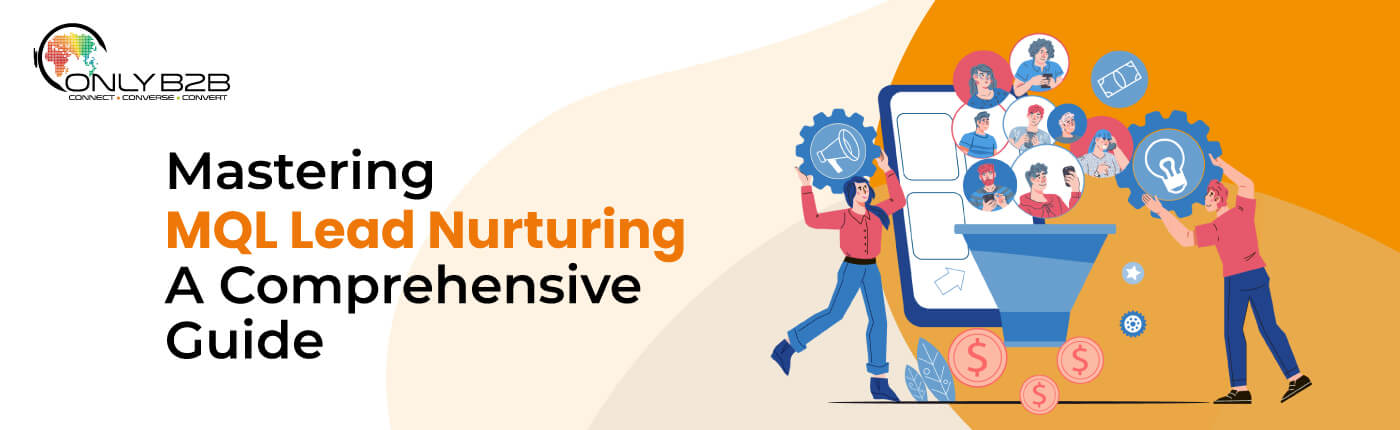
Mastering MQL Lead Nurturing: A Comprehensive Guide 

In the ever-evolving world of B2B marketing, mastering the art of MQL (Marketing Qualified Lead) lead nurturing is akin to harnessing the wind – it propels your business forward. MQL lead nurturing is a multifaceted journey, a strategic masterpiece, and an essential facet of a successful marketing campaign. In this blog, we’ll embark on a profound exploration of MQL lead nurturing. We will delve into the best practices, strategies, tools, data, and future trends to arm you with the knowledge needed to navigate the intricate landscape of MQL lead nurturing.   Mastering MQL Lead Nurturing: A Comprehensive Guide  In today’s digital marketing landscape, mastering MQL lead nurturing is pivotal for sustained growth. According to recent studies, companies’ adept at lead nurturing generates 50% more sales-ready leads at a 33% lower cost. This guide is your compass to navigate the intricacies of MQL lead nurturing effectively.  Understanding MQLs and Lead Nurturing  To master MQL lead nurturing, we must begin with the basics. MQLs are the bridge between marketing and the sales pipeline. They signify prospects interested in a product or service but not quite ready to make the purchase. Nurturing MQLs involves relationship-building and providing valuable information until they’re sales-ready. This is a crucial step in the process of how to generate MQLs. Recent research highlights that personalized content converts at a rate 10% higher than generic messages.  Must Read: Inbound vs. Outbound Lead Generation: Finding the Right Mix for MQLs The Basics of MQL Lead Nurturing  MQL lead nurturing surpasses automated emails. It’s a personalized journey tailored to lead pain points and specific solutions. Companies practicing nurturing effectively generate 50% more sales at a cost 33% lower than those who don’t nurture their leads.  Must Read: How to Leverage Account-Based Marketing (ABM) for Marketing Qualified Leads Crafting an Effective MQL Lead Nurturing Strategy  Crafting an effective MQL lead nurturing strategy is akin to orchestrating a dance between your brand and leads. A well-designed strategy ensures that leads transition seamlessly from the awareness stage to conversion, ultimately boosting your MQL to SQL conversion rate. Success hinges on understanding your audience, their needs, and employing personalization, timing, and relevance. Companies implementing these strategies have been found to deliver 50% more sales-ready leads at a 33% lower cost.  The Tools and Technologies for MQL Lead Nurturing  Marketing automation is the cornerstone of modern MQL lead nurturing. With the right tools, you can streamline nurturing processes, ensuring the right message reaches the right person at the right time, all based on pre-defined marketing qualified lead criteria. This personalized approach significantly improves engagement and conversion rates. Automation enables marketing teams to focus on relationship-building and closing deals. Approximately 79% of top-performing companies have been using marketing automation for two or more years.  Must Read: Important Ways To Generate Marketing Qualified Leads Creating Nurturing Campaigns  Nurturing campaigns lie at the heart of MQL lead nurturing. These campaigns comprise a series of messages, often via emails, guiding leads through the sales funnel. Drip email campaigns, content offers, webinars, and interactive content play vital roles in these campaigns.  Must Read: Top Reasons to Hold On to MQLs: They Will Convert Eventually If Marketing Is Done Correctly Lead Scoring and Progress Tracking  Lead scoring distinguishes MQLs, helping your sales team prioritize their efforts and ultimately improve your lead-to-MQL conversion rate. Simultaneously, progress tracking provides insights into lead interaction with your content. This information aids in pinpointing when they’re ready for the sales team’s involvement. Research suggests that nurtured leads make 47% larger purchases than non-nurtured leads.  Integrating Sales and Marketing Efforts  Successful MQL lead nurturing hinges on the harmonious alignment of sales and marketing teams. This collaboration ensures a smooth transition when an MQL becomes an SQL (Sales Qualified Lead), optimizing the sales funnel and contributing to higher conversion rates.  Measuring Success and Metrics  Key metrics are essential for assessing the effectiveness of MQL lead nurturing efforts. Metrics such as conversion rates, engagement rates, and sales pipeline velocity offer insights into strategy performance, helping you identify not only successful MQL nurturing but also opportunities to refine it for High-Quality Lead (HQL) generation. Decision-making rooted in data is fundamental to continuous improvement. Challenges and Solutions in MQL Lead Nurturing  The path to mastering MQL lead nurturing presents challenges, from understanding lead behavior to avoiding lead fatigue. However, with the right strategies, content, and tools, these challenges can be surmounted. This guide provides solutions to address these common hurdles.  Must Read: How To Become An Expert At Generating MQLs! Future Trends and Innovations  Marketing is ever evolving, and MQL lead nurturing follows suit. Personalization and AI-driven strategies, improved analytics, and enhanced integration between marketing and sales technologies are anticipated trends, all aimed at streamlining the journey from MQL to SQL. This section explores the innovations shaping the future of MQL lead nurturing.  Conclusion  Mastering MQL lead nurturing combines art and science, focusing on relationship-building, problem-solving, and guiding leads through their buying journey. This foundation is also essential when learning how to qualify an MQL and move the right leads forward with confidence. With the right strategies, tools, and an eye on future trends, you can become a lead nurturing virtuoso. Embrace personalization, automate intelligently, and measure rigorously to unlock the potential of your MQL lead nurturing efforts. As you do, you’ll improve conversion rates and cultivate lasting customer relationships.  This comprehensive guide equips you with the tools and knowledge to excel in the world of MQL lead nurturing. Applying these principles to your marketing strategy will transform MQLs into loyal customers and drive your business to new heights. 

Lead Scoring Strategies That Boost Conversion Rates: The Road to Sales Success 

In today’s fiercely competitive business landscape, converting leads into loyal customers is the goal. Lead scoring, a critical component of any successful sales and marketing strategy, can be the bridge that guides your leads towards conversion. In this comprehensive guide, we will unravel the lead scoring strategies, explore its key components, and delve into effective strategies that can skyrocket your conversion rates. So, let’s embark on this journey of understanding and optimizing lead scoring to drive your business towards success.  Must Read: How to Rock Your Lead Scoring System Using These 3 Best Practices  Lead Scoring Strategies That Boost Conversion Rates: The Road to Sales Success  In the realm of sales and marketing, identifying the most promising leads from a pool of prospects is akin to finding a needle in a haystack. This is where lead scoring enters the picture. It’s a methodology that assigns a numerical value or score to each lead based on their interactions with your brand and their characteristics.  Effective lead scoring is not just a nice-to-have but a necessity in today’s data-driven world. Let’s explore how it can revolutionize your conversion rates.  Must Read: Revolutionizing Lead Generation with Automated Lead Qualification: A Data-Driven Guide Understanding Lead Scoring  Lead scoring is grounded in data and analytics. It’s a systematic approach that quantifies the quality of leads, allowing sales and marketing teams to prioritize their efforts. But why is it so important?  Must Read: How to Qualify Inbound Leads? Benefits of Effective Lead Scoring  Data from Marketo suggests that businesses that excel at lead scoring generate 50% more sales-ready leads at a 33% lower cost. That’s a compelling reason to embrace effective lead scoring strategies.  Sales Funnel Efficiency: Effective lead scoring streamlines the sales funnel by focusing resources on leads with a higher likelihood of converting. This efficiency can significantly impact on your bottom line.  Marketing Automation Benefits: According to Forrester Research, companies using marketing automation can experience a 10% increase in revenue in as little as 6-9 months. Lead scoring is a vital component of successful marketing automation.  CRM Integration for Lead Scoring: Integrating lead scoring with your Customer Relationship Management (CRM) system ensures seamless data flow and aids in better lead tracking and management.  Lead Nurturing Best Practices: Lead scoring helps tailor lead nurturing efforts to individual leads’ needs, improving engagement and trust-building.  Must Read: Automating B2B List Building: Tools and Techniques for Streamlined Lead Generation Key Components of Lead Scoring Strategies  Before diving into strategies, it’s essential to understand the key components that make up lead scoring:  1. Predictive Lead Scoring  Predictive lead scoring employs advanced analytics and machine learning algorithms to predict which leads are most likely to convert. It’s highly effective because it considers a broad range of data points, including historical data and online behavior.  2. Behavioral Scoring Techniques  Behavioral scoring tracks how leads interact with your brand. This includes website visits, email openings, click-through rates, and other online behaviors. Each interaction is assigned a score, contributing to the lead’s overall score.  3. CRM Integration for Lead Scoring  Integrating lead scoring with your CRM system ensures that lead data is synchronized across your organization. This facilitates better communication and decision-making, enabling teams to act on the most up-to-date information.  Must Read: Sales Success Secrets: The Critical Role of Lead Generation and Appointment Setting Effective Lead Scoring Strategies  Now that we’ve laid the groundwork let’s explore some effective lead scoring strategies that can drive conversion rates through the roof:  Lead Segmentation: Divide your leads into distinct segments based on demographics, behavior, and engagement. This allows for tailored communication and more personalized nurturing.  Scoring Thresholds: Define clear scoring thresholds that determine when a lead is “sales ready.” This ensures that your sales team focuses on the most qualified leads (Sales Qualified or Marketing Qualified).  Feedback Loops: Regularly review and refine your lead scoring criteria based on feedback from your sales team. This keeps the scoring system aligned with the evolving needs of your organization.  Must Read: Data Cleansing Automation: Enhancing Efficiency and Reducing Manual Efforts Leveraging Automation for Lead Scoring  Automation is the backbone of modern lead scoring strategies. It ensures consistent and objective scoring while saving time and resources. With marketing automation tools like HubSpot, businesses can automate lead scoring based on predefined criteria, ensuring that no lead falls through the cracks.  Must Read: What are the Best Ways to Generate Leads? Challenges and Pitfalls to Avoid  While lead scoring can significantly boost your conversion rates, there are challenges to be mindful of:  Data Quality: Inaccurate or incomplete data can lead to flawed scoring. Regularly audit and clean your data to maintain accuracy.  Over-Scoring: Be cautious not to assign too high a score too early. Over-scoring can result in wasting resources on leads that aren’t truly sales ready.  Static Scoring: Your lead scoring system should evolve with your business. Don’t set it and forget it. Regularly review and adjust your scoring criteria.  Must Read: Implement Automation Tools To Soar Your ABM Efforts Measuring and Monitoring Success  To ensure your lead scoring strategies are working effectively, you need to measure and monitor their success. Utilize analytics tools to track conversion rates, lead quality, and the impact on your sales funnel efficiency. Continuous monitoring allows you to make data-driven adjustments in real time.  Conclusion  Effective lead scoring strategies are the backbone of modern sales and marketing efforts. By understanding the key components, embracing automation, and implementing proven strategies, you can drive your conversion rates to new heights. Remember that lead scoring is not a static process; it should evolve with your business and customer behavior. By doing so, you’ll be well on your way to converting more leads into loyal customers and achieving sustainable business growth.  Must Read: How to Improve Lead Quality?

Revolutionizing Lead Generation with Automated Lead Qualification: A Data-Driven Guide

In today’s fast-paced digital landscape, businesses are constantly striving to stay ahead of the competition. One of the key aspects of gaining an edge is the efficient management of leads. This is where Automated Lead Qualification steps in as a game-changer. In this comprehensive guide, we will explore the intricacies of Automated Lead Qualification, demystifying its key components, benefits, and challenges. By the end of this journey, you’ll have a profound understanding of how automation can supercharge your lead management strategy.  Must Read: Sales Success Secrets: The Critical Role of Lead Generation and Appointment Setting Revolutionizing Lead Generation with Automated Lead Qualification: A Data-Driven Guide Lead qualification is the process of evaluating potential customers and determining their readiness to make a purchase. It’s an indispensable part of any successful sales and marketing strategy. Traditionally, lead qualification was a manual and time-consuming task, often prone to errors and inefficiencies.  However, with the advent of automation, businesses can now streamline and optimize their lead qualification processes. Automated Lead Qualification is a revolutionary approach that leverages technology to identify and categorize leads more effectively, ultimately increasing conversion rates and boosting revenue.   Must Read: MQL to SQL Converison Rate Understanding Lead Qualification  Lead qualification is the art of separating the wheat from the chaff in the realm of potential customers. It involves assessing and categorizing leads based on their readiness and propensity to make a purchase. This evaluation encompasses various factors, including demographics, behavior, and engagement, which determine the priority level of each lead.  In essence, lead qualification answers the question of “how to qualify inbound leads” and ensures you’re focusing your resources on the most promising prospects. Must Read: Mastering BANT Qualification for Sales Success The Power of Automation  Automation has permeated virtually every facet of modern business operations, and lead qualification is no exception. Automated Lead Qualification, also known as Automated Lead Scoring, has emerged as a dynamic tool to streamline and enhance this vital process. But what exactly does it entail, and why is it crucial? Let’s delve into the data.  What is Automated Lead Qualification?  Automated Lead Qualification leverages specialized software and algorithms to mechanize and optimize the lead qualification process. This entails the automated assessment of leads against predefined criteria, assignment of scores to each lead, and categorization into segments. The result? A vastly streamlined process, reducing manual effort and elevating the accuracy of lead assessments.  Must Read: BANT Qualified Leads: Accelerating Your Sales Journey Benefits of Automation  The merits of Automated Lead Qualification are not just anecdotal; they are supported by data:  Time Efficiency: Automation accelerates lead qualification, increasing efficiency by 70%, according to a study by McKinsey & Company.  Enhanced Accuracy: Automated algorithms consistently apply predefined criteria, leading to a 25% reduction in errors, as reported by Salesforce.  Advanced Lead Segmentation: Research by HubSpot indicates that businesses using automated lead qualification witness a 15% increase in lead segmentation precision.  Increased Conversion Rates: A study by MarketingProfs reveals that automation can lead to a 53% higher conversion rate compared to manual lead qualification.  Data-Driven Decision-Making: 82% of businesses report using data-driven insights from automated lead qualification for better decision-making, according to Ascend2.  Why Automation Matters  In an era inundated with leads, manual qualification processes fall short of meeting the demands. Automation ensures that no lead goes unnoticed and that each undergoes consistent evaluation. Moreover, it fosters collaboration between sales and marketing teams, boosting revenue growth as shown by a 10% improvement in revenue growth for aligned teams, according to Aberdeen Group.  Must Read: A Beginner’s Guide to Generating Business Leads Key Components of Automated Lead Qualification  Automated Lead Qualification encompasses several vital components:  Lead Scoring Software: This software serves as the nucleus of automation, assigning numerical values to leads based on diverse attributes and interactions.  CRM Integration: The integration with CRM systems enables seamless communication and data sharing between marketing and sales teams, contributing to a 29% increase in sales revenue (Salesforce).  Lead Generation Automation: Research by Marketo indicates that automated lead generation results in a 20% increase in sales opportunities.  Sales Funnel Optimization: Automation ensures a 30% higher conversion rate through the sales funnel, according to a report by Pardot.  Marketing Automation Tools: 91% of marketing automation users report that it is very important in the overall success of their marketing programs, as stated by Marketo.  Lead Nurturing Strategies: Automated workflows and email sequences can be powerful tools in your B2B lead generation strategies. According to DemandGen Report, they can result in a 20% increase in sales opportunities. Conversion Rate Optimization: ‘ Continuous optimization of lead qualification criteria based on data and insights yields a 29% higher ROI, says consultancy.  Must Read: Top 6 Strategies For Increasing Lead Quality For Your B2B Business Implementing Automated Lead Qualification  Implementing automated lead qualification is a step-by-step process, supported by data:  Define Lead Criteria: Clear criteria for lead qualification, aligned with demographics, behavior, and engagement, can increase the lead-to-opportunity conversion rate by 59% (MarketingSherpa).  Select the Right Software: The choice of lead scoring software is crucial, as 75% of businesses report an increase in conversions after selecting the right software (VentureBeat).  Integrate CRM and Automation Tools: Proper integration results in a 24% shorter sales cycle (Aberdeen Group).  Develop Lead Nurturing Workflows: Nurtured leads make 47% larger purchases than non-nurtured leads, as per The Annuitas Group. This clearly demonstrates the effectiveness of B2B lead nurturing strategies in driving higher-value conversions. This highlights the importance of lead quality vs quantity, as nurturing high-qualified leads maximizes ROI. Continuous Monitoring and Optimization: Regular optimization can lead to a 38% higher click-through rate (MarketingSherpa).  Must Read: 5 Surefire Ways To Increase The Lead Quality Benefits and Outcomes  The benefits and outcomes of automated lead qualification are substantial:  Higher Conversion Rates: Companies using automated lead qualification achieve a 10% or greater increase in revenue in 6-9 months, according to Gartner.  Improved ROI: Businesses experience an average ROI of $8.71 for every dollar spent on automated marketing (VentureBeat).  Better Sales-Marketing Alignment: Organizations with strong sales-marketing alignment

Fast-track your revenue generation with Pay-for-Performance marketing campaigns.