Most B2B marketing teams aren’t struggling because they lack tools, talent, or effort. They’re struggling because everything they do costs more attention than buyers are willing to give.
Budgets are tighter. Buying groups are larger. AI-generated answers shape perception before a sales conversation even exists. And trust, once assumed, now must be earned repeatedly.
The result is quite frustrating: campaigns launch, content ships, dashboards fill up, yet impact feels harder to prove. According to Gartner, 75% buyers now complete most early-stage evaluation without vendor interaction, leaving marketing accountable for influence it can’t easily track.
This is the pressure defining B2B marketing trends in 2026.
The 2026 Trend Snapshot (Read This First)
This snapshot captures the directional shifts shaping how marketing is planned, executed, and evaluated.
It reflects how buyer behavior, trust dynamics, and operational expectations evolve together.
Together, these eight shifts explain why familiar B2B playbooks feel less effective—and where execution must change to stay credible in 2026.
What changed
What to do
KPI
Trend
AI becomes infrastructure
What changed
AI stops being a productivity add-on and becomes the operating layer behind research, execution, and optimization.
What to do
Standardize inputs (ICP, messaging, offers) before automating outputs.
KPI
Execution velocity (cycle time, handoffs, revisions)
Trend
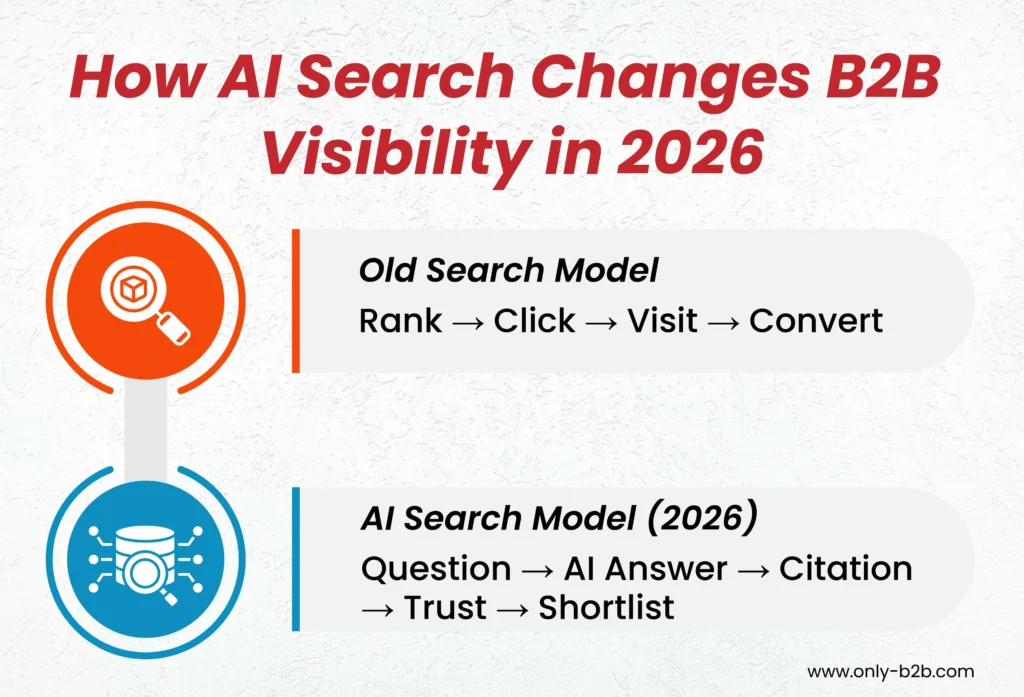
Search becomes an answer economy
What changed
Buyers increasingly trust AI-generated answers, not search results. Visibility depends on being cited, not clicked.
What to do
Design content to be referenced: direct answers, clear structure, verifiable logic, restrained claims.
KPI
Citation-driven demand (brand/direct lift, mentions)
Trend
Trust becomes measurable
What changed
Skepticism rises, verification becomes standard, and credibility directly affects pipeline movement.
What to do
Lead with proof (validation assets, fit boundaries, consistent narratives across teams).
KPI
Stage conversion (SQL→Opp, Opp→Won)
Trend
Experiences return with accountability
What changed
Events and webinars matter again, but only when tied to revenue influence, not attendance.
What to do
Design experiences for reuse + follow-up plays from day one (content, enablement, ABM).
KPI
Influenced pipeline (event→meeting rate, opp assist)
Trend
People outperform brands in distribution
What changed
Employees and founders drive reach and trust more effectively than polished brand channels.
What to do
Enable voices with shared narratives + guardrails (no scripts, no forced posting).
KPI
High-intent engagement (DMs, saves, referrals)
Trend
Transparency becomes a growth lever
What changed
Clear disclosure around AI use and claims reduces risk and increases buyer confidence.
What to do
Define acceptable AI use cases + review steps + disclosure standards where outcomes are affected.
KPI
Trust friction (security blocks, claim pushback)
Trend
Demand creation replaces lead capture
What changed
Long-term belief building outperforms short-term form fills as buying cycles lengthen.
What to do
Build always-on content + distribution and measure influence on pipeline, not just leads.
KPI
Branded/direct growth + content depth before sales
Trend
ABM becomes operational, not aspirational
What changed
Account-based marketing works when tiered, governed, and aligned to buying group reality.
What to do
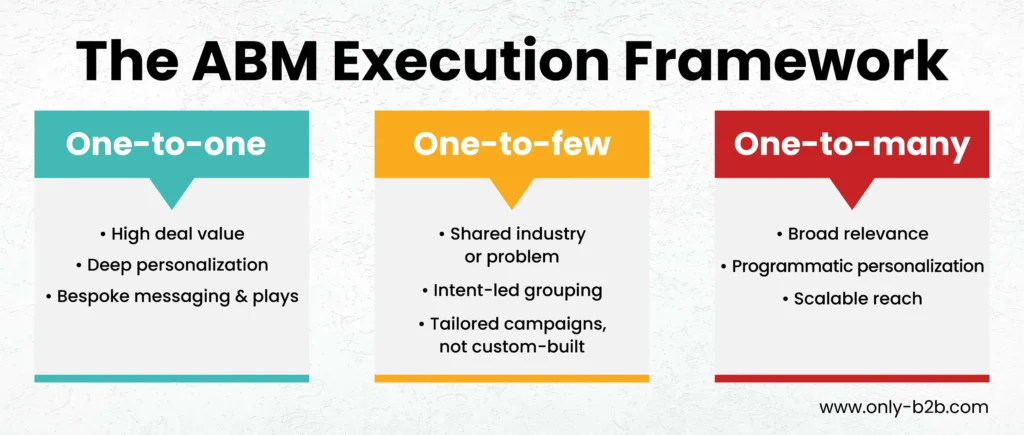
Tier accounts (1:1 / 1:few / 1:many), review quarterly, align ownership and plays.
KPI
Account→meeting rate (coverage, intent lift, win rate)
Trend 1: AI Agents Go Mainstream (But Humans Still Drive Strategy)
AI agents are no longer experimental add-ons. In 2026, they operate as a persistent workflow layer across marketing operations.
Research, planning, execution, personalization, reporting, and optimization increasingly happen inside connected AI-driven systems rather than isolated tools.
This matters because marketing complexity has outpaced human coordination. Campaigns fail less often due to bad ideas and more often due to fragmentation. Inputs live in different places. Decisions are delayed. Feedback arrives too late to matter.
AI agents change this by reducing coordination costs.
They synthesize market research continuously instead of periodically. They update ICP assumptions based on live signals. They adapt messaging variations without manual intervention. They flag performance issues while there is still time to respond.
The impact on teams is structural:
- Strategy discussions move upstream, not downstream
- Execution becomes faster without becoming chaotic
- Reporting shifts from retrospective to diagnostic
However, AI does not solve strategic ambiguity. It exposes it.
Teams with unclear positioning, weak differentiation, or misaligned goals experience faster failure, not better results. AI amplifies intent. It does not create it.
Managing this trend requires discipline:
- Standardize inputs before automating outputs
- Explicitly document strategy, ICP logic, and messaging hierarchy
- Keep accountability human-owned even when execution is automated
AI in B2B marketing becomes a force multiplier only when thinking is already aligned.
Trend 2: AI Search Becomes the New Gatekeeper
Search is no longer a destination. It is an intermediary.
By 2026, AI-generated overviews, summaries, and direct answers increasingly determine what buyers see, trust, and remember. Traditional rankings still matter, but they no longer control first impressions. Around 79% of global B2B buyers say AI search has changed how they conduct research.
This fundamentally changes content economics.
Visibility now depends less on keyword coverage and more on citation-worthiness. AI systems compress information. They reward clarity, originality, and specificity while filtering out repetition.
For marketing teams, the impact is immediate:
- Traffic becomes less predictable, but authority compounds
- Generic content loses visibility faster than before
- Thoughtful perspectives outperform optimized summaries
This is where AI search and visibility intersect with brand trust.
Content that influences AI answers tends to share common traits: original framing, clear structure, restrained claims, and verifiable logic. The goal shifts from “ranking a page” to “shaping the answer buyers internalize.”
Managing this trend requires a re-framing of content strategy:
- Prioritize depth over breadth
- Design content to be referenced, not skimmed
- Optimize for clarity and direct answers instead of persuasion
AI answers in search reward those who reduce cognitive load, not those who add to it.
Trend 3: Trust Will Decide Who Wins Pipeline
Trust becomes the quiet differentiator in 2026.
As automation increases across marketing and sales, buyer skepticism rises in parallel. Forrester predicts 75% of B2B companies will increase budgets for influencer relations, as trust is the defining competitive variable across B2B marketing, sales, and product organizations.
This does not mean buyers distrust vendors by default. It means they verify before they engage.
The impact of this on pipeline is significant as:
- Early-stage engagement is shaped before sales interaction
- Over-promising damages conversion later in the funnel
- Inconsistencies between messaging and reality surface faster
Trust moves from branding into execution detail.
Pricing logic. Use-case clarity. Fit boundaries. Transparency about trade-offs. These elements increasingly influence buying groups who are trying to reduce internal risk.
Managing trust requires restraint:
- Lead with validation assets instead of bold claims
- Be explicit about who the solution is not for
- Maintain consistency across content, sales, and product narratives
B2B trust is built by removing doubt, not adding confidence.
Trend 4: Experience Marketing Comes Back (With a Revenue Lens)
Experience marketing has returned in 2026.
Hybrid events, webinars, and curated experiences regain relevance as buyers seek meaningful interaction amid digital saturation. However, the standard for success has changed.
Experiences are no longer judged by attendance or engagement alone. They are judged by downstream influence.
The impact on teams is operational:
- Events become inputs into demand systems
- Content reuse becomes mandatory, not optional
- Sales alignment becomes non-negotiable
A single experience now feeds multiple functions: content creation, sales enablement, account follow-up, and long-term demand generation.
Managing this trend requires discipline:
- Design experiences for repurposing from day one
- Define success metrics tied to pipeline influence
- Integrate experiences into always-on programs
Experiential marketing succeeds in 2026 when it behaves like infrastructure, not theater.
Trend 5: Employee Ambassadors Take the Lead
Brand-led distribution is now facing diminishing returns.
Buyers increasingly trust people over logos, especially in complex B2B decisions. This is why employee advocacy and founder-led distribution become strategic channels rather than cultural initiatives.
The impact is visible across the funnel:
- Organic reach expands without proportional spend
- Messaging credibility improves
- Engagement quality increases
However, forced advocacy backfires.
Managing this trend requires enablement, not control:
- Provide shared narratives and context
- Set guardrails without scripting voices
- Support consistency rather than virality
When employees understand the “why,” distribution feels natural rather than performative, trust builds easily.
Trend 6: AI Transparency Becomes Non-Negotiable
As AI becomes embedded across marketing operations, scrutiny increases.
Buyers, regulators, and internal stakeholders expect clarity around how AI is used. Undisclosed automation introduces reputational and compliance risk.
The impact extends beyond marketing:
- Trust erodes quietly when expectations are violated
- Internal alignment suffers without governance
- Brand risk compounds over time
Managing AI transparency requires structure:
- Define acceptable AI use cases
- Establish review and approval processes
- Disclose usage where it materially affects outcomes
Transparency signals maturity. It reduces friction rather than creating it.
Trend 7: Demand Generation Becomes the Default
Lead capture optimizes for short-term responses. Demand generation optimizes for long-term belief.
In 2026, demand generation becomes the default growth model because buyer behavior demands it. Buying groups engage on their timeline, across multiple touchpoints, often anonymously.
The impact on teams is strategic:
- Gated assets lose effectiveness
- Content compounds instead of expiring
- Attribution becomes directional rather than precise
This reframes content’s role.
Content stops acting as conversion bait and starts acting as category signal. It shapes how problems are defined and which vendors feel credible before intent is declared.
Managing this trend requires patience and alignment:
- Build always-on content engines
- Measure influence on pipeline, not just leads
- Align messaging to buying group realities
Demand generation creates leverage where lead generation creates friction.
Trend 8: Tiered ABM Becomes Standard for Growth Teams
ABM evolves from aspiration to operation.
In 2026, effective ABM strategy is tiered by design.
- One-to-one for strategic accounts.
- One-to-few for high-intent clusters.
- One-to-many for scalable relevance.
This shift is enabled by better intent data and clearer understanding of buying groups.
The impact is measurable as:
- Resources align to probability, not preference
- Conversion rates stabilize
- Sales and marketing coordination improves
Managing tiered ABM requires governance:
- Define tier criteria explicitly
- Review tiers quarterly based on intent shifts
- Align ownership across teams
ABM works best when it mirrors how decisions actually happen.
30-Day Action Plan
- Audit content for credibility, clarity, and reuse potential
- Identify gaps in trust signals across the buyer journey
- Enable employee distribution with shared narratives
- Define AI usage, governance, and disclosure standards
- Shift reporting toward pipeline influence and efficiency
This execution checklist prioritizes focus over activity.
Measuring Success
Measuring success in 2026 means shifting from activity proof to impact signals. The goal is not to track everything, but to track whether marketing reduces friction, builds trust, and meaningfully influences pipeline. These indicators focus on direction and quality, not vanity volume.
- Faster execution with fewer handoffs and revisions
- Rising branded, direct, and referral demand
- Deeper content consumption before sales engagement
- Shorter or more predictable sales cycles
- Pipeline influenced by content, experiences, and people
Final Takeaway
B2B marketing in 2026 rewards clarity over volume. These trends point to one reality: buyers trust what feels consistent, credible, and easy to validate.
Teams that simplify strategy, align execution to real buying behavior, and treat trust as an operating system will outperform louder competitors.
Vikas Bhatt is the Co-Founder of ONLY B2B, a premium B2B lead generation company that specializes in helping businesses achieve their growth objectives through targeted marketing & sales campaigns. With 10+ years of experience in the industry, Vikas has a deep understanding of the challenges faced by businesses today and has developed a unique approach to lead generation that has helped clients across a range of industries around the globe. As a thought leader in the B2B marketing community, ONLY B2B specializes in demand generation, content syndication, database services and more.