
Hourly
Optimizes for speed and low commitment — but quality risk sits with your team.
In 2026, the B2B tech buyer is more insulated than ever. According to HubSpot, over 96% of buyers complete their research before ever engaging with a sales team. For SaaS and Tech companies, this means the window to influence a decision is shrinking.
Appointment setting has evolved from a volume-based “numbers game” into a high-precision growth function. It exists to create access during that narrow phase when a buyer is ready to align internally and decide who is worth a conversation.
However, as the role becomes more strategic, appointment setting pricing has become a maze of inconsistent models and hidden costs.
At Only B2B, we believe the real question isn’t “What does it cost?” It’s: “Which pricing model minimizes my risk while maximizing my pipeline velocity?”
This guide breaks down the five dominant pricing structures in the market today so you can choose the one that fits your revenue engine, not just your budget.
Table of Contents
At first glance, appointment setting pricing looks fragmented. Two providers can quote dramatically different numbers for what appears to be the same output: booked meetings.
That gap is rarely accidental.
Pricing models are signals. They show where responsibility sits, who absorbs risk, and how success is measured. In 2026, understanding pricing is less about finding the cheapest option and more about choosing the model that aligns with how your revenue engine actually works.
Most appointment setting engagements fall into five core pricing structures:
A clear side-by-side view of pricing models, what vendors charge for, and where risk/control sits.
| Pricing Model | What the Vendor is Paid For | What You Get (Risk + Control) |
|---|---|---|
| Hourly | Time spent | You control quality, risk is yours |
| Retainer | Capacity + management | You get consistency, but pay regardless of outcome |
| Pay-per-appointment | Confirmed meeting | Vendor bears risk, quality depends on criteria |
| Pay-per-qualified-lead | Qualified lead | Quality depends on strict definitions |
| Hybrid Best balance | Base + performance | Balanced risk + predictable cost |
Each model answers a different business question:
There is no universally “best” pricing model. There is only a best-fit model for your stage, market, and internal readiness.
Hourly pricing is often the entry point for companies exploring outsourced appointment setting.
Hourly models tend to work when:
Over time, hourly pricing often shifts hidden costs internally:
Hourly pricing assumes execution is the constraint. In reality, strategy and judgment usually are. If hourly-based outreach is leading to low quality conversations, use this guide to tighten structure and improve conversion: How to Build Winning Appointment Setting Strategies for B2B SaaS.
Retainer pricing treats appointment setting as an ongoing revenue function, paying monthly fee.
For companies with defined sales motions, retainer pricing often delivers the highest long-term ROI because optimization compounds instead of resetting each month.
Retainers perform best when you’re running a repeatable funnel. Here’s how to build the motion: How to Create an Optimized Appointment Setting Funnel That Converts.
Pay-per-appointment pricing shifts focus from effort to output. The payment you make is directly related to the number of appointments are set.
Without strict qualification rules and replacement policies, this model can flood calendars without actually improving pipeline quality.
If your biggest risk is booked meetings that don’t show, this playbook will help you fix attendance without chasing prospects: How to Reduce No-Show Rates in B2B Appointment Setting (Without Chasing Prospects Like It’s Your Job).
PQL pricing moves accountability earlier in the funnel.
PQL models work only when qualification and follow-up are disciplined. Use these discovery prompts to prevent mismatched “qualified” leads: Open-Ended Questions for Sales You Should Be Asking to Close More Deals.
PQL pricing works best when sales teams are disciplined about follow-up and qualification definitions are documented upfront.
Hybrid models are becoming the dominant structure in 2026. it includes paying basic monthly fee plus a variable payment as per performance. It balances accountability and reliability while being flexible.
Hybrid pricing aligns incentives across both sides, making it a strong fit for mid-market and enterprise teams.
By now, the pattern is clear: pricing isn’t just a number — it’s a decision about who absorbs risk and who controls quality.
Optimizes for speed and low commitment — but quality risk sits with your team.
Builds consistency and market familiarity — but you pay regardless of short-term outcomes.
Links spend to booked meetings — but can over-optimize for booking vs buying intent.
Improves targeting and follow-up efficiency — but only if definitions are airtight.
Combines predictable capacity with performance incentives — the most stable fit for serious pipeline growth.
Rule of thumb: The best pricing model is the one that reduces wasted conversations and protects pipeline quality — not the one that looks cheapest on paper.
Pricing varies because appointment setting difficulty varies.
These variables explain why two programs with identical pricing models can also deliver vastly different results.
Headline pricing rarely reflects total investment. Here are some of additional costs you should look for before deciding on the pricing model:
These costs are operational realities, not red flags, as long as they are transparent.
Many teams compare outsourced pricing against internal hires.
In most cases, outsourcing reduces risk during growth or market entry phases, while in-house teams excel once they are experienced.
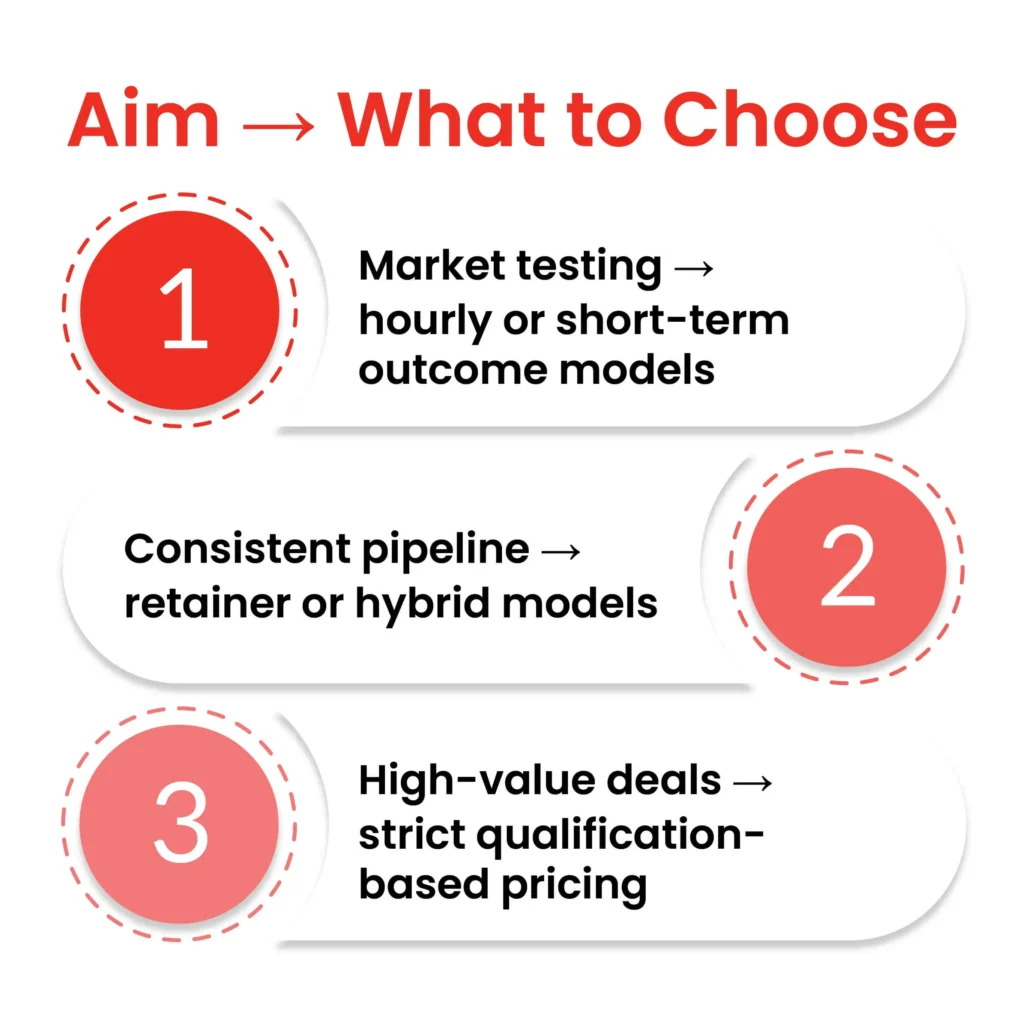
Start with intent, not budget.
ROI should be evaluated across the full funnel. Here is an example on how you can do it, to ensure that pricing model is beneficial for your business.
Revenue generated: $60,000
Effective ROI (after sales and operational costs): ~11:1
The goal is not maximizing meetings, it is maximizing revenue efficiency.
There are several trends that are reshaping pricing structures:
Pricing models are evolving to reflect strategic contribution, not just activity.
Appointment setting is no longer a support function. It is a revenue lever.
The right pricing model does not minimize cost, it minimizes waste, friction, and lost opportunity.
Teams that win in 2026 are not buying meetings. They are investing in access to decisions already in motion.
That is the lens pricing should be viewed through.

Vikas Bhatt is the Co-Founder of ONLY B2B, a premium B2B lead generation company that specializes in helping businesses achieve their growth objectives through targeted marketing & sales campaigns. With 10+ years of experience in the industry, Vikas has a deep understanding of the challenges faced by businesses today and has developed a unique approach to lead generation that has helped clients across a range of industries around the globe. As a thought leader in the B2B marketing community, ONLY B2B specializes in demand generation, content syndication, database services and more.
Enter your email to access the download.